
About
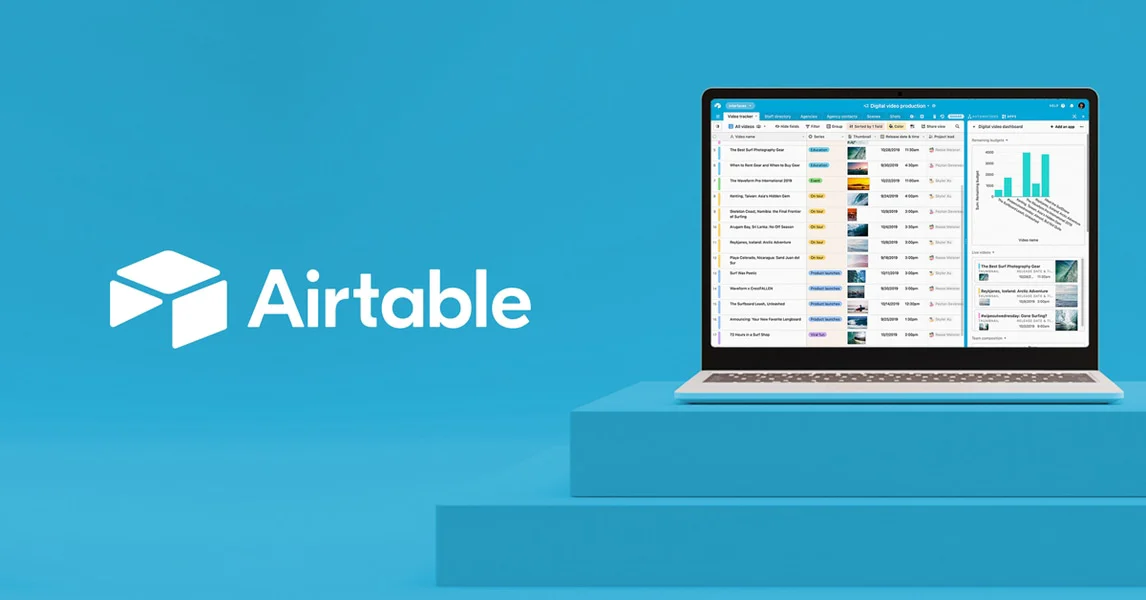
Airtable is an enterprise-grade, no-code platform that empowers teams to build custom business applications, automate repetitive workflows, and deploy AI agents at scale. At its core, Airtable uses a relational database model that connects data across apps, workflows, and third-party tools — giving organizations a single source of truth for their operations. With Airtable AI, teams can embed intelligent automation end-to-end across their workflows, from generating content to triaging tasks. The new AI Agents feature allows businesses to deploy thousands of autonomous agents directly inside their apps. Custom interfaces let non-technical users interact with data in intuitive, role-specific views, while powerful reporting tools surface actionable insights. Airtable integrates natively with popular tools including Slack, Google Drive, Salesforce, Jira, and Zendesk, and supports up to 100 million records for large-scale deployments. Centralized governance, permissions management, and enterprise-grade security make it suitable for regulated industries and large organizations. Use cases span virtually every business function: product teams track roadmaps and ship faster; marketing teams plan and execute campaigns; operations teams unify cross-functional workflows; and HR teams manage the full employee lifecycle. With a rich template library, a developer API, custom scripting, and a thriving community, Airtable scales from startup to enterprise.
Key Features
- AI App Building & Agents: Build custom business apps without code and deploy thousands of AI agents inside your apps to automate complex, multi-step workflows at scale.
- Relational Database Engine: Connect data across apps, workflows, and tools using a powerful relational database that supports up to 100 million records for enterprise-scale operations.
- Custom Interfaces & Views: Design role-specific interfaces and tailor data visualizations so every team member sees exactly what they need, without overwhelming complexity.
- Workflow Automations: Automate repetitive tasks and manual processes with no-code automation builders, saving teams thousands of hours and reducing human error.
- Native Integrations & API: Connect seamlessly with Slack, Google Drive, Salesforce, Jira, Zendesk, and more via native integrations, a robust REST API, and custom scripting extensions.
Use Cases
- Product teams managing feature roadmaps, sprint tracking, and cross-functional product launches in a single connected workspace.
- Marketing teams planning, executing, and reporting on campaigns with unified content calendars, asset management, and performance dashboards.
- Operations teams automating repetitive business processes and connecting data across departments to streamline end-to-end workflows.
- HR departments managing the full employee lifecycle — from recruiting pipelines and onboarding workflows to performance tracking and offboarding.
- Agencies and professional services firms coordinating client projects, tracking deliverables, and protecting margins with centralized project management.
Pros
- Highly Flexible & Customizable: Airtable adapts to virtually any workflow or industry, allowing teams to build custom apps, views, and automations tailored to their exact needs without writing code.
- Strong Integration Ecosystem: Native integrations with top business tools like Slack, Salesforce, Jira, and Google Drive make Airtable easy to plug into existing tech stacks.
- Enterprise-Grade Security & Governance: Centralized permissions, data governance controls, and security features make it suitable for large organizations with strict compliance requirements.
- Embedded AI Capabilities: Built-in AI App Building and AI Agents allow teams to automate intelligent workflows end-to-end without needing separate AI tooling.
Cons
- Can Get Expensive at Scale: Advanced features, AI capabilities, and high record counts are gated behind higher-tier plans, which can become costly for large teams or organizations.
- Learning Curve for Complex Use Cases: While the basics are accessible, building sophisticated relational data models, automations, and custom interfaces can require significant time investment to master.
- Performance on Very Large Datasets: Even with 100M record support, very large or complex bases can experience slowdowns in the interface, especially with heavy automation or reporting workloads.
Frequently Asked Questions
Is Airtable free to use?
Yes, Airtable offers a free plan with core features for individuals and small teams. Paid plans unlock advanced automations, AI features, higher record limits, and enterprise governance controls.
What is Airtable AI and how does it work?
Airtable AI embeds artificial intelligence throughout your workflows, enabling features like AI-generated content, intelligent data classification, and AI Agents that autonomously perform multi-step tasks inside your apps.
Can Airtable replace tools like Excel or Google Sheets?
Airtable goes beyond spreadsheets by offering a relational database model, custom interfaces, automations, and app-building capabilities — making it a more powerful alternative for teams managing complex, interconnected data.
What integrations does Airtable support?
Airtable integrates natively with Slack, Google Drive, Salesforce, Jira, Zendesk, and many more tools. It also offers a REST API, custom extensions, and scripting for deeper custom integrations.
Is Airtable suitable for enterprise use?
Yes. Airtable's enterprise plans include centralized governance, advanced permission controls, SSO, data protection features, and support for up to 100 million records, making it well-suited for large organizations.