

About
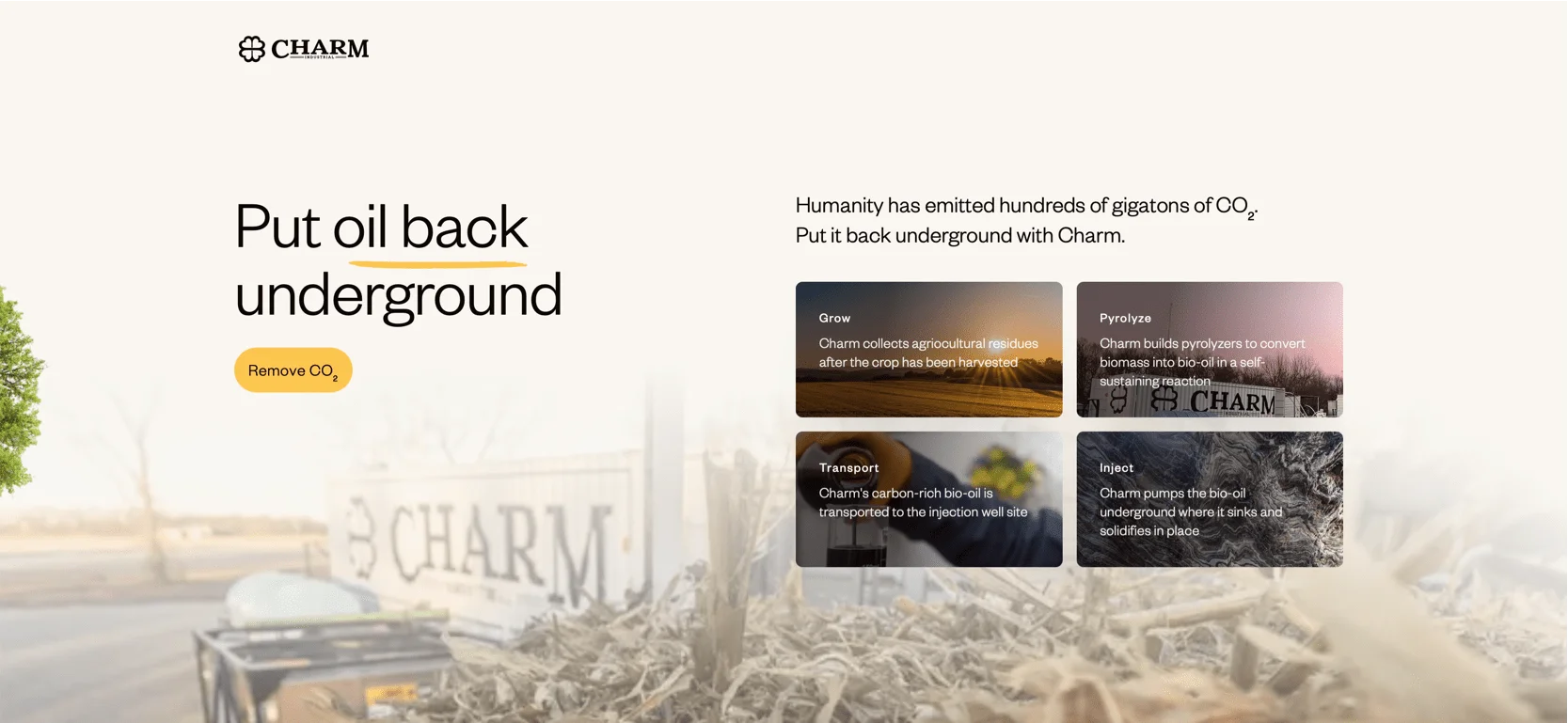
Charm Industrial offers one of the fastest-growing permanent carbon removal technologies available today. The company collects cellulosic agricultural residues—such as corn stalks left after harvest—and runs them through proprietary fast pyrolyzers that convert the biomass into bio-oil, a dense, carbon-rich liquid with low energy content. This bio-oil is then transported to EPA-regulated Class II injection well sites, where it is pumped deep underground, sinks under its own density, and solidifies in place, effectively locking away CO₂ for millennia. Unlike nature-based offsets vulnerable to wildfires, soil erosion, or land-use change, Charm's approach achieves true permanence. The company publishes a real-time carbon removal ledger so buyers can verify every tonne removed. Enterprise purchasers and frontier buyers have already signed over $53 million in offtake agreements, enabling Charm to scale capacity and deliver co-benefits to farming communities. Charm has been rated best-in-class by CarbonPlan and featured in major press outlets including the BBC. The solution is ideal for corporations with ambitious net-zero or carbon-negative commitments seeking high-quality, permanent carbon dioxide removal credits backed by rigorous science and regulatory compliance.
Key Features
- Agricultural Residue Feedstock: Collects cellulosic crop residues (e.g., corn stalks) after harvest, leveraging biomass that already captures 100+ Gt of CO₂ per year through natural photosynthesis.
- Fast Pyrolysis Conversion: Proprietary self-sustaining pyrolyzers convert biomass into bio-oil—a dense, carbon-rich liquid with low energy content—at industrial scale.
- Permanent Underground Injection: Bio-oil is pumped into EPA-regulated Class II injection wells, where it sinks and solidifies in place, sequestering CO₂ for millennia beyond the reach of wildfires or land-use change.
- Real-Time Carbon Removal Ledger: A live public ledger tracks total tonnes of CO₂ permanently removed, giving buyers transparent, verifiable proof of every removal credit purchased.
- Enterprise Offtake Agreements: Long-term offtake contracts allow enterprise buyers to secure durable carbon removal supply while enabling Charm to expand capacity and deliver agricultural co-benefits.
Use Cases
- Corporate net-zero and carbon-negative commitments requiring permanent, high-quality carbon removal credits
- Frontier climate tech investment and long-term offtake agreements to secure durable CO₂ removal supply
- Agricultural sector sustainability initiatives that monetize crop residues while reducing atmospheric CO₂
- Government and institutional carbon procurement programs seeking EPA-regulated, scientifically verified removal
- Supply chain decarbonization strategies for enterprises needing credible, permanent offsets beyond nature-based solutions
Pros
- True Permanence: Bio-oil solidifies underground for thousands of years, making this one of the most durable forms of carbon removal available—immune to wildfires, erosion, or land-use reversal.
- Best-in-Class Verification: Rated best-in-class by CarbonPlan and supported by EPA-regulated injection wells, providing buyers with rigorous scientific and regulatory credibility.
- Scalable with Agricultural Co-Benefits: Works alongside existing farming operations, creating economic opportunities for agricultural communities while scaling removal capacity through enterprise offtakes.
- Transparent Public Ledger: Real-time removal tracking gives corporate buyers and third-party verifiers clear, auditable data on every tonne of CO₂ removed.
Cons
- Enterprise-Scale Pricing: Carbon removal credits are primarily accessible to large corporations and institutional buyers through offtake agreements, making it inaccessible for individuals or small businesses.
- Geographic Dependency: Operations depend on proximity to agricultural residue supply chains and EPA-approved injection well sites, limiting near-term geographic availability.
- Physical Infrastructure Requirements: Unlike software solutions, scaling requires significant capital investment in pyrolyzers, transport logistics, and injection well infrastructure.
Frequently Asked Questions
What is bio-oil sequestration?
Bio-oil sequestration is the process of converting biomass (such as crop residues) into a carbon-rich liquid called bio-oil through fast pyrolysis, then injecting that liquid deep underground where it permanently solidifies, locking away the carbon for millennia.
How permanent is Charm's carbon removal?
Charm's bio-oil sinks and solidifies in underground geological formations, keeping CO₂ stored for thousands of years. Unlike forests or soils, it is not vulnerable to wildfires, erosion, or changes in land use.
Who can purchase carbon removal from Charm?
Charm primarily works with enterprises and institutional buyers through long-term offtake agreements. Frontier buyers have already committed over $53 million in purchases to help scale capacity.
What feedstocks does Charm use?
Charm collects cellulosic agricultural residues—biomass left over after crops like corn are harvested. These residues already capture CO₂ through photosynthesis, and Charm's process converts that captured carbon into a permanent storage form.
How is the carbon removal verified?
Charm maintains a public real-time ledger tracking total tonnes of CO₂ permanently removed. The injection process uses EPA-regulated Class II wells, and the methodology has been independently rated best-in-class by CarbonPlan.