

About
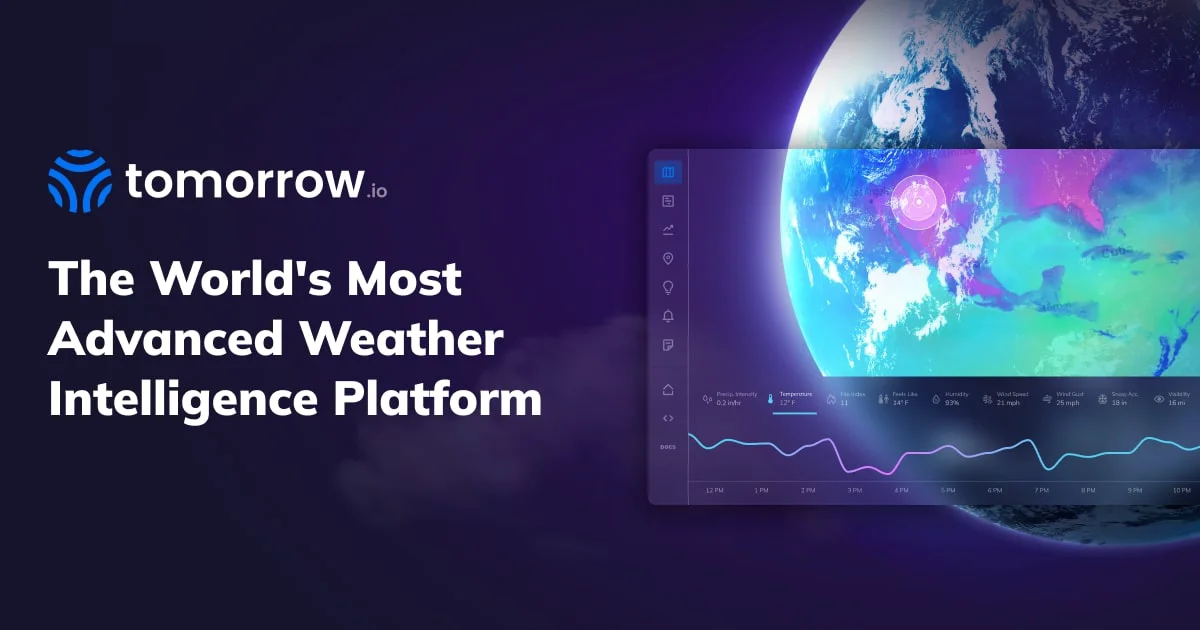
Tomorrow.io, formerly known as ClimaCell, is the world's leading AI-native weather intelligence and resilience platform. At its core is a powerful Weather API offering 80+ data layers — including real-time conditions, historical data, severe weather alerts, air quality, and hyperlocal forecasts — consumed by developers and enterprises worldwide. The platform is built on DeepSky, humanity's first commercial AI-native weather satellite constellation, providing cloud-penetrating global atmospheric observations where traditional sensors fall short. This space data feeds adaptive AI models that fuse satellite intelligence with global datasets for superior forecast accuracy. For enterprises, Tomorrow.io offers sector-specific agentic AI suites. The Shield Agent, for example, helps insurance teams predict peril-driven losses, validate claims, and manage catastrophe response with property-level hail, wind, flood, and freeze intelligence. Similar agents exist for aviation, rail, trucking, manufacturing, and energy. Developers can access the Weather API via REST endpoints, an API Playground, GitHub resources, and Postman collections, making integration straightforward. The platform also features map visualization tools, localized severe weather alerts, and embeddable widgets. A consumer-facing app and personal forecast tool round out the product suite. Tomorrow.io is trusted by leading global organizations and governments, positioning itself as a single source of weather truth for operational resilience and automated decision-making.
Key Features
- Weather API with 80+ Data Layers: Access real-time, historical, and forecast weather data including severe alerts, air quality, and hyperlocal conditions via a developer-friendly REST API.
- DeepSky Satellite Constellation: Proprietary AI-native commercial weather satellites provide cloud-penetrating global atmospheric observations unavailable from traditional sensors.
- AI-Driven Adaptive Weather Modeling: Machine learning fuses satellite data with global weather datasets to produce adaptive, high-accuracy forecasts for any location on Earth.
- Sector-Specific AI Agents: Industry-tailored agentic suites (like Shield Agent for insurance) translate weather data into automated operational decisions and proactive alerts.
- Historical & Real-Time Data Access: Query past weather events for claims verification, compliance, research, or operational analysis alongside live and forecast data streams.
Use Cases
- Insurance companies using the Shield Agent to predict property-level hail and wind damage before a storm makes landfall, enabling proactive customer outreach and loss prevention.
- Developers integrating the Weather API into logistics and delivery apps to dynamically adjust routing, scheduling, and ETAs based on real-time and forecast weather conditions.
- Aviation operations teams using hyper-accurate turbulence and visibility forecasts to optimize flight planning, reduce delays, and improve passenger safety.
- Energy companies forecasting solar irradiance, wind speeds, and temperature to optimize renewable energy production and grid load balancing.
- Claims adjusters verifying historical weather conditions at a specific address and date to validate or expedite weather-related insurance claims with automated data retrieval.
Pros
- Unmatched Data Depth: With 80+ data layers and proprietary satellite coverage, Tomorrow.io offers significantly more granular and accurate weather intelligence than standard providers.
- Enterprise-Grade Agentic Automation: Pre-built AI agents for insurance, aviation, logistics, and energy reduce the time from weather signal to operational action without custom model development.
- Developer-Friendly Integration: Well-documented REST API, Postman collections, GitHub resources, and an interactive API Playground make it easy to integrate into any stack.
- Global Coverage via Space Infrastructure: The DeepSky constellation delivers persistent global atmospheric monitoring, providing data from regions where ground-based sensors are absent.
Cons
- Cost at Scale: Enterprise-level access and high-volume API usage can become expensive; pricing is not fully transparent without contacting sales.
- Complexity for Simple Use Cases: The breadth of features and data layers may be overwhelming for developers who only need basic weather data for lightweight applications.
- Satellite Coverage Still Maturing: As DeepSky is a new constellation, global coverage and data density will continue to improve over time but may not yet be uniform across all regions.
Frequently Asked Questions
What is the difference between ClimaCell and Tomorrow.io?
ClimaCell rebranded to Tomorrow.io in 2021. The platform has since expanded significantly beyond API weather data into a full AI-powered weather intelligence and resilience platform with satellite infrastructure.
How do I access the Weather API?
You can sign up for API access at tomorrow.io, explore endpoints via the interactive API Playground, and use the documentation, Postman collections, and GitHub resources to integrate into your application.
What industries does Tomorrow.io serve?
Tomorrow.io serves aviation, insurance, rail and transportation, logistics/trucking, energy, pharmaceuticals, manufacturing, government and defense, and more with tailored weather intelligence solutions.
Is there a free tier available for the Weather API?
Tomorrow.io offers a freemium model where developers can access the Weather API at no cost up to certain usage limits, with paid plans available for higher volumes and enterprise features.
What makes Tomorrow.io's weather data more accurate than competitors?
Tomorrow.io combines data from its proprietary DeepSky AI-native satellite constellation with global data sources, processed through adaptive AI models, resulting in higher spatial and temporal resolution than traditional weather providers.