

About
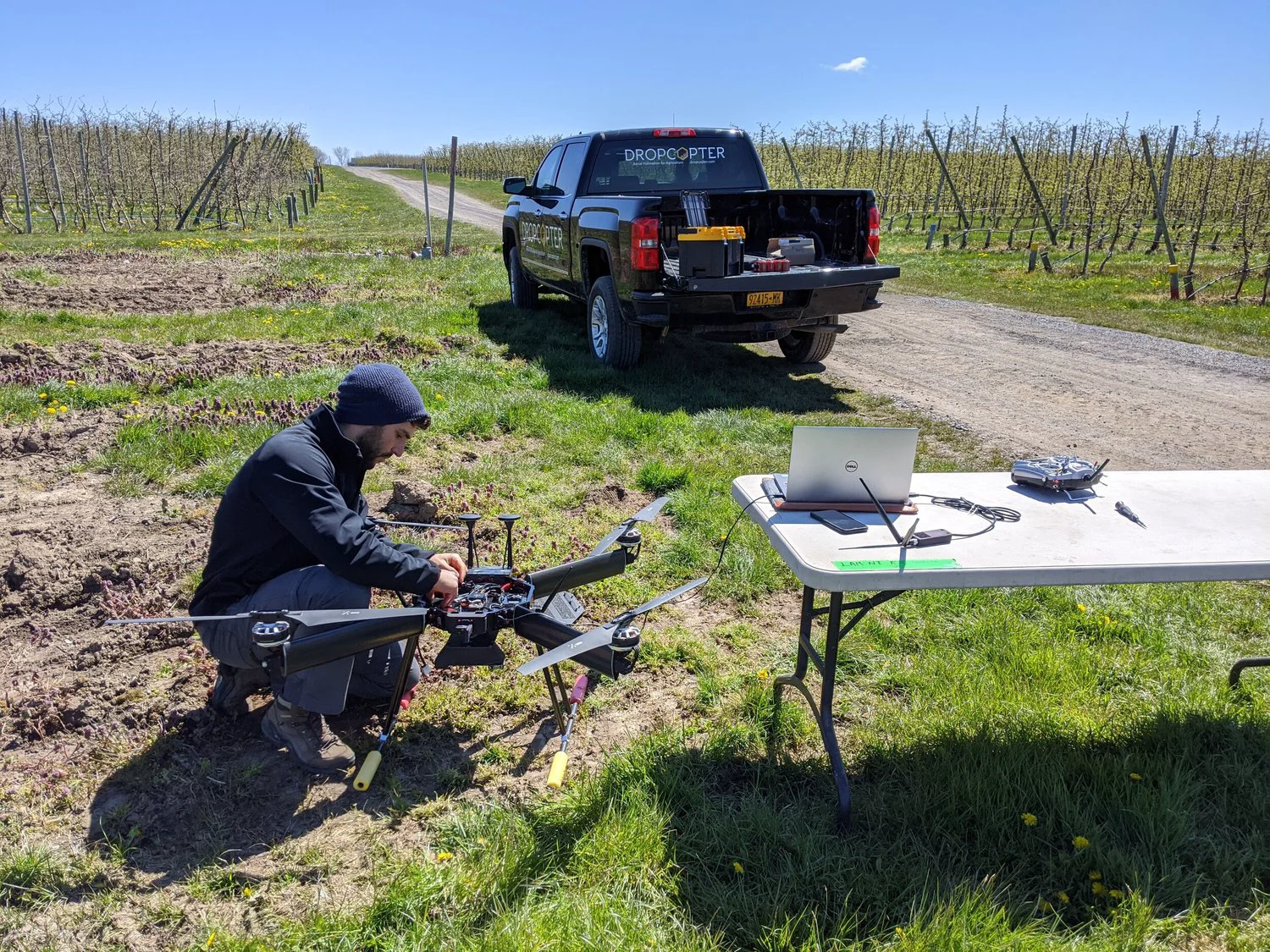
Dropcopter is a pioneering agri-tech company that uses autonomous multi-rotor drones to deliver aerial pollination services to orchard and specialty crop growers. Operating primarily in California, New York, and Washington, Dropcopter addresses one of agriculture's most critical bottlenecks — pollination — by replacing or supplementing traditional methods such as honeybee hive rentals with a more consistent, controllable, and scalable drone-based approach. The core service involves dispensing the right pollen at the right time over orchards, maximizing fruit and nut set rates. Dropcopter's drones can cover large acreage efficiently, flying precise patterns to ensure uniform pollen distribution even in challenging weather or terrain conditions where natural pollinators may be unreliable. Beyond pollination, Dropcopter offers crop scanning services, using aerial imagery and data collection to give growers actionable insights into crop health and field conditions. This data-driven layer supports smarter farm management decisions throughout the growing season. Dropcopter serves commercial orchard growers of almonds, cherries, apples, dates, and other tree fruits and nuts. The company has built partnerships with institutions like California State University and organizations such as Blue White Robotics and Kolecti to advance its technology and expand its agricultural impact. Dropcopter is ideal for large-scale farming operations looking to modernize their pollination strategy, reduce dependency on honeybees, and achieve more predictable, higher-quality yields.
Key Features
- Precision Aerial Pollination: Multi-rotor drones dispense pollen at precisely the right time and location across orchards to maximize fruit and nut set rates.
- Crop Scanning Services: Aerial crop scanning provides growers with detailed imagery and data to monitor crop health and inform field management decisions.
- Wide Crop Compatibility: Supports pollination for a variety of orchard crops including almonds, cherries, apples, and dates, adaptable to different growing regions.
- Large-Scale Coverage: Drones can cover extensive acreage efficiently, flying programmed patterns to ensure uniform pollen distribution across entire orchards.
- Multi-State Operations: Active service locations in California, New York, and Washington, with international capabilities for broader agricultural deployment.
Use Cases
- Commercial almond and tree nut growers supplementing or replacing honeybee hive rentals with drone-delivered pollen for more reliable fruit set.
- Cherry and apple orchard operators in regions with declining natural pollinator populations seeking a consistent and controllable pollination alternative.
- Large-scale farm operations using Dropcopter's crop scanning services to gather aerial data and monitor crop health throughout the growing season.
- Date palm growers in arid regions leveraging drone pollination to reach tall or densely planted trees that are difficult to pollinate manually.
- Agribusiness managers integrating aerial pollination and crop scanning data into precision farming workflows to optimize harvest yields and reduce operational costs.
Pros
- Reduces Dependency on Honeybees: Provides a reliable, controllable pollination alternative or supplement, reducing risk from declining bee populations or poor hive performance.
- Precision and Consistency: Drones deliver pollen with consistent coverage regardless of weather variability or natural pollinator behavior, improving yield predictability.
- Combined Pollination and Scanning: Offers both pollination services and crop scanning in one platform, giving growers a more complete aerial agricultural solution.
- Proven Grower Results: Testimonials and case studies demonstrate measurable improvements in fruit set and harvest outcomes for commercial orchard clients.
Cons
- Service-Based Model Only: Dropcopter operates as a managed service rather than selling equipment, so growers cannot independently operate the technology on their own schedule.
- Limited Geographic Coverage: Current primary operations are concentrated in California, New York, and Washington, limiting accessibility for growers in other regions.
- Paid Service with No Free Tier: As a commercial agricultural service, there is no free trial or self-service option, which may be a barrier for smaller or budget-constrained farms.
Frequently Asked Questions
What crops does Dropcopter support?
Dropcopter specializes in orchard and specialty crops including almonds, cherries, apples, dates, and other tree fruits and nuts that require pollination for fruit or nut set.
How does drone pollination work?
Dropcopter's multi-rotor drones are loaded with compatible pollen and fly programmed patterns over orchards, dispensing pollen at optimal times during the bloom period to improve fertilization rates.
Where does Dropcopter operate?
Dropcopter currently has active service locations in California, New York, and Washington, and also has international capabilities for deployments outside the US.
Does Dropcopter offer crop scanning in addition to pollination?
Yes, Dropcopter also provides aerial crop scanning services that use drone-captured imagery and data to help growers monitor crop health and make informed field management decisions.
How do I get started with Dropcopter?
Growers can get started by filling out a quick contact form on the Dropcopter website to request a callback and discuss their specific acreage, crop type, and service needs.