

About
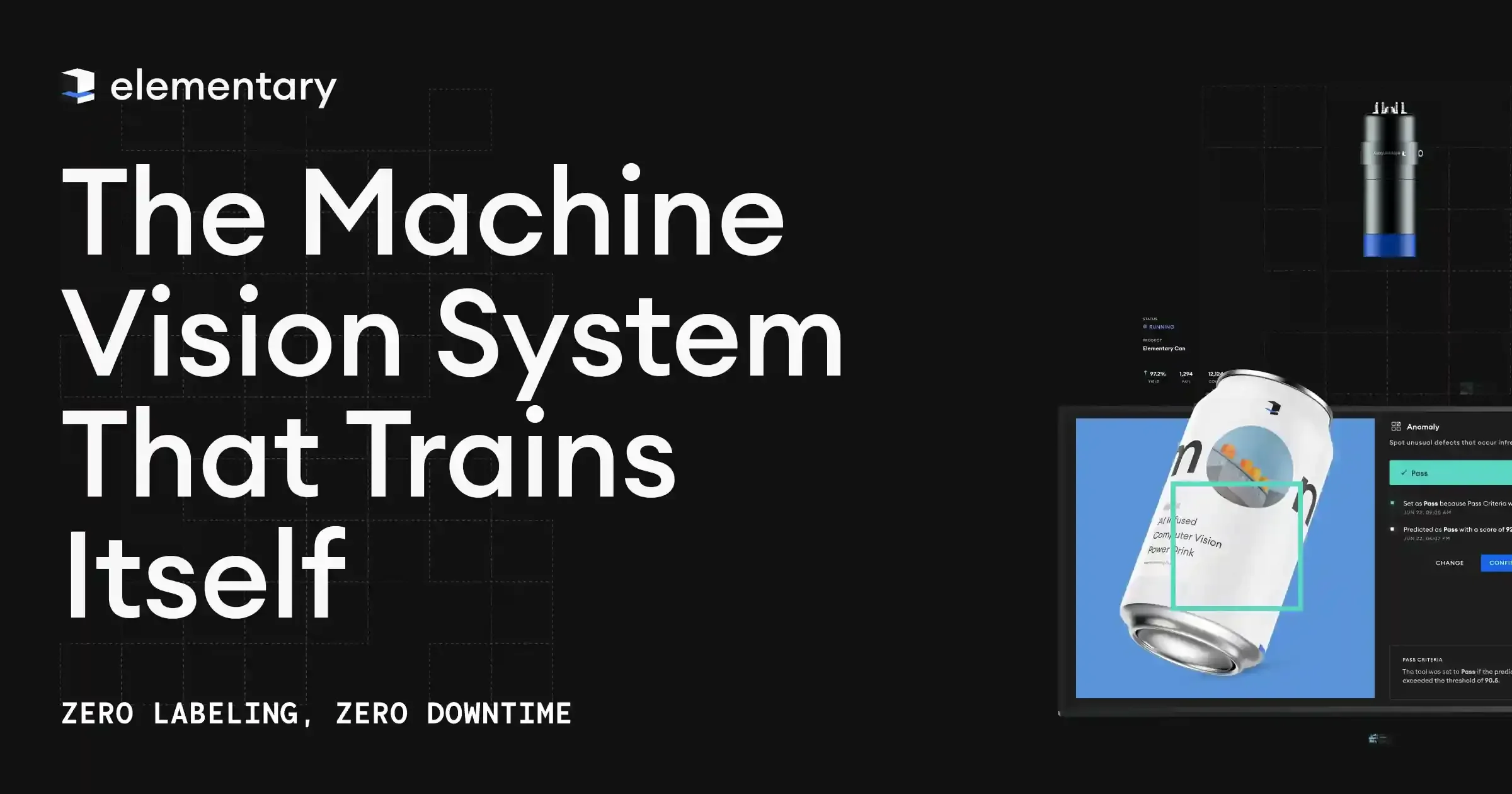
Elementary is an AI-powered machine vision inspection system purpose-built for industrial manufacturing. Its flagship QualityOS platform and VisionLink™ technology enable factories to automate quality control without hiring vision experts or halting production lines. The system uniquely auto-trains on a facility's own quality standards, achieving 99.9% defect detection accuracy with zero manual tuning required—deploying in as little as 16 seconds of runtime and 80x faster than conventional AI approaches. Elementary serves a broad range of industries including food & beverage, automotive, paper & pulp, consumer packaged goods, industrial & construction, electronic devices, logistics, and life sciences. Core inspection capabilities include labeling verification, defect detection, sorting & classification, and presence & absence detection. The platform is trusted by Fortune 500 manufacturers and inspects more than 1 billion parts per year globally. Designed for seamless integration into high-speed production environments, Elementary introduces zero line stoppage and has no impact on existing production schedules. Custom solutions are also available for specialized production needs not covered by standard applications. Elementary is ideal for quality engineers, plant managers, and operations teams looking to modernize their inspection processes, reduce defects, and future-proof their manufacturing operations with AI-driven automation.
Key Features
- Auto-Training Vision AI: Automatically learns your facility's quality standards without requiring vision experts or manual configuration, enabling fast and accurate defect detection from day one.
- 99.9% Detection Accuracy: Delivers industry-leading defect detection accuracy with zero manual tuning, reducing quality escapes by 95% on the first day of deployment.
- 80x Faster Deployment: Deploys significantly faster than conventional AI systems—with a runtime as short as 16 seconds—minimizing disruption and accelerating time-to-value.
- Multi-Industry Application Support: Supports labeling verification, defect detection, sorting & classification, and presence & absence detection across industries like food & beverage, automotive, and electronics.
- Zero Production Downtime: Integrates into high-speed production lines with no line stoppage or impact on existing production schedules.
Use Cases
- Automated defect detection on food & beverage packaging lines to prevent contaminated or damaged products from reaching consumers.
- Labeling verification for consumer packaged goods to ensure label accuracy, placement, and compliance before products ship.
- Sorting and classification in automotive manufacturing to identify and separate non-conforming parts from approved components.
- Presence and absence detection in electronics assembly to confirm all required components are correctly placed during production.
- Quality control in paper & pulp manufacturing to detect surface defects, tears, or inconsistencies in high-speed continuous production.
Pros
- Trusted at Enterprise Scale: Inspects over 1 billion parts annually for Fortune 500 manufacturers, demonstrating proven reliability and scalability in demanding industrial environments.
- No Expertise Required: Auto-training eliminates the need to hire specialized vision engineers, making advanced AI inspection accessible to any manufacturing team.
- Rapid Time-to-Value: Deploys 80x faster than conventional AI systems and achieves meaningful defect reduction immediately, with minimal setup time.
- Broad Industry Coverage: Serves eight major industries with customizable solutions for unique production requirements, making it highly versatile across manufacturing segments.
Cons
- Enterprise-Focused Pricing: No self-serve or transparent pricing is available; access requires contacting a sales representative, which may be a barrier for smaller manufacturers.
- Hardware Integration Required: As an industrial machine vision system, deployment requires physical camera and hardware setup on the production line, adding implementation complexity.
- Manufacturing-Specific Use Case: The platform is purpose-built for industrial quality control and is not applicable outside of manufacturing or production environments.
Frequently Asked Questions
What industries does Elementary support?
Elementary serves a wide range of industries including food & beverage, automotive, paper & pulp, consumer packaged goods, industrial & construction, electronic devices, logistics, and life sciences.
How accurate is Elementary's defect detection?
Elementary achieves 99.9% detection accuracy with zero manual tuning, and reduces quality escapes by 95% on day one of deployment.
How long does it take to deploy Elementary?
Elementary deploys 80x faster than conventional AI systems. Its auto-training capability allows it to learn quality standards quickly, with a runtime of as little as 16 seconds.
Does Elementary require vision engineering expertise to set up?
No. Elementary's AI auto-training feature automatically learns your quality standards, eliminating the need to hire specialized machine vision or AI experts.
Will Elementary disrupt our existing production line?
No. Elementary is designed to integrate into high-speed production environments with zero line stoppage and no impact on existing production schedules.