
About
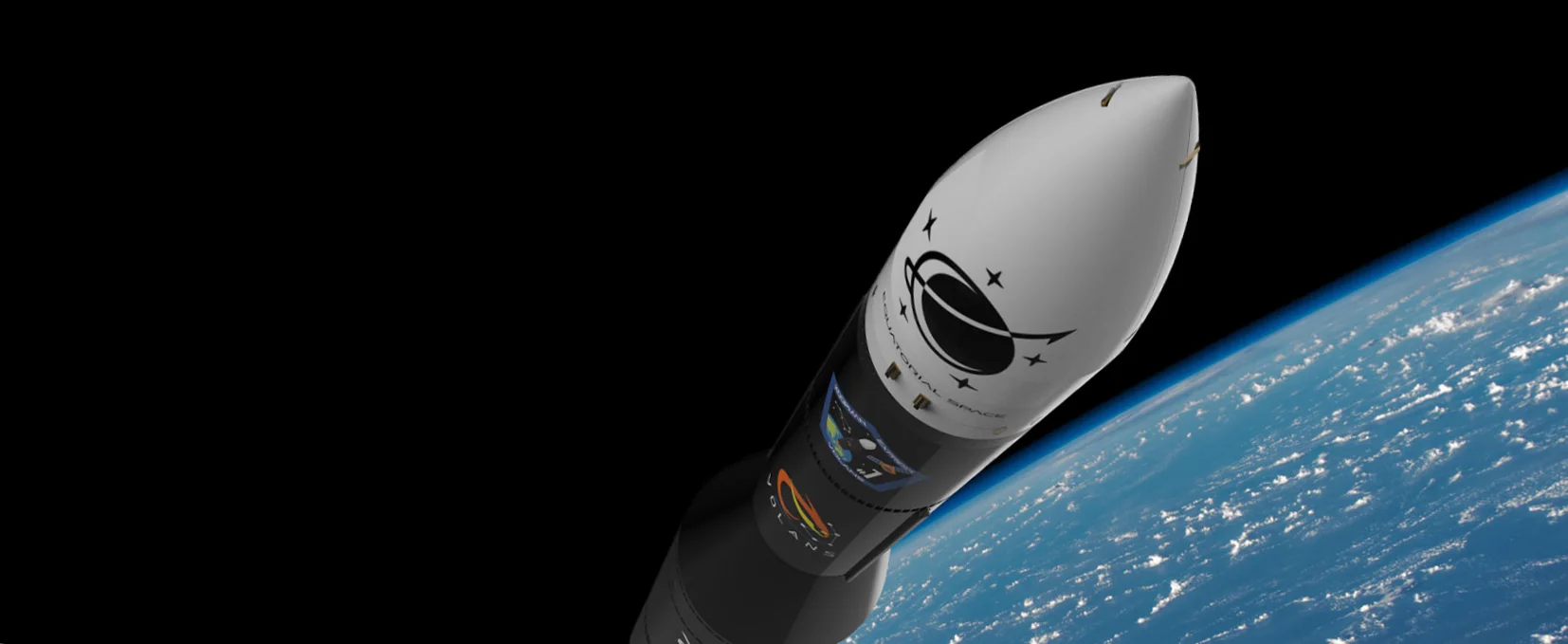
Equatorial Space Systems is pioneering a new era of space access with its proprietary High Regression Fuel 1 (HRF-1) hybrid rocket engine technology. The company's flagship product, VOLANS, is a modular family of low-cost orbital launch vehicles capable of delivering up to 750 kg to Low Earth Orbit, launching from near-equatorial sites to a full 0–97° inclination range. VOLANS is the world's first 100% pyrotechnics-and-explosives-free orbital launcher, eliminating TNT explosive equivalence entirely. The second vehicle, DORADO, is a responsive suborbital sounding rocket designed for microgravity research payloads up to 20 kg, reaching apogees of 80 km with 2 minutes of microgravity access. DORADO ships fully inert, is safe to manufacture and transport globally, and is marketed as the greenest sounding rocket in the world — producing minimal carbon compounds and greenhouse gases. Compared to conventional kerolox propulsion, Equatorial Space's technology delivers up to 60% reduction in greenhouse gas emissions and up to 80% cost reduction, while dramatically simplifying operations through the removal of explosive components. Backed by Singapore's Prime Minister's Office deep tech initiative and recognized by major regional accelerators and investors, the company is positioned to serve satellite operators, research institutions, and governments seeking reliable, flexible, and affordable launch services from equatorial orbit.
Key Features
- HRF-1 Hybrid Propulsion: Proprietary High Regression Fuel 1 technology delivering superior performance with zero TNT explosive equivalence and up to 80% cost reduction versus traditional kerolox engines.
- VOLANS Orbital Launch Vehicle: Modular family of launchers capable of delivering up to 750 kg to LEO, covering inclinations from 0–97°, launching from near-equatorial sites.
- DORADO Suborbital Sounding Rocket: Responsive, fully inert suborbital launcher reaching 80 km apogee with 2 minutes of microgravity access for payloads up to 20 kg.
- 100% Explosives-Free Design: Both VOLANS and DORADO eliminate pyrotechnics and explosive components entirely, simplifying logistics, transport, and range operations worldwide.
- Green Launch Technology: Up to 60% reduction in greenhouse gas emissions compared to conventional propulsion, producing minimal carbon compounds and toxic effluents.
Use Cases
- Small satellite operators seeking affordable LEO deployment for Earth observation, communications, or IoT constellation satellites
- Universities and research institutions needing suborbital microgravity access for experiments via the DORADO sounding rocket
- Government space agencies in Southeast Asia and the Asia-Pacific region looking for regional launch independence and equatorial orbit capabilities
- Deep tech startups testing new space hardware in orbit at lower cost compared to rideshare or traditional dedicated launch providers
- Defense and intelligence organizations requiring responsive, operationally flexible launch from any global range without explosive-handling infrastructure
Pros
- Significantly Lower Launch Costs: HRF-1 propulsion achieves up to 80% cost reduction compared to kerolox systems, making orbital and suborbital access far more affordable.
- Operationally Flexible and Safe: Explosives-free design means vehicles ship fully inert and can be deployed to virtually any launch range in the world without special explosive-handling protocols.
- Environmentally Responsible: Substantially reduced greenhouse gas emissions and elimination of toxic propellant effluents make it one of the cleanest launch solutions available.
- Equatorial Launch Advantage: Launches from near-equatorial sites maximize payload capacity and orbital flexibility, directly serving the fast-growing Asia-Pacific satellite market.
Cons
- Early-Stage Commercial Availability: As a deep tech startup, commercial launch services are not yet widely available; customers may face longer lead times compared to established launch providers.
- Limited Payload Capacity: VOLANS tops out at 750 kg to LEO, making it unsuitable for larger satellite constellations or heavy payloads that require medium- or heavy-lift vehicles.
- Niche Geographic Coverage: Near-equatorial launch sites optimize low-inclination orbits; customers requiring high-inclination or polar orbits may face performance trade-offs.
Frequently Asked Questions
What is HRF-1 and how does it differ from conventional rocket propellants?
HRF-1 (High Regression Fuel 1) is Equatorial Space's proprietary hybrid rocket fuel that combines a solid fuel grain with liquid oxidizer (LOX). Unlike traditional solid or liquid propellants, it contains zero explosive compounds, dramatically reduces greenhouse gas emissions, and costs significantly less to manufacture and handle.
What payloads can VOLANS carry to orbit?
VOLANS can carry up to 750 kg to Low Earth Orbit (400 km, 40° reference orbit). It accommodates payloads within a fairing of 2.40 m length and 21.80 cm diameter, with a volume of 10.58 m³, and supports inclinations from 0° to 97°.
What is the DORADO rocket used for?
DORADO is a suborbital sounding rocket designed for microgravity research, technology demonstrations, and small scientific payloads up to 20 kg. It reaches an apogee of 80 km and provides approximately 2 minutes of microgravity access per flight.
Where does Equatorial Space operate its launches?
Equatorial Space is headquartered in Singapore and has an office in Bangkok, Thailand. The company targets near-equatorial launch sites to maximize orbital performance, leveraging Singapore's geographic position close to the equator.
Is Equatorial Space backed by investors or government programs?
Yes. Equatorial Space has been recognized by Singapore's Prime Minister's Office as part of its deep tech investment initiative, and has received support from regional incubators, accelerators, and institutional investors. It has also been covered by major media outlets including Channel NewsAsia and Lianhe Zaobao.