

About
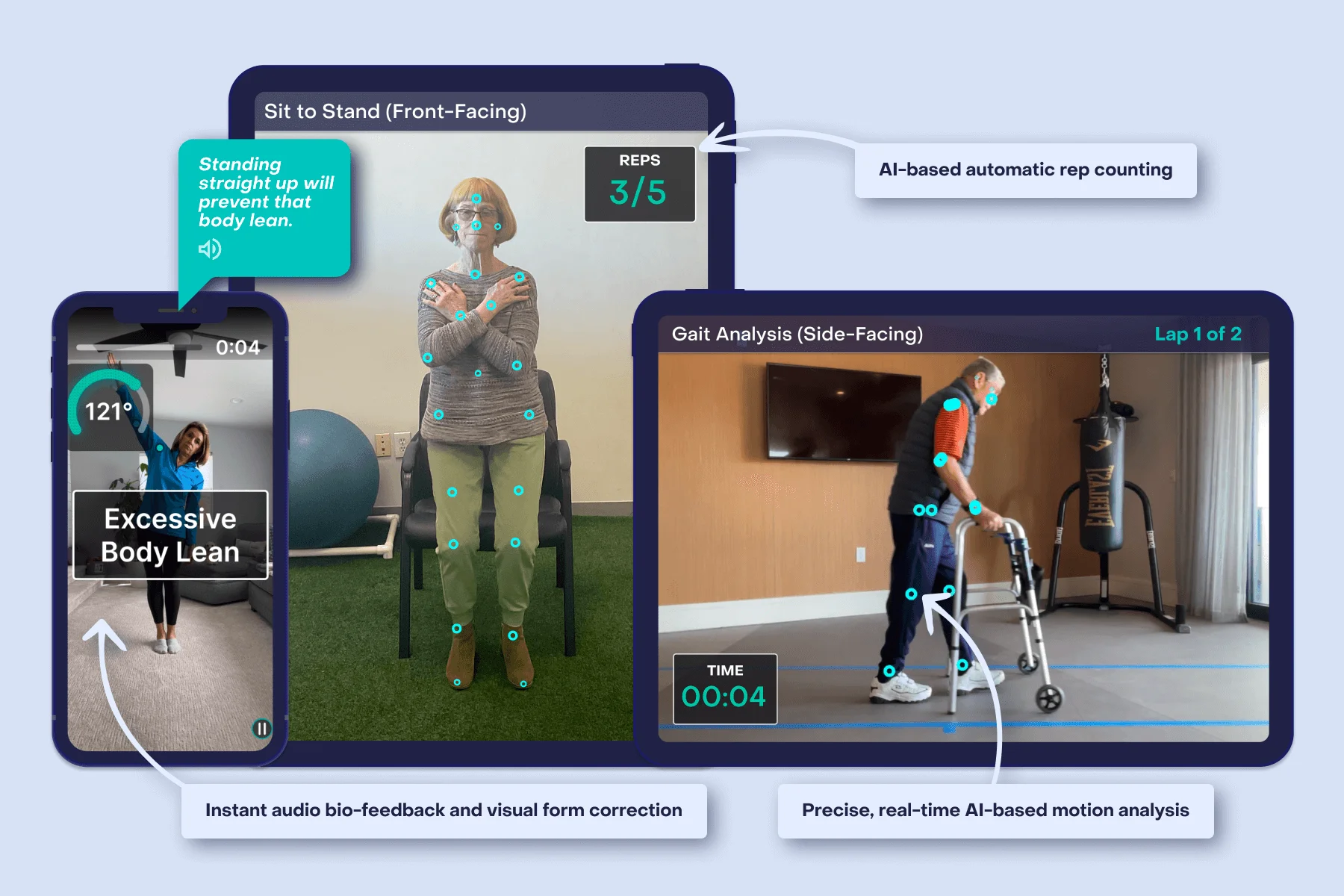
Exer AI is an all-in-one digital health platform built for healthcare providers managing musculoskeletal (MSK) conditions and motion disorders. By harnessing computer vision and clinical AI, it transforms raw patient movement data into actionable clinical insights — without requiring any sensors, hardware, or wearables. The platform supports care delivery across orthopedics, senior care, neurology, primary care, physical medicine & rehabilitation, and health plans. Exer AI's product suite includes Exer Scan, which enables in-clinic patient assessments with objective motion data; Exer Health, which extends monitoring to the home environment with real-time AI guidance and protocol adherence tracking; and Exer Hands, which supports the management of dozens of acute and chronic hand and wrist conditions such as rheumatoid arthritis and carpal tunnel syndrome. Key clinical applications include fall prevention for seniors, gait analysis, functional outcome evaluations, and early detection of movement-pattern changes that may signal worsening conditions. By replacing subjective manual assessments with standardized, AI-driven evaluations, Exer AI reduces clinician variability and improves patient outcomes at scale. The platform is designed for healthcare organizations seeking to bridge in-person and remote care pathways with a consistent, data-driven approach.
Key Features
- Sensorless Motion Analysis: Captures and analyzes patient movement using AI-powered computer vision — no wearables, sensors, or specialized hardware needed.
- Multi-Setting Care Support: Delivers consistent motion assessments across in-clinic visits, telehealth appointments, and at-home monitoring sessions.
- Broad MSK & Disorder Coverage: Addresses a wide spectrum of conditions including orthopedic injuries, hand/wrist disorders, neurological movement issues, and fall risk in seniors.
- Real-Time Clinical Decision Support: Provides objective, AI-driven insights that help clinicians reduce subjectivity, personalize treatment plans, and detect early signs of patient deterioration.
- Remote Patient Monitoring (Exer Health): Engages patients at home with AI-guided exercise monitoring, ensuring proper form and adherence to prescribed rehabilitation protocols.
Use Cases
- Orthopedic clinics using AI motion assessments to evaluate pre- and post-operative outcomes for joint replacement patients.
- Senior care facilities implementing fall prevention programs with objective functional movement screening.
- Neurologists remotely monitoring patients with Parkinson's disease or other movement disorders for changes in gait and motor function.
- Physical therapists delivering and monitoring home exercise programs with real-time AI form feedback to improve patient adherence.
- Health plans deploying hybrid value-based care programs that track MSK patient outcomes across in-clinic and remote touchpoints.
Pros
- No Hardware Required: Eliminates the cost and friction of sensors or wearables by using camera-based AI motion capture, making deployment simple and scalable.
- Objective, Standardized Assessments: Replaces subjective clinician judgment with consistent, data-driven motion evaluations, improving reliability across providers and care settings.
- Comprehensive Specialty Coverage: Supports a wide range of specialties — orthopedics, neurology, senior care, primary care, and rehab — under a single platform.
- Hybrid Care Enablement: Seamlessly bridges in-person and remote care, supporting value-based care models for health plans and provider networks.
Cons
- Enterprise-Focused Pricing: Designed for healthcare organizations and clinics; pricing is not publicly listed and likely requires a demo/contract, making it inaccessible for individual practitioners.
- Requires Adequate Camera Setup: While no special sensors are needed, accurate motion capture still depends on proper camera placement and lighting conditions.
- Niche Use Case: Highly specialized for MSK and motion disorder contexts, limiting its applicability outside clinical or rehabilitation environments.
Frequently Asked Questions
Does Exer AI require any special hardware or wearables?
No. Exer AI uses AI-powered computer vision to analyze patient motion through a standard camera — no sensors, wearables, or proprietary hardware are needed.
What conditions does Exer AI support?
Exer AI covers a broad range of MSK and motion disorders including orthopedic conditions (major joints, hand/wrist), neurological movement disorders, fall risk assessment in seniors, and chronic conditions like rheumatoid arthritis and carpal tunnel syndrome.
Can Exer AI be used for remote or at-home patient monitoring?
Yes. The Exer Health product is specifically designed for at-home use, providing patients with real-time AI-guided monitoring and feedback to ensure protocol adherence between clinical visits.
Who is Exer AI designed for?
Exer AI is built for healthcare providers including orthopedic surgeons, neurologists, physical therapists, primary care physicians, senior care facilities, and health plans looking to implement hybrid, value-based care models.
How do I get started with Exer AI?
Exer AI is available through a demo request on their website. Prospective customers can contact the team to discuss their use case and receive a tailored demonstration of the platform.