

About
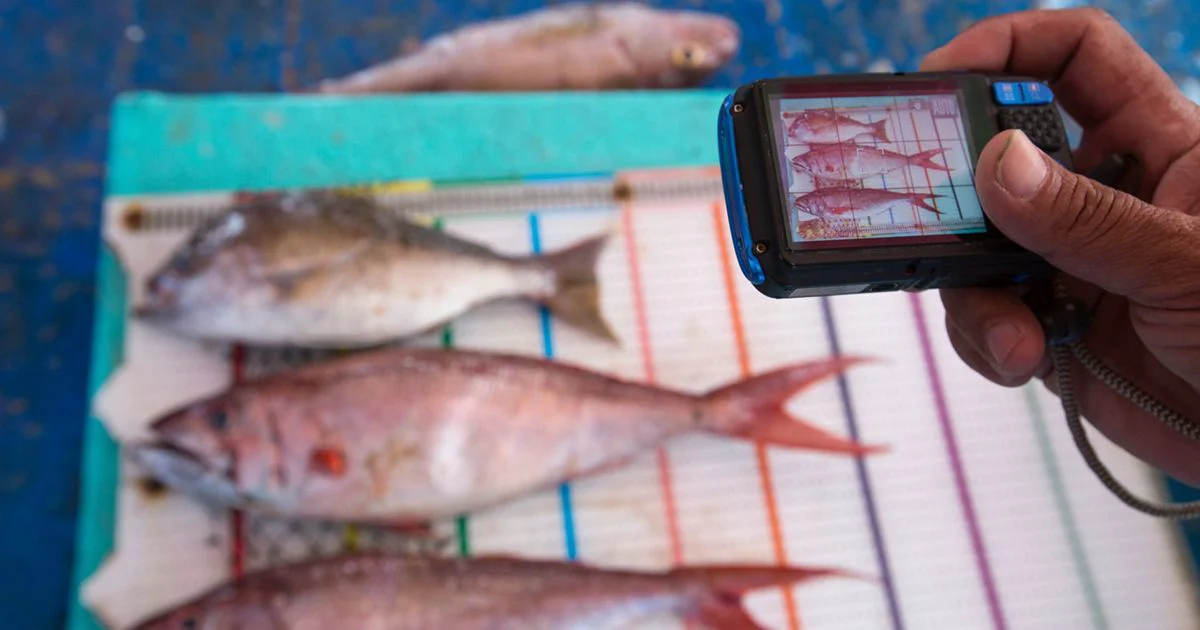
FishFace is a conservation technology initiative developed by The Nature Conservancy Australia, powered by a machine learning engine built by Refind Technologies — a Swedish company specializing in machine vision and deep learning for intelligent sorting. The system uses facial recognition technology to automatically identify fish species and quantities at the point of catch aboard fishing vessels, replacing the need for manual data collection by crew members. The global fishing industry faces a crisis: global peak fish catch occurred in the 1980s and has been declining ever since, with 64% of fisheries now overfished and 90% lacking effective management. The core problem is insufficient data — FishFace directly addresses this by automating the collection of species and volume data at sea. FishFace operates at the moment fish are transferred from the chiller to the hold. Crew members simply photograph the catch using a camera and a specialized measuring board; the machine learning engine handles identification and logging automatically. Collected data is then used to inform fisheries management decisions, supporting sustainable catch limits and protecting the livelihoods of coastal communities. Initially developed and trialed in Indonesia's deep-water snapper and grouper fisheries, the technology is designed to be scalable to fisheries worldwide. FishFace is particularly relevant for fishing-dependent regions where one in 12 people globally rely on fisheries and aquaculture for their livelihood, and three billion people depend on seafood as their primary source of animal protein.
Key Features
- AI-Powered Fish Species Recognition: Uses facial recognition and deep learning to automatically identify fish species from photographs taken aboard fishing vessels, eliminating manual identification errors.
- At-Sea Real-Time Data Collection: Operates directly on fishing vessels at the point of catch transfer, capturing species and quantity data in real time without disrupting normal fishing operations.
- Machine Vision Deep Learning Engine: Powered by Refind Technologies' industrial-grade machine vision platform, originally developed for intelligent sorting in electronics recycling, adapted for marine species classification.
- Fisheries Management Data Pipeline: Automatically collates, organizes, and shares catch data to inform sustainable fisheries management decisions and help regulators set science-based catch limits.
- Global Scalability: Designed and trialed in Indonesian fisheries with architecture built to scale to fishing fleets and fishery types around the world.
Use Cases
- Automated species and quantity logging on commercial fishing vessels to replace manual catch recording
- Providing fisheries regulators and managers with reliable, real-time catch data to set sustainable harvest limits
- Supporting sustainable fisheries certification programs by enabling verifiable, data-backed catch documentation
- Monitoring bycatch (unintended species capture) to help fleets reduce waste and comply with environmental regulations
- Scaling fisheries data collection in developing nations where monitoring infrastructure is limited or nonexistent
Pros
- Addresses a Critical Global Data Gap: 90% of the world's fisheries have no effective management due to lack of data — FishFace directly solves the data collection bottleneck at its source.
- Minimal Burden on Fishing Crews: The system requires only a simple photograph from crew members; all identification and logging is handled automatically by the AI engine.
- Backed by Proven Conservation Expertise: Developed by The Nature Conservancy and funded by a $750,000 Google Impact Challenge grant, providing strong institutional credibility and research backing.
Cons
- Hardware Dependency: Requires physical device deployment on individual fishing vessels, creating logistical and cost challenges for large-scale rollout across diverse global fishing fleets.
- Limited Initial Species Coverage: The machine learning model was initially trained on Indonesian deep-water snapper and grouper species; expanding to other fisheries requires additional training data and trials.
- Still in Development and Trial Phase: As of the available information, FishFace was still undergoing hardware testing and machine learning development, meaning broad availability remains uncertain.
Frequently Asked Questions
What is FishFace?
FishFace is a machine learning device developed by The Nature Conservancy Australia that uses facial recognition technology to automatically identify the species and quantities of fish caught at sea, providing the data needed for sustainable fisheries management.
How does FishFace work?
A crew member aboard a fishing vessel photographs the catch using a digital camera and a specialized measuring board. The machine learning engine — developed by Refind Technologies — processes the image to identify species and log quantities, automatically building a catch record.
Where is FishFace being deployed?
FishFace is initially being developed and trialed in Indonesia's deep-water snapper and grouper fisheries. The long-term goal is to roll out the technology to fisheries around the world.
Who built the technology behind FishFace?
The Nature Conservancy Australia leads the project, while the machine learning engine is built by Refind Technologies, a Swedish company specializing in machine vision and deep learning for intelligent sorting solutions.
Why is FishFace important for global fisheries?
Global fish catch has been declining since the 1980s, with 64% of fisheries overfished and 90% lacking effective management — primarily due to insufficient catch data. FishFace automates data collection to give fisheries managers the information they need to implement sustainable practices and protect the three billion people who rely on seafood as their primary protein source.