

About
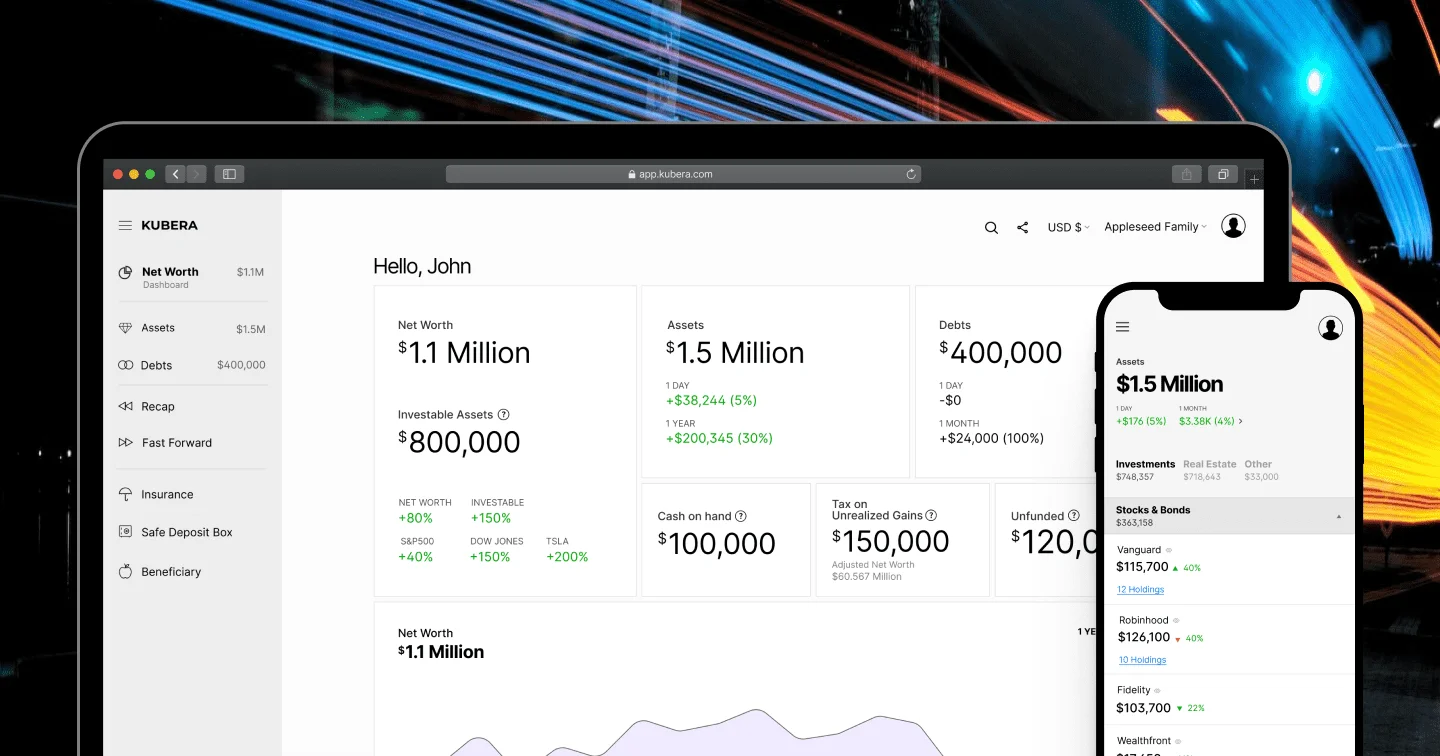
Kubera is a premium personal finance and net worth tracking tool designed for individuals who self-manage significant or complex wealth. Unlike generic budgeting apps, Kubera functions as a true balance sheet — aggregating every asset class you own into one clear view. It connects to thousands of banks and brokerage institutions worldwide via multiple aggregation partners, and its smart algorithm selects the most reliable connector for each institution automatically. Beyond traditional finance, Kubera offers deep support for digital assets including DeFi positions, NFTs, staking rewards, and stablecoin categorization. For alternative investments, it integrates directly with Carta and similar platforms to track LP positions, capital calls, distributions, and IRR. Physical assets like real estate, vehicles, jewelry, and commodities are kept current through live price feeds and AI-powered appraisals. For users with private equity or PDF-based statements, the AI Import feature extracts structured data from uploaded documents and screenshots automatically. Kubera also handles complex multi-entity structures — holding companies, trusts, subsidiaries — using nested portfolios that roll up into a unified net worth view. Multi-currency support is first-class, and a collaboration feature (Multiplayer) allows family members or financial assistants to access the account. A White Label option is available for advisors and institutions. The platform costs $250/year with a 14-day free trial.
Key Features
- Universal Asset Aggregation: Connects to thousands of global banks, brokerages, and crypto exchanges via multiple aggregators, with a smart algorithm picking the best connector per institution.
- AI Import for Private Documents: Upload PDFs or screenshots of statements from alt investments or private equity and AI automatically extracts and structures your holdings data.
- Deep Digital Asset Support: Tracks DeFi, NFTs, staking, lending, wallets, and exchanges — going far beyond basic crypto balance tracking.
- Multi-Entity & Ownership Structures: Manage separate balance sheets for trusts, LLCs, holding companies, and partnerships using nested portfolios that roll up into one unified net worth view.
- Multi-Currency & Global Support: First-class multi-currency support across all major stock exchanges in the US, Canada, UK, Europe, and Asia, designed for globally distributed wealth.
Use Cases
- High-net-worth individuals tracking diversified portfolios across stocks, real estate, crypto, and private equity in one dashboard.
- Entrepreneurs and founders managing wealth held across multiple legal entities such as LLCs, trusts, and holding companies.
- Crypto-native investors monitoring DeFi positions, staking rewards, NFTs, and exchange balances alongside traditional assets.
- Globally mobile professionals managing bank accounts, investments, and assets across multiple countries and currencies.
- Family offices or wealth advisors using the White Label version to provide unified balance sheet reporting to clients.
Pros
- Truly Unified View: Rare ability to combine traditional finance, crypto, alternatives, physical assets, and complex entity structures in one place — replacing error-prone spreadsheets.
- Best-in-Class Connectivity: Uses multiple aggregation providers with intelligent routing, resulting in more reliable bank and brokerage connections than single-provider competitors.
- Designed for Complexity: Handles capital calls, LP IRR, Carta integrations, and nested entities — purpose-built for high-net-worth individuals with non-trivial portfolios.
Cons
- Paid-Only After Trial: At $250/year, there is no free tier — making it less accessible for users with simpler financial situations or smaller portfolios.
- Not a Budgeting Tool: Kubera focuses on net worth and balance sheet tracking, not day-to-day spending, budgeting, or cash flow analysis.
- Learning Curve for Complex Features: Advanced features like nested entities, LP tracking, and DeFi categorization may require setup time and financial familiarity to use effectively.
Frequently Asked Questions
How much does Kubera cost?
Kubera costs $250 per year, regardless of the size of your portfolio. A 14-day free trial is available with no credit card required upfront.
Does Kubera support cryptocurrency and DeFi?
Yes. Kubera offers comprehensive crypto support including DeFi positions, NFTs, staking rewards, lending activities, and major exchanges and wallets. Stablecoins are categorized as cash equivalents.
Can I track alternative investments and private equity in Kubera?
Yes. Kubera integrates with Carta and other platforms for LP positions, and its AI Import feature can extract data from private equity PDFs and statements automatically.
Does Kubera support multiple currencies and international accounts?
Yes. Kubera is built for multi-currency wealth management and supports banks and brokerages across the US, Canada, UK, Europe, Asia, and beyond.
Can I share my Kubera account with my financial advisor or family?
Yes. Kubera's Multiplayer feature allows you to collaborate with family members or financial assistants. A White Label option is also available for advisors and institutions.