
About
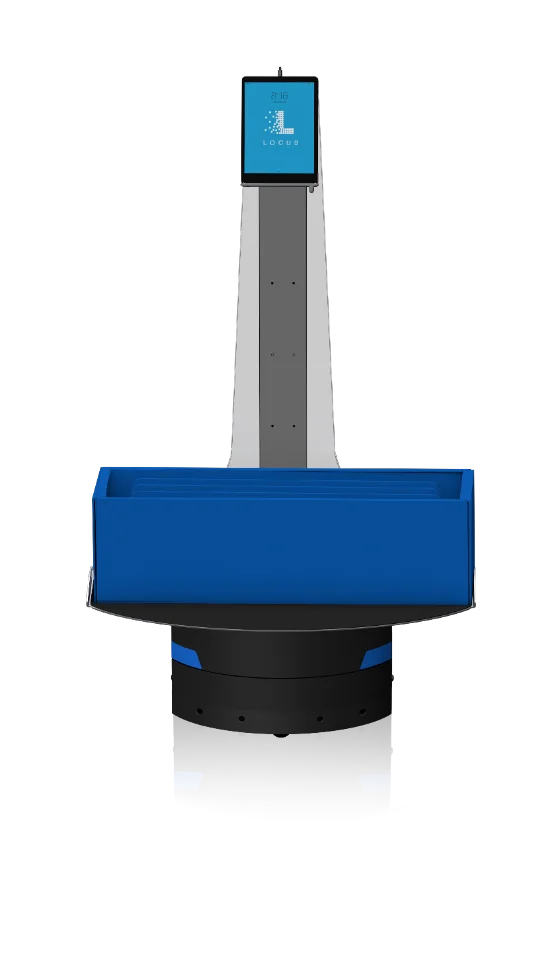
Locus Robotics delivers enterprise-grade warehouse automation through a fleet of AI-driven Autonomous Mobile Robots (AMRs) and the LocusONE data science platform. Designed for high-volume fulfillment environments, Locus robots work alongside human workers to handle picking, putaway, transport, and mezzanine management tasks — increasing productivity by 2–3x without requiring a full facility overhaul. The LocusONE platform serves as the intelligence layer, providing AI and business intelligence capabilities for enterprise-wide AMR deployments, performance management, and real-time operational decision-making. It includes modules such as Locus Fleet, Locus Array, Locus Origin, and Locus Vector, enabling end-to-end visibility and control. Locus Robotics serves a broad range of industries including third-party logistics (3PL), retail and eCommerce, healthcare, food distribution, apparel and footwear, and wholesale distribution. The company offers a Robots-as-a-Service (RaaS) model, enabling rapid deployment without large upfront capital expenditure. With a flexibility-first philosophy, Locus solutions are built to adapt to unpredictable demand surges, changing SKU profiles, and labor variability — making them well-suited for modern supply chain challenges. The company emphasizes rapid deployment, ongoing customer success support, and a strong focus on worker health and safety.
Key Features
- AI-Powered Autonomous Mobile Robots: A fleet of AMRs autonomously navigates warehouse floors to assist with picking, putaway, transport, and mezzanine management, working alongside human associates.
- LocusONE Platform: A data science-driven software platform providing enterprise-wide AMR orchestration, real-time performance management, AI analytics, and business intelligence.
- Flexibility-First Automation: Adapts dynamically to demand fluctuations, changing SKU profiles, and labor variability without requiring rigid fixed infrastructure.
- Robots-as-a-Service (RaaS) Model: Subscription-based deployment model that eliminates large upfront capital costs and enables rapid go-live with ongoing support included.
- Multi-Industry Support: Purpose-built solutions for 3PL, retail and eCommerce, healthcare, food distribution, apparel, and wholesale distribution industries.
Use Cases
- Third-party logistics (3PL) providers scaling fulfillment operations to handle peak demand seasons without proportionally increasing headcount.
- Retail and eCommerce warehouses needing to increase picking speed and order accuracy to meet next-day delivery expectations.
- Healthcare distributors requiring precise, high-throughput fulfillment of medical supplies across large distribution centers.
- Wholesale food distributors managing high SKU variability and tight delivery windows with AI-driven automated sortation and transport.
- Apparel and footwear brands optimizing omnichannel fulfillment by automating returns processing, putaway, and pick operations.
Pros
- 2–3x Productivity Gains: Proven to significantly increase warehouse throughput without a full facility redesign, delivering measurable ROI.
- Rapid Deployment: The RaaS model and flexible platform enable fast deployment, reducing time-to-value compared to traditional automation capital projects.
- Real-Time Adaptability: The AI platform continuously adjusts to live operational conditions — demand spikes, labor shifts, and changing order profiles — without manual intervention.
- Human-Robot Collaboration: Robots are designed to work alongside existing associates, improving safety and ergonomics rather than fully replacing the workforce.
Cons
- Enterprise-Focused Pricing: The solution is designed for high-volume, enterprise-scale warehouses; smaller operations may find the cost and complexity prohibitive.
- Requires Physical Infrastructure Integration: Deployment involves onsite setup, facility mapping, and integration with existing WMS systems, which requires coordination and lead time.
- Vendor Lock-In Risk: Deep integration with the LocusONE platform and proprietary robot fleet may create dependency on Locus Robotics for ongoing operations.
Frequently Asked Questions
What types of warehouse tasks can Locus robots perform?
Locus AMRs support a range of fulfillment tasks including goods picking, putaway, transport between zones, and mezzanine management, operating collaboratively alongside human workers.
What is LocusONE?
LocusONE is Locus Robotics' data science-driven warehouse automation platform that manages enterprise-wide AMR deployments, provides AI-powered analytics, and enables real-time performance monitoring and optimization.
What is the Robots-as-a-Service (RaaS) model?
RaaS is a subscription-based model where customers pay for robot usage over time rather than purchasing hardware outright, reducing upfront costs and including ongoing support and maintenance.
Which industries does Locus Robotics serve?
Locus serves third-party logistics (3PL), retail and eCommerce, healthcare, food distribution, wholesale distribution, apparel and footwear, and industrial sectors.
How quickly can Locus Robotics be deployed?
Locus emphasizes rapid deployment as a key advantage, with the RaaS model and pre-built platform components designed to minimize time-to-live compared to traditional warehouse automation projects.