

About
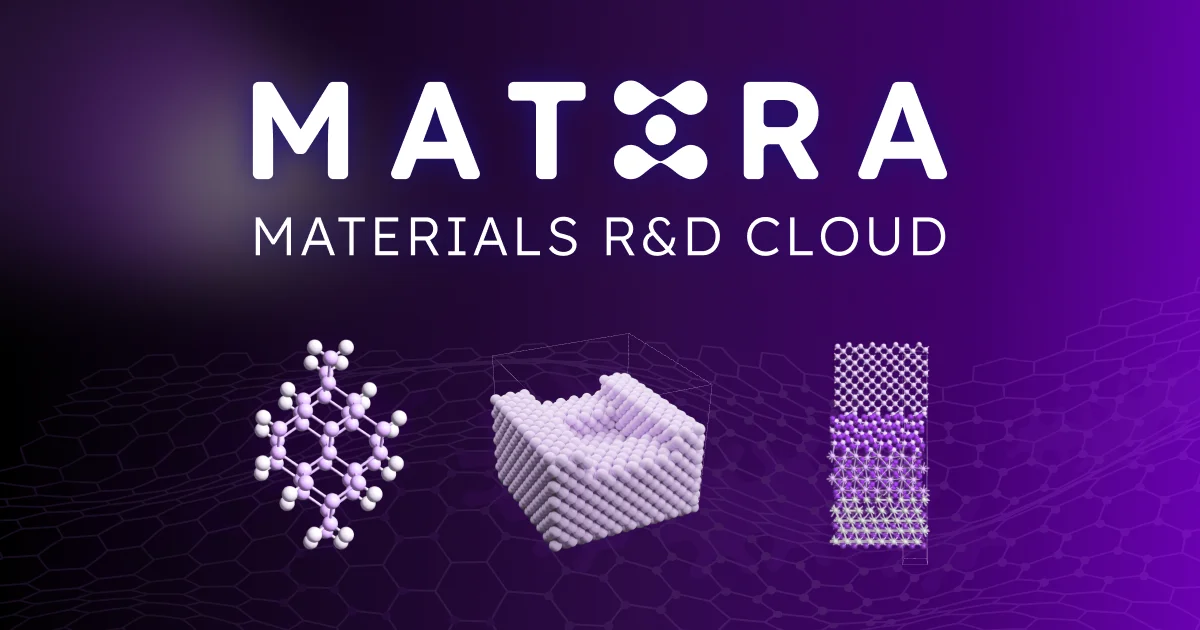
Mat3ra is a global cloud ecosystem purpose-built for materials research and development. It provides chemists, materials scientists, and computational researchers with a modern, browser-based platform to prototype new compounds in-silico, run physics-based simulations, and develop AI/ML predictive models—all within a single searchable and collaborative environment. The platform supports leading simulation engines including Quantum ESPRESSO, VASP, LAMMPS, and GROMACS, and offers secure cloud high-performance computing (HPC) to scale demanding workloads. Users can access Mat3ra through a web interface, command-line interface, remote desktop, or RESTful API, making it flexible for both novice and experienced computational scientists. Key capabilities include an in-browser materials structure designer, a web-based workflow builder for interoperable modeling pipelines, open-source data standards for organizing materials data, and advanced analytics and machine learning infrastructure. The platform emphasizes secure collaboration, supporting teamwork within and across organizations with encrypted data and network partitioning. Mat3ra is used across academia and industry—from investigating solid-state battery electrolytes to surface catalysis with AI—enabling research teams to reduce time-to-insight, onboard new users faster, and bridge the gap between experiment and computational theory. With over 64,000 materials stored and 250,000+ properties predicted, Mat3ra provides a proven, scalable foundation for accelerating modern materials science.
Key Features
- Multi-Engine Simulation Support: Run simulations using Quantum ESPRESSO, VASP, LAMMPS, GROMACS, and other leading engines directly from the cloud platform.
- In-Browser Materials Designer: Build and visualize crystal structures and molecular configurations through an integrated browser-based design environment.
- AI/ML Model Building Infrastructure: Leverage advanced machine learning and data analytics tools to build predictive models for material properties without leaving the platform.
- Cloud High-Performance Computing: Access fast and secure cloud HPC resources to scale computationally intensive simulations on demand.
- Secure Team Collaboration: Collaborate within and between research teams with encrypted data, network partitioning, and shared workflow environments.
Use Cases
- Computational materials scientists running DFT simulations to predict electronic, structural, or thermodynamic properties of new compounds.
- Research teams investigating next-generation battery electrolytes or catalysts by combining high-throughput simulations with machine learning models.
- University groups onboarding students and postdocs into nanoscale simulation workflows using a standardized, accessible cloud environment.
- Industrial R&D teams accelerating materials discovery by prototyping new compounds in-silico before committing to physical experiments.
- Research collaborations bridging experimental data (e.g., STEM imaging) and computational theory through integrated simulation and ML pipelines.
Pros
- All-in-One Research Environment: Combines structure design, simulation execution, data management, and ML model building in a single unified platform, eliminating tool fragmentation.
- Supports Industry-Standard Engines: Integrates directly with widely-used simulation codes like VASP and Quantum ESPRESSO, enabling scientists to use familiar tools without infrastructure overhead.
- Scalable Cloud HPC Access: Provides on-demand high-performance computing resources, allowing small teams to run large-scale simulations without investing in local hardware.
- Fast Onboarding for New Users: The modern, accessible interface significantly reduces the time needed to train new researchers in nanoscale and computational modeling workflows.
Cons
- Highly Domain-Specific: Mat3ra is exclusively designed for materials science and chemistry, making it irrelevant to users outside computational research fields.
- Learning Curve for Simulation Setup: Despite a modern UI, users unfamiliar with materials simulation concepts (DFT, force fields, etc.) may still face a steep technical learning curve.
- Cost at Scale: While a free tier exists, large-scale HPC usage and advanced features likely require paid plans, which may be a barrier for smaller academic groups.
Frequently Asked Questions
What simulation engines does Mat3ra support?
Mat3ra supports Quantum ESPRESSO, VASP, LAMMPS, GROMACS, and other simulation engines, all accessible directly from the cloud platform.
Is there a free plan available?
Yes, Mat3ra offers open access and a free account option. Paid plans are available for teams and organizations requiring more compute resources and advanced features.
Can I collaborate with external researchers on Mat3ra?
Yes, the platform supports secure collaboration within and between accounts, enabling both internal team workflows and cross-institutional research partnerships.
How can I access Mat3ra beyond the browser?
Mat3ra provides a command-line interface (CLI), remote desktop access, and a RESTful API, giving users flexibility to integrate with existing scripts and pipelines.
What kinds of AI/ML capabilities does Mat3ra offer?
Mat3ra includes advanced data analytics and machine learning infrastructure for building predictive models of material properties, including support for high-throughput simulation-informed ML workflows.