

About
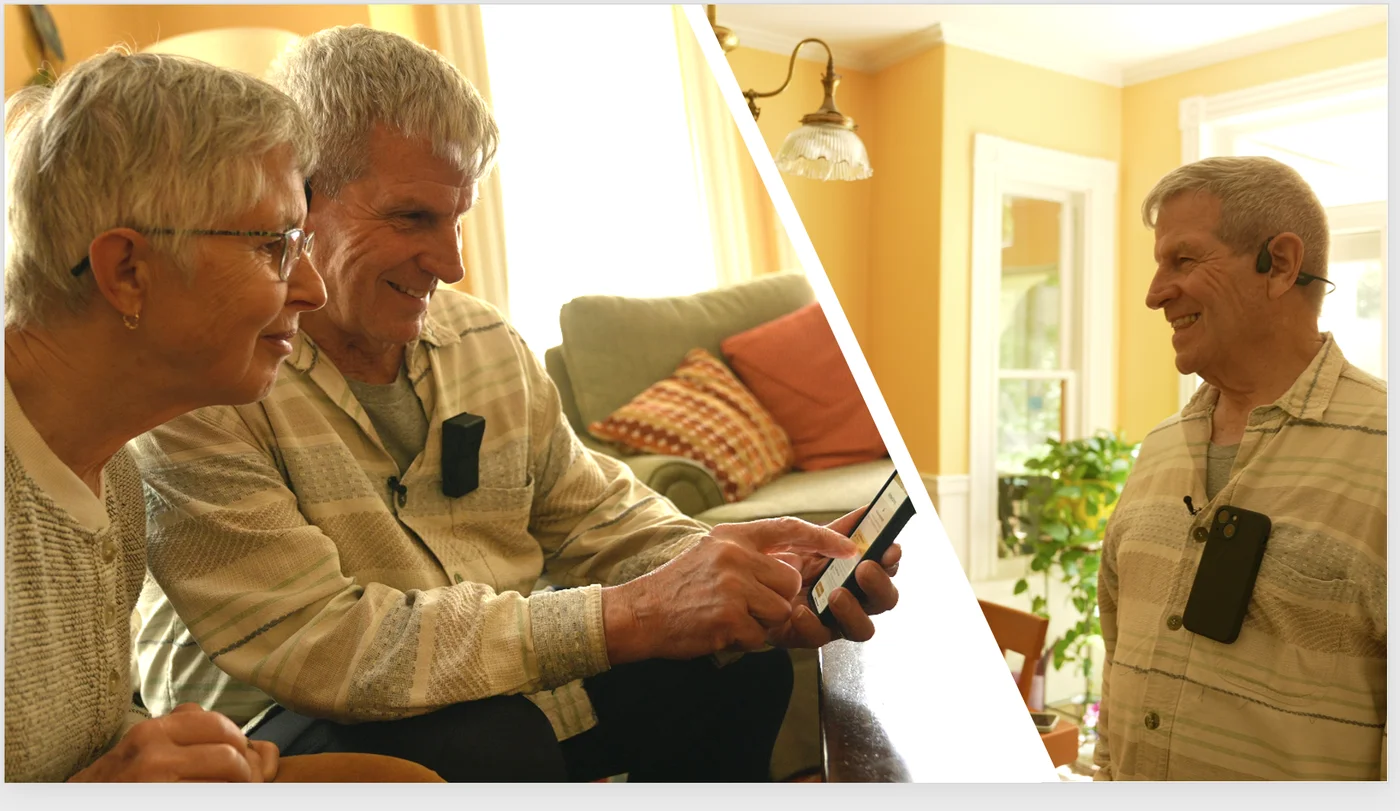
MemPal is a research project from MIT Media Lab's Fluid Interfaces group designed to address the growing challenge of cognitive decline in aging populations. It is a wearable voice-based memory assistant that helps older adults live more independently at home while simultaneously reducing the burden on their caregivers. The system uses a wearable camera and on-device AI to continuously log the user's actions in real time based on visual context — critically, without storing any image data, preserving user privacy. This activity log powers three core capabilities: object retrieval (e.g., "Hey Pal, where is my phone?"), context-aware proactive safety reminders (e.g., "You may have forgotten to turn off the stove"), and automatic medication or task tracking. A companion mobile app allows remote caregivers to monitor activity completion and receive summarized daily diaries of the user's behavior — information that can also be shared with physicians to better understand patient routines at home. MemPal was evaluated in a real-world study with 15 adults aged 65 and older, demonstrating measurable improvement in object-finding performance with audio-based assistance compared to no aid, along with positive user perceptions. The project was accepted to IUI'25 and represents a meaningful step toward AI-powered assistive technologies tailored to the needs of older adults and their caregivers.
Key Features
- Voice-Based Object Retrieval: Users can ask simple voice queries like "Hey Pal, where is my phone?" to locate misplaced objects based on the automatically logged activity history.
- Proactive Safety Reminders: MemPal issues context-aware safety alerts — such as reminding users they may have left the stove on or already taken their medication — reducing accident risks.
- Privacy-Preserving Activity Logging: A wearable camera captures visual context to log actions in real time without storing any image data, ensuring user privacy throughout the process.
- Caregiver Remote Monitoring App: A companion mobile app lets caregivers track task completion and receive automatically generated daily activity summaries for their loved ones.
- Automatic Activity Diary Generation: MemPal compiles summarized diaries of daily behavior that can assist physicians and caregivers in understanding patient routines at home.
Use Cases
- An elderly adult living alone uses MemPal to locate frequently misplaced items like glasses or keys using simple voice commands throughout the day.
- A caregiver remotely monitors a parent's daily activity log through the MemPal app to ensure medications were taken and safety routines were followed.
- A physician reviews an automatically generated activity diary from MemPal to better understand a patient's at-home behavior patterns between clinic visits.
- An older adult with mild cognitive impairment receives proactive voice reminders from MemPal to turn off the stove or avoid double-dosing on medication.
- Researchers and assistive technology developers study MemPal's open design guidelines to build next-generation wearable cognitive assistance systems for aging populations.
Pros
- Strong Privacy Protections: Visual processing is done without retaining any image data, making it significantly more privacy-preserving than typical camera-based monitoring solutions.
- Reduces Caregiver Burden: Remote monitoring and automated activity summaries give caregivers peace of mind without requiring constant physical presence.
- Research-Validated Design: Tested with 15 real users aged 65+ in home settings, demonstrating practical usability and measurable improvements in object-finding performance.
Cons
- Research Prototype — Not Commercially Available: MemPal is an MIT Media Lab research project and is not yet available as a consumer product, limiting immediate accessibility.
- Requires Wearable Hardware: The system depends on a wearable camera device, which adds setup complexity and may present adoption barriers for some older adults.
- Limited to Home Environments: The current design and testing focus on in-home use, and performance in other environments has not yet been validated.
Frequently Asked Questions
How does MemPal protect user privacy?
MemPal uses a wearable camera to capture visual context for activity logging, but it does not store any image data. Only structured activity logs are retained, ensuring user privacy is preserved.
How do caregivers access activity information?
Caregivers can use the MemPal companion app to remotely monitor task completion and receive automatically generated daily activity summaries of their loved one's behavior.
What kinds of voice queries does MemPal support?
Users can ask natural language questions such as "Hey Pal, where is my phone?" to retrieve the last known location of objects. The system also proactively issues voice reminders for safety-critical actions like medication or turning off appliances.
Has MemPal been tested with real users?
Yes. MemPal was tested in the homes of 15 older adults aged 65 and above. The study showed improved object-finding performance with audio-based assistance and positive overall user perceptions. The research was accepted to IUI'25.
Is MemPal available to the public?
MemPal is currently an academic research project from MIT Media Lab's Fluid Interfaces group and is not yet commercially available. For research inquiries, contact [email protected].