About
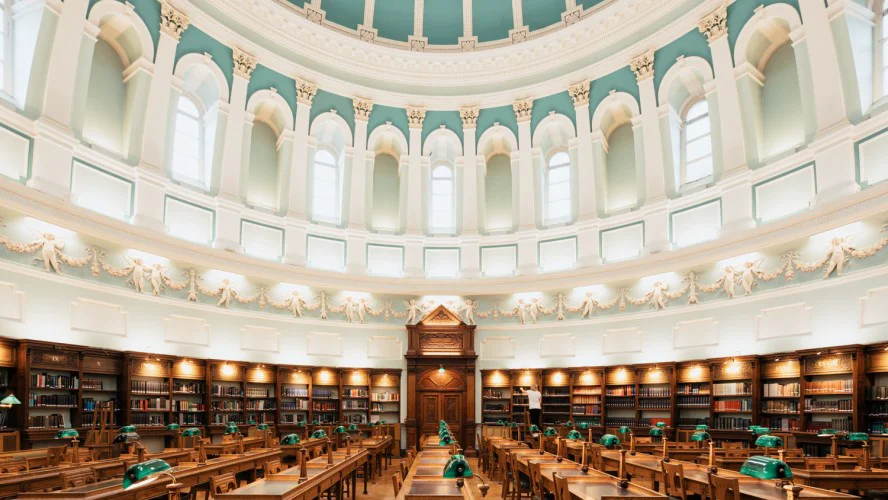
The National Library of Ireland (NLI) is Ireland's premier public research institution, dedicated to collecting, protecting, and making accessible the nation's recorded heritage. With over 12 million items spanning books, serials, newspapers, manuscripts, photographs, prints and drawings, maps, music, ephemera, and born-digital archives, the NLI serves as an indispensable resource for researchers, students, genealogists, and lifelong learners. Users can search the online catalogue, order materials digitally, and access a growing range of e-resources and digitised collections from anywhere in the world. The Family History Service is a standout offering, helping individuals trace Irish ancestry through Catholic Parish Registers and other historical records. The Irish Queer Archive and Web Archive further demonstrate the NLI's commitment to preserving diverse facets of Irish society. Physical visitors to the Kildare Street premises in Dublin can apply for a free Reader's Ticket to access the reading rooms. Regular events including exhibitions, director's tours, courses, and podcasts enrich the cultural experience. Educational programmes cater to primary, post-primary, third-level, and lifelong learners, as well as language schools. The NLI is a registered charity and welcomes donations to support its preservation mission.
Key Features
- Online Catalogue Search: Search across millions of books, serials, manuscripts, photographs, maps, and digital archives from anywhere in the world.
- Family History Service: Dedicated genealogy research support including access to Catholic Parish Registers and historical census records to trace Irish ancestry.
- Digitised & Born-Digital Collections: Explore digitised rare items alongside a growing Web Archive and Born Digital Archives, making heritage accessible online.
- Educational Resources: Structured learning materials and programmes for primary, post-primary, third-level, and lifelong learners, including language schools.
- Exhibitions & Events: Regular in-person and online exhibitions, director-led tours, courses, and podcasts celebrating Irish culture and heritage.
Use Cases
- Researching Irish history and culture using digitised manuscripts, newspapers, and rare books from the online catalogue.
- Tracing family ancestry through the Family History Service, Catholic Parish Registers, and census records.
- Supporting academic research at third-level by accessing e-resources, scholarly texts, and archival materials.
- Attending or viewing online exhibitions and events to engage with Irish literary and cultural heritage.
- Developing school curricula and lesson plans using the NLI's primary, post-primary, and TY educational resources.
Pros
- Free Public Access: A free Reader's Ticket grants access to physical reading rooms, and much of the online catalogue and resources are freely available without registration.
- Vast & Diverse Collection: Over 12 million items spanning centuries of Irish history, culture, and society — from medieval manuscripts to born-digital archives.
- Specialised Genealogy Support: The Family History Service provides expert assistance and access to records unavailable elsewhere, making it invaluable for Irish ancestry research.
Cons
- Physical Access Limited to Dublin: Full access to the reading rooms and physical collections requires visiting the Kildare Street location in Dublin, which is not practical for international users.
- Not All Items Digitised: While digitisation is ongoing, many items still require an in-person visit to access, limiting remote research for some collections.
Frequently Asked Questions
How do I access the National Library of Ireland's collections?
You can search the online catalogue at nli.ie for free. To access physical materials in the reading rooms, you need to apply for a free Reader's Ticket at the Kildare Street premises in Dublin.
Is the National Library of Ireland free to use?
Yes. Admission to reading rooms is free with a Reader's Ticket, and online catalogue access, many digitised resources, and educational materials are available at no cost.
Can I use the NLI for family history and genealogy research?
Absolutely. The NLI offers a dedicated Family History Service, access to Catholic Parish Registers, and support for further genealogical research, both in person and online.
What types of materials does the NLI hold?
The NLI's collection includes books, serials, newspapers, official publications, manuscripts, photographs, prints and drawings, ephemera, maps, music, web archives, born-digital archives, and the Irish Queer Archive.
Does the NLI offer educational programmes?
Yes. The NLI provides learning resources and programmes tailored to primary, post-primary, third-level students, lifelong learners, language schools, and Transition Year students through initiatives like Poetry Aloud and TY: REVEAL.