

About
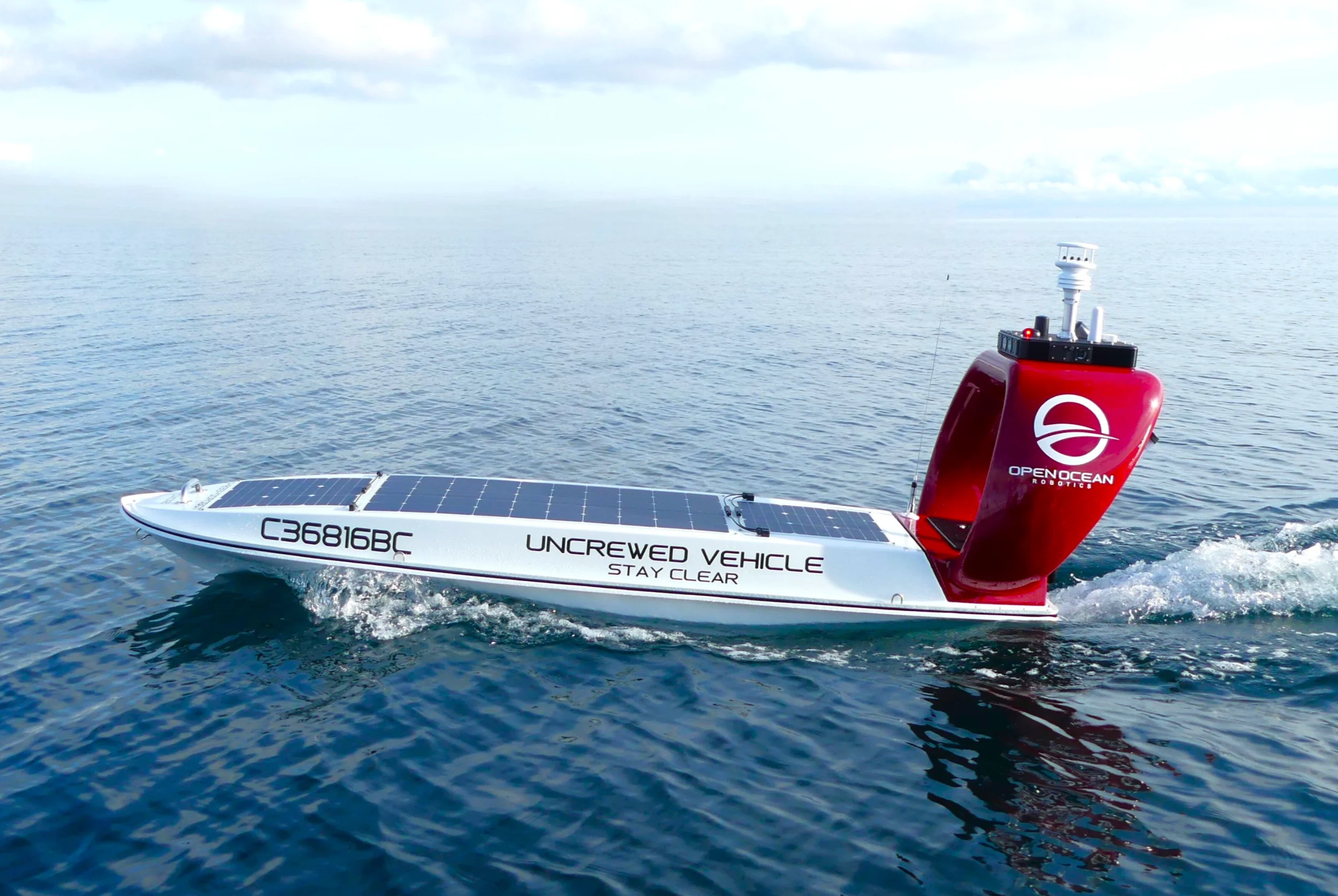
Open Ocean Robotics pioneers autonomous ocean intelligence through its fleet of solar-powered uncrewed surface vehicles (USVs). The company's flagship DataXplorer series includes specialized variants — DataXplorer Protect, Enviro, Listen, Survey, and METOC — each purpose-built for missions ranging from coastal surveillance and illegal fishing enforcement to marine mammal monitoring, hydrographic surveys, and meteorological data collection. All vehicles are designed for high sea state operation, zero-emission performance, and persistent deployment in the world's most remote and challenging waters. The XplorerView Mission Portal provides operators with a single dashboard for real-time data, fleet management, and autonomous command. Edge AI tools onboard deliver real-time vision and acoustic intelligence, enabling detection of vessels, hazards, and underwater activities without requiring crew at sea. Markets served include Defence & Security (ISR and patrol), Research & Environment (climate, water quality, and wildlife monitoring), Offshore & Industry (site assessments, asset security, and weather monitoring), and Harbours & Ports (autonomous port security and environmental compliance). The platform is validated by major organizations including the US Defense Innovation Unit and commercial clients across multiple case studies. Open Ocean Robotics is ideal for government agencies, research institutions, offshore energy companies, and port operators looking to reduce operational risk, lower costs, and extend maritime situational awareness without exposing crew to hazardous conditions.
Key Features
- DataXplorer USV Fleet: A modular family of solar-powered, high-sea-state-capable uncrewed surface vehicles with variants for protection, environmental sensing, acoustic listening, hydrographic surveying, and meteorological data collection.
- XplorerView Mission Portal: A unified web dashboard for real-time data ingestion, fleet command, and autonomous mission oversight across multiple deployed USVs simultaneously.
- Edge AI Tools: Onboard AI delivers real-time vision and acoustic intelligence, enabling autonomous detection of vessels, hazards, marine mammals, and other targets without ground-truth human operators at sea.
- Zero-Emission Persistent Operations: Solar-powered propulsion allows USVs to operate continuously in remote regions for extended periods without refueling or crew rotation, reducing both cost and environmental impact.
- Multi-Mission Versatility: A single platform architecture supports both maritime security missions (coastal patrol, illegal fishing enforcement) and environmental missions (wildlife monitoring, water quality, climate data), maximizing asset utilization.
Use Cases
- Coastal surveillance and illegal fishing enforcement for coast guard and naval defence agencies seeking persistent maritime domain awareness without risking crew.
- Marine mammal monitoring and seagrass mapping for research institutions and environmental agencies requiring continuous, low-impact data collection in remote ocean regions.
- Hydrographic surveying and bathymetric mapping for government or commercial survey operators conducting nautical charting in challenging or hazardous waters.
- Port and harbour security monitoring using AI-driven vessel detection and underwater activity surveillance to protect critical maritime infrastructure.
- Offshore energy site assessments, protected species observation, and weather monitoring to support safe and cost-effective offshore operations without deploying crewed vessels.
Pros
- Crew Safety Eliminated: Fully uncrewed operation removes personnel from dangerous offshore and high-sea-state environments, dramatically reducing operational risk.
- Significantly Lower Cost: Solar-powered autonomous vessels operate at a fraction of the cost of traditional crewed research or patrol vessels, enabling more frequent and longer missions.
- Validated by Defense & Government: Recognized by the US Defense Innovation Unit and deployed in real-world government and commercial case studies, providing proven operational credibility.
- Dual-Use Platform: The same USV infrastructure serves both security and scientific missions, giving operators flexibility to maximize return on investment across different use cases.
Cons
- Hardware-Dependent Solution: Deployment requires physical USV assets, logistics, and maritime operational expertise, which increases the complexity and lead time compared to purely software-based solutions.
- High Capital Investment: Purchasing or leasing a USV fleet involves significant upfront costs, making the platform most accessible to well-funded government, defense, or industrial organizations.
- Limited to Surface and Near-Surface Operations: As surface vehicles, they cannot independently perform deep-water subsea inspection or operations without additional underwater assets.
Frequently Asked Questions
What is the DataXplorer and what variants are available?
The DataXplorer is Open Ocean Robotics' flagship USV platform. It comes in five mission-specific variants: Protect (security/ISR), Enviro (environmental monitoring), Listen (acoustic/underwater sensing), Survey (hydrographic mapping), and METOC (meteorological and oceanographic data). A DX Solar Station variant is also available for stationary deployments.
How long can Open Ocean Robotics USVs operate without human intervention?
The solar-powered USVs are designed for persistent, long-endurance operations, capable of running continuously without refueling. The exact endurance depends on sea state, solar conditions, and mission payload, but the platform is engineered to operate in remote regions over extended periods.
What AI capabilities are built into the platform?
The USVs feature onboard edge AI that provides real-time computer vision and acoustic intelligence. This enables autonomous detection and classification of vessels, marine mammals, hazards, and other targets, with results streamed to the XplorerView mission portal.
Which industries and organizations does Open Ocean Robotics serve?
The platform serves four primary markets: Defence & Security (coast guards, navies, law enforcement), Research & Environment (universities, environmental agencies), Offshore & Industry (offshore energy, survey companies), and Harbours & Ports (port authorities and terminal operators).
Can multiple USVs be managed simultaneously?
Yes. The XplorerView Mission Portal is built for fleet operations, providing a single dashboard to manage, monitor, and issue commands to multiple USVs concurrently, enabling coordinated autonomous fleet missions.