

About
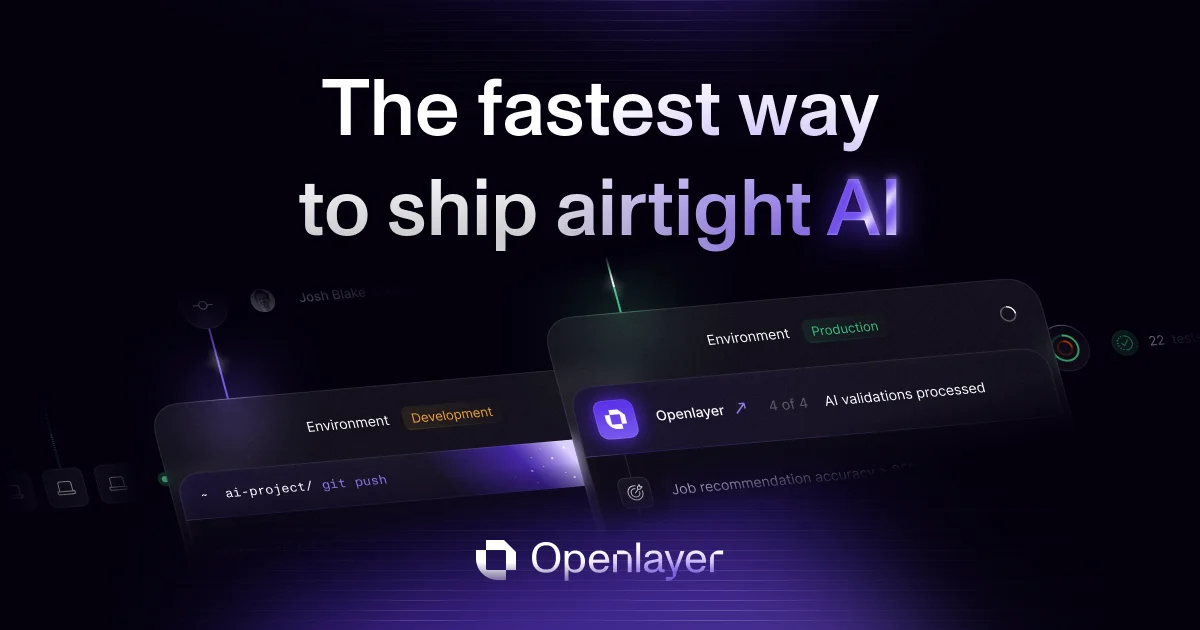
Openlayer is a comprehensive AI governance and observability platform built for enterprise teams deploying machine learning and large language model systems. It bridges the gap between AI prototyping and production by offering continuous CI/CD validation, real-time production monitoring, and automated regulatory compliance. The platform supports both traditional ML and LLM pipelines, providing 100+ automated tests to evaluate model performance, safety, hallucination rates, latency, and output quality. Real-time guardrails actively prevent prompt injection, PII leakage, hallucinations, and discriminatory outputs before they impact end users. Openlayer integrates natively with OpenAI, Anthropic, GitHub Copilot, OpenTelemetry, and Snowflake, making it easy to embed into existing AI development workflows. Teams can monitor production requests in real-time, detect issues within minutes, and collaborate directly within the platform through activity logs and inline comments. For regulatory compliance, Openlayer automates alignment with ISO/IEC 42001, OWASP, NIST, and the EU AI Act, dramatically reducing governance overhead for regulated industries. Data quality monitoring connects to existing pipelines to detect schema changes, data drift, and anomalies before they reach models. Openlayer is trusted by AI teams at companies like eBay, Hurb, and Cutshort, and is ideal for MLOps engineers, AI developers, and compliance officers who need to maintain trust and control over production AI systems.
Key Features
- Real-Time Production Monitoring: Observe and monitor AI system requests in real-time, catching issues in production and enabling rapid remediation within minutes.
- Security Guardrails: Actively prevent prompt injection, PII leakage, hallucinations, and discriminatory outputs with automated real-time guardrails.
- CI/CD Validation: Run 100+ automated tests as part of your deployment pipeline to validate ML and LLM systems before they reach production.
- Automated Compliance: Align AI systems with ISO/IEC 42001, OWASP, NIST, and EU AI Act standards automatically, reducing governance overhead for regulated industries.
- Data Quality Monitoring: Connect data pipelines and automatically test for schema changes, drift, and anomalies before bad data reaches your models.
Use Cases
- Validating LLM output quality, safety, and latency thresholds before shipping new model versions to production via CI/CD pipelines
- Monitoring enterprise AI deployments in real-time to detect and block prompt injection attacks, PII leakage, and hallucinations
- Automating compliance reporting and audit trails for EU AI Act, NIST, and ISO/IEC 42001 requirements in regulated industries
- Running automated data quality checks on ML training and inference pipelines to catch schema drift and anomalies early
- Enabling cross-functional AI teams to collaborate on model evaluation with shared activity logs, test results, and inline comments
Pros
- Broad Native Integrations: First-class integrations with OpenAI, Anthropic, GitHub Copilot, OpenTelemetry, and Snowflake make adoption frictionless for modern AI stacks.
- Comprehensive Automated Testing: 100+ automated tests covering latency, accuracy, safety, and compliance give teams deep confidence across the full model lifecycle.
- Built-In Regulatory Compliance: Automated alignment with EU AI Act, NIST, OWASP, and ISO/IEC 42001 significantly reduces the compliance burden for regulated enterprises.
- Unified Governance Workflow: Activity logs, inline collaboration, and deployment status tracking consolidate AI oversight into a single platform for the entire team.
Cons
- Enterprise-Oriented Pricing: Pricing is not publicly listed and requires a demo request, making it harder for smaller teams or individuals to evaluate cost upfront.
- Onboarding Complexity: The breadth of governance, compliance, and monitoring features may require significant setup time and expertise for teams new to MLOps.
- Primarily Cloud-Based: Teams with strict on-premises data residency requirements may face limitations given the platform's cloud-native architecture.
Frequently Asked Questions
What types of AI systems does Openlayer support?
Openlayer supports both traditional machine learning (ML) systems and large language model (LLM) systems, covering the full spectrum of modern AI deployments from classical models to generative AI applications.
Which compliance standards does Openlayer automate?
Openlayer automates alignment with ISO/IEC 42001, OWASP, NIST AI Risk Management Framework, and the EU AI Act, helping organizations meet major international AI governance requirements with minimal manual effort.
How does Openlayer protect against AI security threats?
Openlayer deploys real-time guardrails that actively detect and block prompt injection attacks, PII leakage, hallucinations, and discriminatory outputs in production, preventing these risks from reaching end users.
Which tools and platforms does Openlayer integrate with?
Openlayer offers native integrations with OpenAI, Anthropic, GitHub Copilot, OpenTelemetry (OTel), and Snowflake, and is designed to fit into existing AI development and data engineering workflows without friction.
Can Openlayer be used in automated CI/CD pipelines?
Yes. Openlayer is built with CI/CD integration in mind, allowing teams to run 100+ automated validation tests on every commit or deployment so issues are caught before they reach production environments.