
About
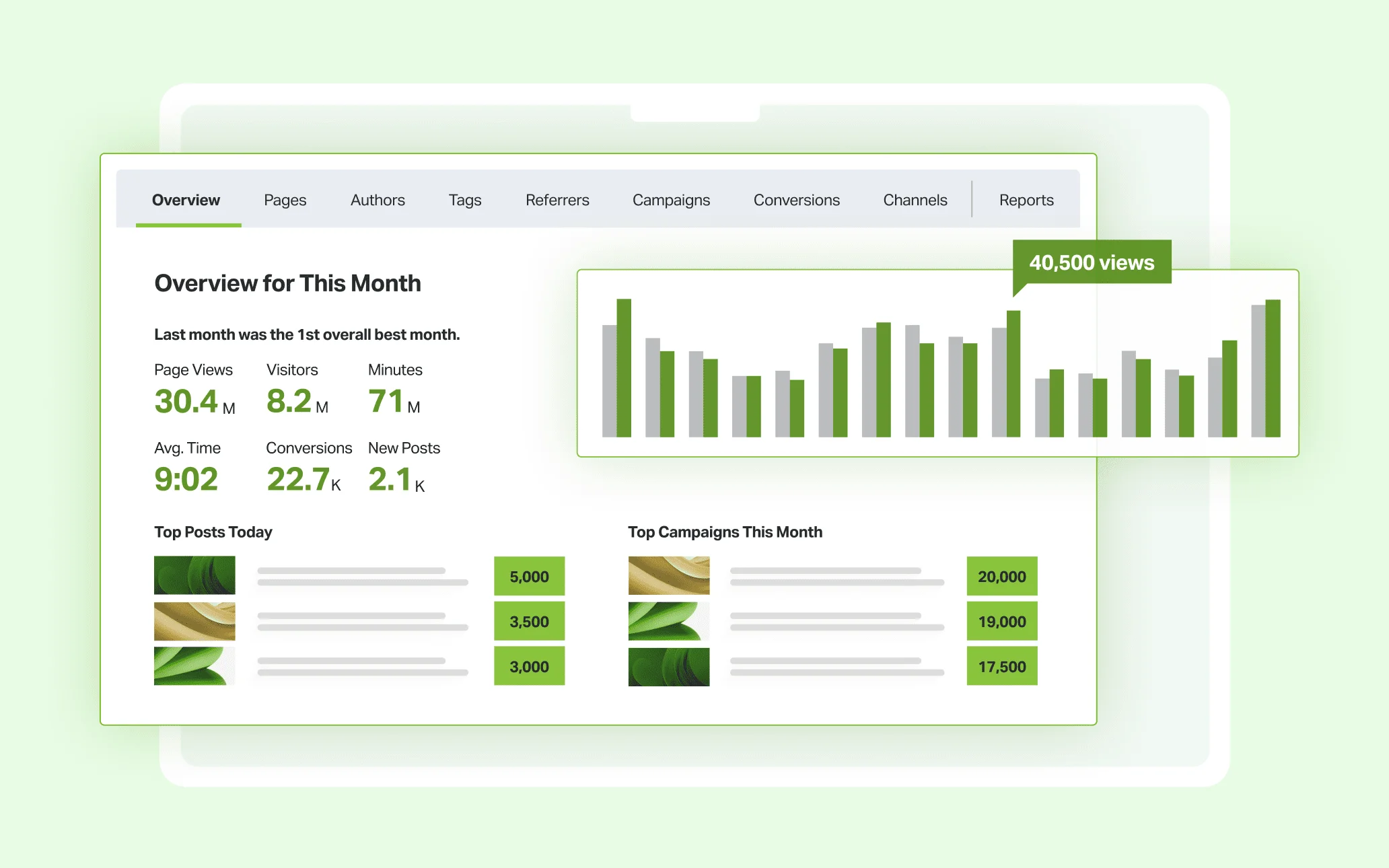
Parse.ly is a specialized analytics platform designed exclusively for the needs of publishers, newsrooms, and content marketers. While most analytics tools are optimized for e-commerce, Parse.ly focuses on the metrics that matter most to editorial teams: engaged time, audience loyalty, newsletter performance, and the content signals that drive subscriptions and conversions. At its core, Parse.ly offers an intuitive Analytics Dashboard that makes real-time content performance data accessible to every member of an editorial team—not just data analysts. The platform surfaces actionable insights directly within editorial workflows, enabling faster publishing decisions and smarter content strategies. Beyond the dashboard, Parse.ly includes a Content Conversion Engine for proving ROI, a Content API for developers to deliver personalized content recommendations (with a drag-and-drop WordPress block and customizable models), and a Data Pipeline for streaming raw, real-time event-level data directly to data warehouses in a clean format. The platform also integrates a Content Management System to streamline publishing workflows. It is used daily by thousands of editors and content marketers across media companies and digital publishers who need to identify high-value content, justify content investment to leadership, and grow audience engagement. Parse.ly is available as an enterprise SaaS solution with custom pricing, accessed via demo request.
Key Features
- Real-Time Analytics Dashboard: An accessible, team-friendly dashboard that surfaces real-time content performance data—including engaged time, conversions, and audience loyalty—for every member of an editorial team.
- Content Conversion Engine: Tracks and reports on how content drives business outcomes such as subscriptions and conversions, helping teams prove content ROI to leadership and secure investment.
- Content API for Personalization: A developer-facing API for serving personalized content recommendations based on customizable audience models, with a drag-and-drop WordPress block for easy integration.
- Data Pipeline for Analysts: Streams raw, real-time event-level data from websites and apps to a data warehouse in a clean format, enabling deep custom analysis by data teams.
- Editorial Workflow Integration: Embeds audience intelligence directly into publishing workflows via a built-in CMS, enabling faster, data-informed content decisions at the point of creation.
Use Cases
- Editorial teams at digital news outlets use Parse.ly to monitor real-time article performance and identify which stories are driving the most engaged readership and subscription conversions.
- Content marketing leaders use the Content Conversion Engine to generate reports that tie content investment to measurable business outcomes like leads and pipeline, justifying budget to executives.
- Developers at media companies integrate the Content API to power personalized article recommendation modules, increasing page views and time on site.
- Data analysts pipe raw event data from Parse.ly's Data Pipeline into their warehouse to run custom audience segmentation and cohort analyses.
- Publishers use the built-in CMS integration to ensure writers receive performance feedback as they work, creating a faster content improvement feedback loop.
Pros
- Built Specifically for Publishers: Unlike generic analytics platforms, Parse.ly tracks editorial-specific metrics like engaged time, audience loyalty, and newsletter performance that are irrelevant to e-commerce tools.
- Accessible to Non-Technical Users: The dashboard is designed to be intuitive and non-intimidating, enabling editors and writers—not just data analysts—to engage with performance data daily.
- Real-Time Data at Scale: Provides live content performance signals that help editorial teams make immediate publishing decisions rather than waiting for delayed batch reports.
- Flexible Data Access: Offers multiple data access layers—dashboard, API, and raw data pipeline—so teams at every technical level can extract the value they need.
Cons
- Not Suited for E-Commerce or General Websites: Parse.ly is purpose-built for publishers and content-heavy sites; businesses focused on product sales or lead generation will find its feature set too narrow.
- Opaque Pricing: No public pricing is listed—interested users must request a demo, which can slow down evaluation for teams comparing multiple vendors.
- Enterprise Focus May Be Too Heavy for Small Teams: The platform is designed for established editorial operations and may offer more depth and complexity than small independent publishers need.
Frequently Asked Questions
How is Parse.ly different from Google Analytics?
Parse.ly is built specifically for publishers and editorial teams, tracking metrics like engaged time, audience loyalty, and content-driven conversions—signals that generic platforms like Google Analytics are not designed to surface. Its dashboard is also embedded into editorial workflows, making it more actionable for content teams.
What types of organizations use Parse.ly?
Parse.ly is used by newsrooms, digital media publishers, and content marketing teams at mid-size to enterprise organizations who create content at high volume and need real-time feedback on its performance.
Does Parse.ly offer an API?
Yes. Parse.ly provides a Content API that developers can use to power personalized content recommendation experiences on their sites. It supports customizable audience models and includes a drag-and-drop WordPress block for non-developers.
Can I send Parse.ly data to my own data warehouse?
Yes. The Data Pipeline feature streams raw, real-time event-level data from your websites and apps to your data warehouse in a clean, analysis-ready format.
How do I get started with Parse.ly?
Parse.ly is available via a demo request on their website. There is no self-serve free tier; pricing and onboarding are handled through their sales team after an initial demo.