

About
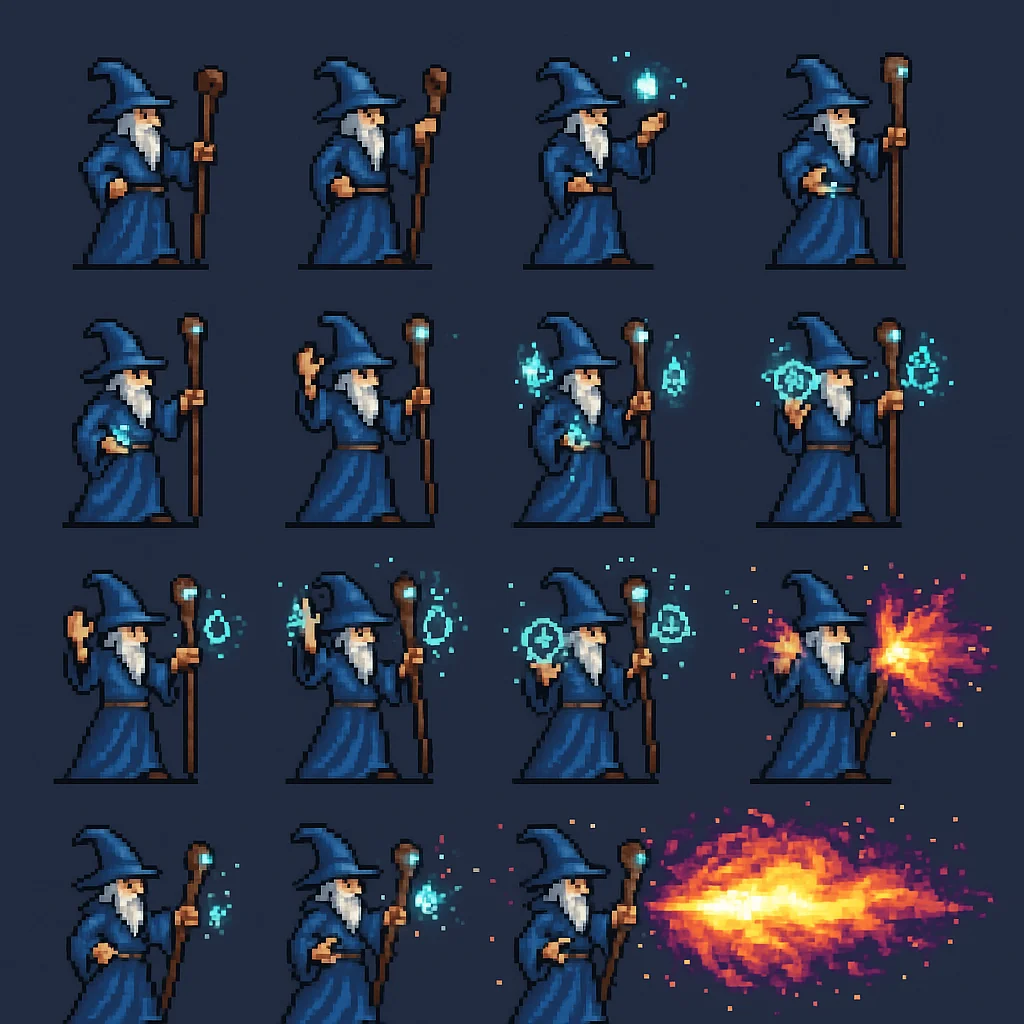
The AI 2D Character Animation Sprite Sheet Generator is a specialized Pixelflow template on the Segmind platform, designed to eliminate one of game development's most time-intensive tasks: creating 2D character sprite sheets from scratch. Powered by state-of-the-art models including GPT-Image-1 and Claude Sonnet, the tool accepts a plain-text description of a character action—such as 'a wizard casting a spell'—and autonomously generates a complete sequence of pixel art keyframes, neatly compiled into a single, organized sprite sheet. The output maintains a consistent retro or modern pixel-art aesthetic while delivering impressive visual fidelity. Each animation is broken into clearly delineated sub-images within the sprite sheet layout, making it trivially easy to import frames directly into Unity, Godot, GameMaker, or any other engine. Users can access the generator through an interactive Playground UI or via API for pipeline integration. Key beneficiaries include indie game developers who need rapid prototyping of animation cycles (idle, run, attack, jump), pixel artists seeking a creative starting point they can refine, and studios looking to cut production costs on asset generation. At approximately $0.27 per generation and a ~96-second turnaround, it offers a cost-effective alternative to hiring dedicated animators for early-stage or jam projects. The workflow-based architecture also allows chaining with other Segmind Pixelflow templates for end-to-end game-asset pipelines.
Key Features
- Text-to-Sprite-Sheet Generation: Describe any character action in plain text and the AI produces a complete, sequenced sprite sheet tailored to that motion.
- Fluid Keyframe Sequencing: Automatically generates smooth, naturally transitioning keyframes so characters move convincingly within a game environment.
- Integrated Sprite Sheet Output: Compiles all animation frames into a single organized sprite sheet in a standard format ready for import into Unity, Godot, GameMaker, and more.
- High-Fidelity Pixel Art Rendering: Maintains consistent retro and modern pixel-art aesthetics with impressive visual detail, suitable for classic or contemporary game styles.
- Playground & API Access: Use the interactive Playground for one-off generations or integrate via API to automate sprite sheet production inside existing game development pipelines.
Use Cases
- Indie game developers rapidly prototyping character animation cycles (idle, run, jump, attack) without hiring dedicated pixel artists.
- Game jam participants generating polished sprite sheet assets within tight time constraints.
- Pixel artists using AI-generated sheets as a starting reference or base layer to refine manually.
- Studios automating the early-stage production of NPC or enemy animation assets to reduce costs.
- Educators and hobbyists learning game development who need professional-looking assets without advanced art skills.
Pros
- Massive Time Savings: Reduces hours of manual frame-by-frame pixel animation to roughly 96 seconds, dramatically accelerating asset production.
- Game-Engine Ready Output: Sprite sheets are formatted and labeled for direct import into all major game engines with no post-processing required.
- Flexible Access Methods: Both a no-code Playground UI and a developer API are available, making the tool accessible to artists and engineers alike.
- Backed by Top AI Models: Leverages GPT-Image-1 and Claude Sonnet for high-quality, coherent visual output that outperforms simpler image-generation approaches.
Cons
- Per-Generation Cost: At ~$0.27 per run, costs can accumulate quickly when iterating across many character actions or animation cycles.
- Limited Style Control: Advanced users may find the pixel art style options constrained compared to hand-crafting assets with dedicated animation software.
- Generation Latency: The ~96-second generation time per sprite sheet may slow iterative workflows where rapid feedback is needed.
Frequently Asked Questions
What input do I need to provide?
You simply describe the character action you want animated in the 'Animation Scene' text field (e.g., 'a wizard casting a spell'). No images or reference files are required to get started.
Which game engines are compatible with the output?
The generated sprite sheets use a standard grid layout compatible with Unity, Godot, GameMaker Studio, Phaser, and most other 2D game engines that support sprite sheet imports.
How much does each generation cost?
Each sprite sheet generation costs approximately $0.27 and takes around 96 seconds to complete.
Can I access this tool programmatically?
Yes. In addition to the interactive Playground, Segmind exposes an API so you can integrate sprite sheet generation directly into your game development pipeline or asset build process.
What AI models power the generator?
The tool currently uses GPT-Image-1 (OpenAI) and Claude Sonnet (Anthropic) to generate and orchestrate the pixel art sprite sheet output.