

About
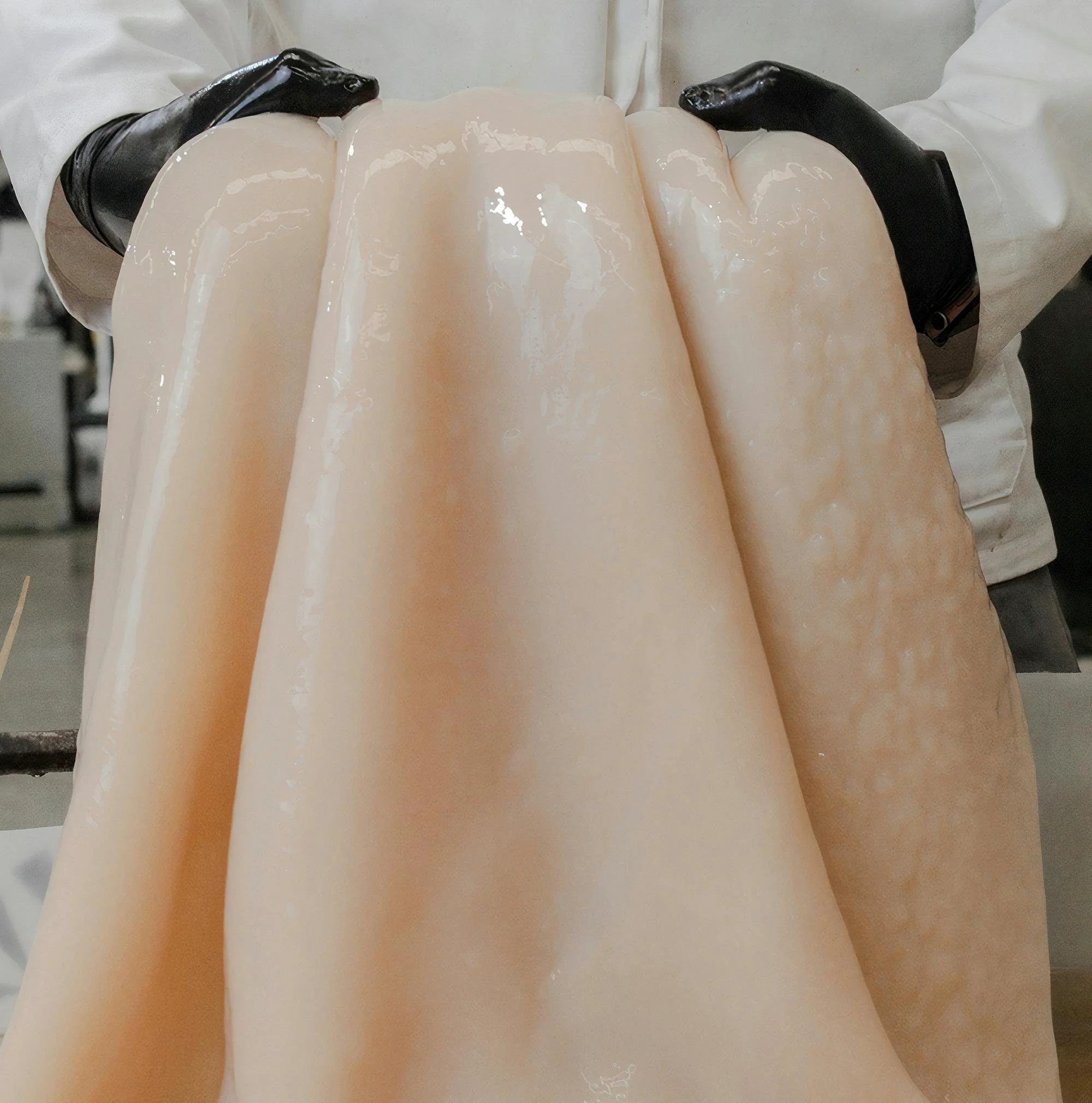
Polybion is a biotechnology company headquartered in Mexico that engineers premium biomaterials for forward-thinking designers and brands. Their flagship material, Celium™, is cultivated by nourishing bacteria with agro-industrial fruit waste, resulting in sheets of bacterial cellulose formed during fermentation. Unlike synthetic or animal-derived alternatives, Celium™ emerges from a living process, giving it a coherent, resilient structure with a refined handfeel and subtle natural variations unique to each batch. After cultivation, Celium™ undergoes a proprietary stabilization process—Polybion's equivalent of tanning—where thickness, flexibility, and overall performance are precisely defined. Sheets can then be finished with color, embossing, or protective coatings, expanding their visual and functional range while preserving the material's biological identity. Celium™ is highly versatile: it can drape, fold, and stitch for soft applications like garment panels and bag shells, or be structured into architectural forms for lighting and furniture. It accepts cutting, layering, perforation, and lamination with other substrates, making it suitable for both tactile close-to-skin pieces and robust spatial applications. Polybion sells Celium™ in full sheets, sample kits, and custom developments. Minimum orders start at two sheets (17 sq.ft. each) for prototyping, scaling to 63 sheets for custom color or material specifications. As Celium™ is grown to order in batches, a delivery pipeline and waiting list apply. Polybion ships globally from Mexico.
Key Features
- Bacterial Cellulose Cultivation: Celium™ is grown by feeding bacteria with agro-industrial fruit waste, forming coherent, high-performance cellulose sheets during fermentation.
- Proprietary Stabilization Process: After cultivation, each sheet undergoes a stabilization stage that precisely defines thickness, handfeel, flexibility, and durability—Polybion's equivalent of traditional tanning.
- Versatile Finishing Options: Celium™ can be finished with custom colors, embossing, or protective coatings, enabling a wide range of aesthetic and functional expressions.
- Multi-Application Adaptability: The same material can be draped for garments, structured into bag shells, perforated for lighting, or layered for furniture—adapting to diverse design disciplines.
- Custom & Sample Orders: Available in sample kits, full sheets, and custom developments with minimum orders starting at two 17 sq.ft. sheets for prototyping.
Use Cases
- Fashion designers sourcing sustainable, non-animal leather alternatives for garments and accessories.
- Luxury bag and accessory brands seeking premium, bio-based material with a refined handfeel and customizable finish.
- Interior designers and furniture makers incorporating cultivated cellulose panels into lighting fixtures and furniture details.
- Independent studios and product designers prototyping innovative material concepts with small sample orders.
- Brands committed to circular or regenerative supply chains replacing conventional synthetic materials with cultivated biomaterials.
Pros
- Sustainable Origin: Grown entirely from agro-industrial fruit waste, Celium™ offers a biologically-rooted, low-impact alternative to synthetic or animal-derived materials.
- Design Versatility: One base material adapts to fashion, accessories, furniture, and spatial applications through cutting, layering, embossing, and finishing techniques.
- Global Shipping: Polybion ships Celium™ worldwide from Mexico, making it accessible to international brands and studios.
- Fully Scalable Production: Despite being grown batch by batch, Polybion's production is fully scaled, enabling consistent supply for commercial orders.
Cons
- Waiting List & Lead Times: Because Celium™ is grown to order in batches, customers may face a delivery pipeline and waiting list before receiving their materials.
- High Minimum for Custom Orders: Custom color or material specifications require a minimum order of 63 sheets, which may be a barrier for small studios or independent designers.
- No Public Pricing: Pricing is not listed publicly and must be obtained by contacting the Polybion team directly, adding friction to the purchasing process.
Frequently Asked Questions
What is Celium™ made from?
Celium™ is a bacterial cellulose material cultivated by feeding bacteria with agro-industrial fruit waste. It forms as a sheet during fermentation and is then stabilized and finished for use.
How can I order Celium™?
You can order Celium™ by filling out the inquiry form on Polybion's website or emailing [email protected]. Orders start with a short conversation to identify the right material version, quantities, and finishing.
What is the minimum order quantity?
For prototyping, the minimum order is two sheets of 17 sq.ft. each. For customized color or material characteristics, the minimum order is 63 sheets.
Does Polybion ship internationally?
Yes, Polybion ships Celium™ from its headquarters in Mexico to any destination worldwide.
What applications is Celium™ suitable for?
Celium™ is suitable for fashion (garment panels), accessories (bag shells), interior design (furniture detailing), and spatial applications (lighting elements). It can be cut, sewn, layered, perforated, embossed, and combined with other substrates.