

About
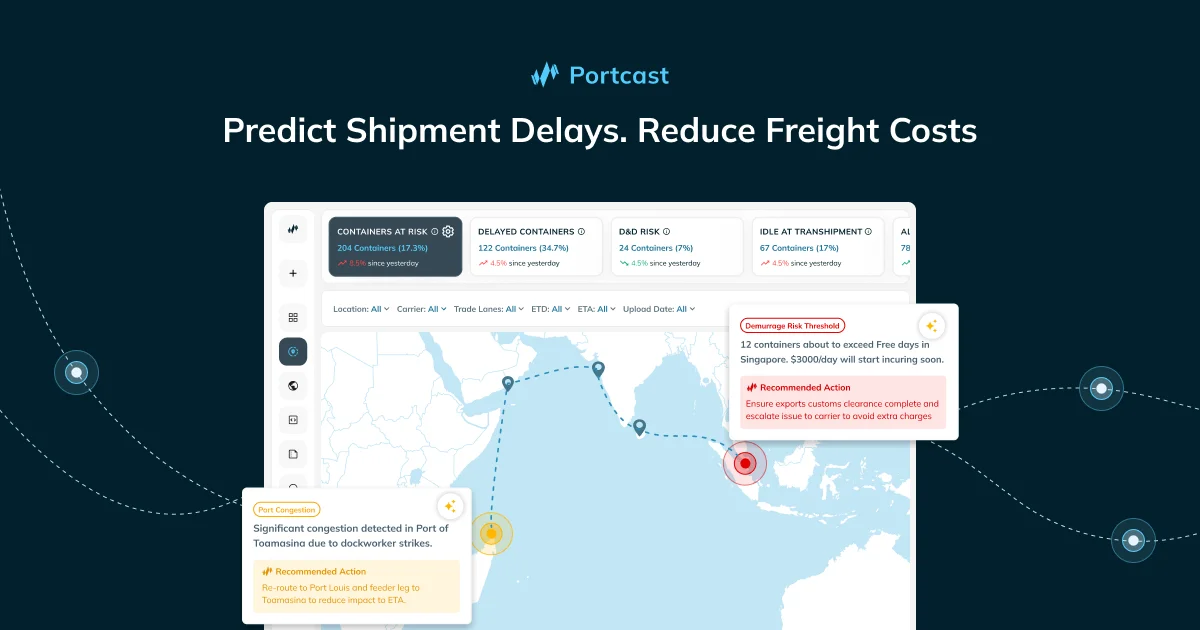
Portcast is a supply chain visibility and freight spend management platform designed for global transportation teams. By consolidating shipment data, contracts, and invoices into one place, it gives operations and finance teams the full picture they need to act faster and smarter. At its core, Portcast uses AI to surface the risks and exceptions that matter most — shipment delays, terminal disruptions, invoice discrepancies, and detention & demurrage exposures — before they impact cost or service levels. Its Command Center provides a live dashboard where teams can immediately see high-priority exceptions and their downstream effects. Key capabilities include real-time container tracking across 98% of carriers, predictive ETA and ETD accuracy powered by machine learning, and an automated Freight Audit module that detects overcharges and undue costs before payments are processed. A KPI Dashboard tracks carrier reliability, lane performance, and D&D metrics, while Planning & Performance tools enable data-driven procurement decisions and contract negotiations. Portcast also supports air cargo tracking across 350+ airlines, port congestion and terminal event monitoring, CO2e emissions dashboards, and sailing schedule planning. Its ready-to-integrate API makes it compatible with TMS, ERP, and logistics technology platforms. Portcast is ideal for 3PLs, freight forwarders, beneficial cargo owners, and supply chain technology companies seeking to eliminate data silos, recover freight costs, and build proactive rather than reactive supply chain operations.
Key Features
- Real-Time Container Tracking: Track shipments across 98% of global carriers in one place, with full visibility into ocean and air cargo milestones.
- Predictive ETA & ETD Visibility: AI-powered models provide accurate arrival and departure predictions, helping teams anticipate delays before they happen.
- Automated Freight Audit: Extract invoice data with 99% accuracy, automatically detect overcharges and detention & demurrage exposures, and enable touchless resolution workflows.
- Operations Command Center: A live dashboard that surfaces high-priority shipment exceptions, terminal issues, and risk events so teams start each day with a clear action list.
- KPI & Performance Dashboard: Analyze carrier reliability, lane performance, and freight spend to optimize routing, allocation, and contract negotiations with real shipment data.
Use Cases
- 3PLs and freight forwarders managing multi-carrier shipments who need a single real-time view of all exceptions and delays across their customer portfolios.
- Manufacturers and importers tracking inbound ocean and air cargo to protect production schedules and respond proactively to supply disruptions.
- Finance and logistics teams automating freight invoice audits to recover overcharges and reduce detention & demurrage costs before payments are made.
- Procurement and operations leaders using carrier and lane performance data to optimize routing decisions, improve contract negotiations, and allocate shipments more efficiently.
- Logistics technology companies (TMS, ERP providers) integrating Portcast's API to enrich their platforms with real-time shipment visibility and predictive intelligence.
Pros
- Unmatched carrier coverage: With 98% of carriers connected in one platform, teams avoid the fragmentation of managing multiple tracking portals.
- AI-driven proactive risk management: Rather than reacting to delays, Portcast's AI surfaces exceptions and recommends actions before they affect service levels or margins.
- Integrated freight spend control: Combining visibility and freight audit in one platform means finance and operations teams share the same data, eliminating silos.
- API-ready for existing tech stacks: A well-documented API enables straightforward integration with TMS, ERP, and other logistics technology platforms.
Cons
- Enterprise-focused pricing: Portcast is built for mid-to-large logistics operations; pricing and onboarding complexity may be prohibitive for small businesses.
- Requires data integration setup: Realizing full value depends on connecting shipment, order, contract, and invoice data sources, which involves initial implementation effort.
- Primarily ocean and air freight: While ocean and air cargo are well-covered, teams with significant road or rail freight needs may find coverage less comprehensive.
Frequently Asked Questions
What shipping modes does Portcast support?
Portcast supports ocean container tracking across 98% of carriers and air cargo tracking for 350+ airlines, along with port terminal event monitoring and sailing schedule data.
How does Portcast's predictive ETA work?
Portcast uses machine learning models trained on historical shipment data, carrier schedules, port congestion patterns, and real-time vessel positions to generate accurate predicted arrival and departure times.
Can Portcast integrate with our existing TMS or ERP?
Yes. Portcast provides a ready-to-integrate API with documented data points, making it compatible with major TMS, ERP, and logistics technology platforms.
How does the Freight Audit feature help control costs?
Portcast automatically extracts invoice data with 99% accuracy, flags discrepancies, overcharges, and undue detention & demurrage fees before payments are processed, enabling teams to resolve issues touchlessly from flag to resolution.
Does Portcast offer CO2 emissions tracking?
Yes. Portcast includes a CO2e Emissions Dashboard that measures both emissions intensity and total logistics emissions, helping teams track and report on their environmental footprint.