

About
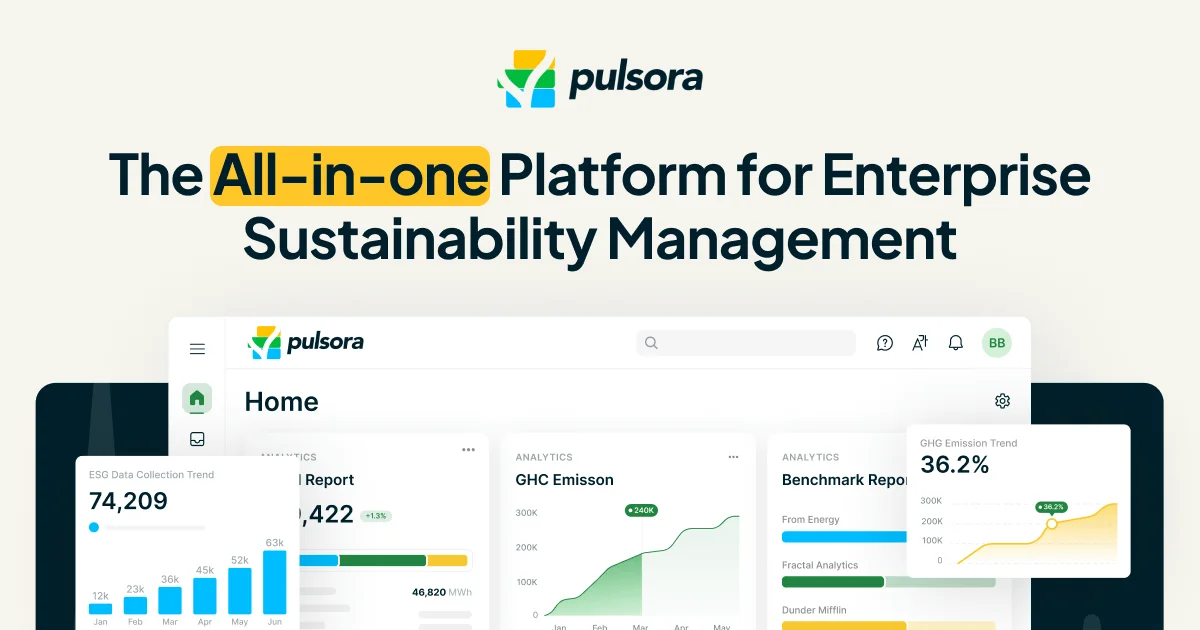
Pulsora is an enterprise-grade, AI-powered sustainability management platform that helps organizations streamline every aspect of their ESG and carbon management operations. By centralizing structured and unstructured ESG data from systems, suppliers, and internal teams into a single governed data model, Pulsora eliminates manual processes and data silos that typically slow sustainability reporting. The platform's agentic AI engine — PulsoraAI — automates data collection, validation, and consolidation workflows, enabling faster and more accurate disclosures. Pulsora supports carbon footprint measurement across Scopes 1, 2, and 3, and prepares investor-grade, audit-ready reports aligned with over a dozen global regulations and frameworks, including CSRD. Key capabilities include a Sustainability Context Graph for contextual AI intelligence, multi-entity management for subsidiaries and portfolio companies, target-setting tools, performance tracking, and dynamic analytics dashboards that turn disclosures into actionable decisions. Pulsora serves two primary audiences: corporate sustainability teams seeking full value-chain visibility, and private capital firms monitoring ESG performance across portfolio companies. Its flexible, future-proof architecture adapts to evolving regulatory requirements and business complexity, making it a long-term partner for sustainability compliance and strategy — not just a one-time reporting tool.
Key Features
- Centralized ESG Data Management: Aggregates structured and unstructured ESG data from systems, suppliers, and internal teams into a single governed data model with traceable lineage and shared definitions.
- AI-Powered Workflow Automation: PulsoraAI uses agentic AI to automatically collect, validate, and consolidate sustainability data, dramatically reducing manual effort and reporting errors.
- Carbon Accounting Across All Scopes: Measures and tracks carbon emissions across Scope 1, 2, and 3, enabling organizations to understand their full environmental footprint.
- Multi-Framework Compliance Reporting: Supports 12+ global sustainability regulations and reporting frameworks including CSRD, producing investor-grade, audit-ready disclosures efficiently.
- Sustainability Context Graph: A proprietary deep context layer that enables AI to interpret sustainability data with organizational intelligence, improving accuracy and decision-making quality.
Use Cases
- A multinational corporation uses Pulsora to consolidate ESG data from 40+ subsidiaries into a single platform and prepare CSRD-compliant annual disclosures.
- A private equity firm leverages Pulsora to monitor and benchmark ESG performance across all portfolio companies during due diligence and annual reporting cycles.
- A corporate sustainability team uses Pulsora's carbon accounting module to measure Scope 1, 2, and 3 emissions and set science-based reduction targets.
- An enterprise sustainability manager uses Pulsora to automate data collection from suppliers and internal systems, eliminating manual spreadsheet workflows.
- A compliance officer uses Pulsora to generate investor-grade, audit-ready sustainability reports aligned with multiple regulatory frameworks simultaneously.
Pros
- Enterprise-Ready Multi-Entity Support: Handles complex organizational structures with dozens of subsidiaries or portfolio companies, making it ideal for large enterprises and private capital firms.
- Broad Regulatory Coverage: Supports 12+ frameworks out of the box, reducing the burden of staying current with evolving global ESG regulations like CSRD.
- Reduces Manual Reporting Effort: AI-powered automation significantly cuts the time spent on data collection, validation, and consolidation across the sustainability lifecycle.
- Trusted by Major Enterprises: Already deployed at 500+ companies worldwide, indicating strong real-world reliability and implementation experience.
Cons
- Pricing Not Publicly Available: Pulsora operates on a demo/sales-led model with no public pricing, making it difficult for smaller organizations to evaluate cost upfront.
- Enterprise Focus May Exclude SMBs: The platform's depth and complexity are optimized for large enterprises, which may make it overpowered or cost-prohibitive for small to mid-sized businesses.
- Requires Onboarding and Integration Effort: Connecting 25–40+ entities and data sources requires significant initial setup, data mapping, and collaboration with implementation teams.
Frequently Asked Questions
What is Pulsora used for?
Pulsora is used to centralize ESG and sustainability data, automate reporting workflows, calculate carbon emissions across Scopes 1–3, and prepare audit-ready disclosures for regulators, investors, and stakeholders.
Which reporting frameworks does Pulsora support?
Pulsora supports over a dozen global sustainability regulations and reporting frameworks, including CSRD, making it suitable for companies with international compliance obligations.
Is Pulsora suitable for private equity and investment firms?
Yes. Pulsora has dedicated solutions for private capital firms that need to collect and monitor ESG performance across multiple portfolio companies from a single platform.
How does PulsoraAI work?
PulsoraAI is an agentic AI engine that automates data collection, validation, and consolidation. It is powered by a Sustainability Context Graph that gives the AI deep organizational and domain-specific context for more accurate results.
How many companies use Pulsora?
Pulsora is trusted by 500+ companies worldwide, including enterprises like CompuGroup Medical, ANWR Group, Cornerstone Building Brands, and Allegro Funds.