
About
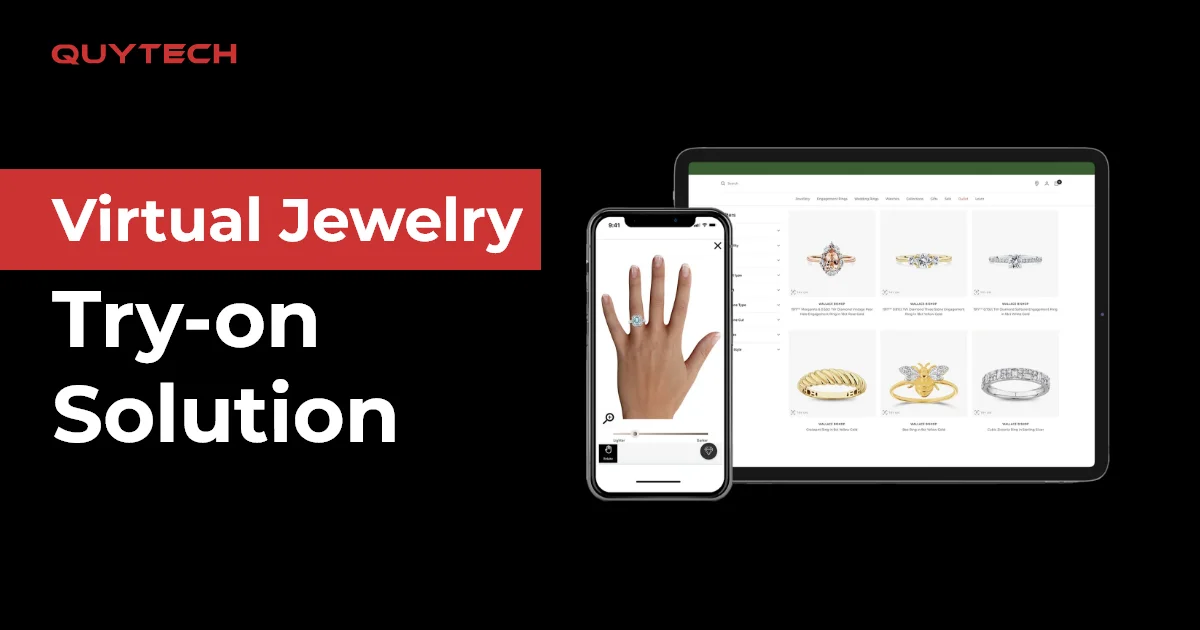
Quytech's Virtual Jewelry Try-On Solution is an augmented reality (AR) platform built specifically for the jewelry industry. It enables customers to visualize how rings, bracelets, necklaces, and earrings look on them in real time — directly through a smartphone or web browser — without needing to visit a physical store. Powered by advanced computer vision and AR technology, the solution accurately maps jewelry onto a user's hand or body, accounting for size, proportion, and lighting to deliver a realistic try-on experience. This empowers shoppers to make confident purchase decisions, which translates to higher conversion rates and fewer product returns for retailers. Quytech's solution is tailored for jewelry brands and e-commerce platforms looking to differentiate their digital storefront. It integrates seamlessly into existing e-commerce ecosystems — including mobile apps and web platforms — and supports customization for various product types and brand aesthetics. Key capabilities include real-time AR rendering, multi-device support, easy integration with retail platforms, and scalable architecture that grows with the business. The platform is part of Quytech's broader suite of virtual try-on solutions, which also covers glasses and makeup. Ideal for jewelry retailers, luxury brands, and e-commerce businesses, this solution addresses the core challenge of online jewelry shopping: the inability to physically try before you buy. By leveraging AR, Quytech helps businesses deliver immersive, engaging, and conversion-optimized shopping experiences.
Key Features
- Real-Time AR Try-On: Lets customers virtually try on rings, necklaces, and other jewelry in real time using their device's camera.
- Computer Vision Mapping: Advanced computer vision accurately maps jewelry onto hands and body parts, respecting scale, proportion, and lighting.
- Multi-Device Support: Works seamlessly across iOS, Android, and web browsers for broad customer reach.
- E-commerce Integration: Integrates with existing e-commerce platforms and mobile apps for a frictionless retail experience.
- Customizable for Brands: Supports branding customization and adaptation for various jewelry product types and collections.
Use Cases
- Online jewelry retailers enabling customers to virtually try on rings and necklaces before purchasing.
- Luxury jewelry brands offering immersive digital experiences to replicate in-store consultations.
- E-commerce platforms reducing product return rates by giving shoppers realistic AR previews.
- Jewelry brands launching new collections with interactive digital try-on campaigns.
- Mobile jewelry shopping apps integrating AR try-on to increase user engagement and time-on-site.
Pros
- Reduces Return Rates: Customers can see how jewelry looks on them before buying, leading to more confident purchases and fewer returns.
- Boosts Conversion Rates: Immersive try-on experiences increase engagement and encourage shoppers to complete purchases.
- Scalable & Integrable: Built to scale with the business and integrate into existing mobile and web e-commerce platforms.
Cons
- Enterprise-Focused Pricing: As a custom development solution, it may not be cost-effective for small jewelry retailers or individual sellers.
- Implementation Time: Custom AR integrations require development and onboarding time, making it less plug-and-play than off-the-shelf tools.
Frequently Asked Questions
What types of jewelry does the virtual try-on solution support?
The solution supports a wide range of jewelry including rings, necklaces, bracelets, and earrings, and can be customized to fit specific product catalogs.
Does it work on both mobile and desktop?
Yes, Quytech's virtual jewelry try-on solution is designed for multi-device compatibility, working on iOS, Android, and web browsers.
Can it be integrated with our existing e-commerce store?
Yes, the solution is built to integrate with existing e-commerce platforms and mobile apps, including custom-built storefronts.
How does AR improve the jewelry shopping experience?
AR allows shoppers to visualize jewelry on themselves in real time, eliminating guesswork and increasing purchase confidence without requiring an in-store visit.
Is this solution customizable for our brand?
Yes, Quytech offers full customization to align the try-on experience with your brand's aesthetics, product categories, and user interface design.