

About
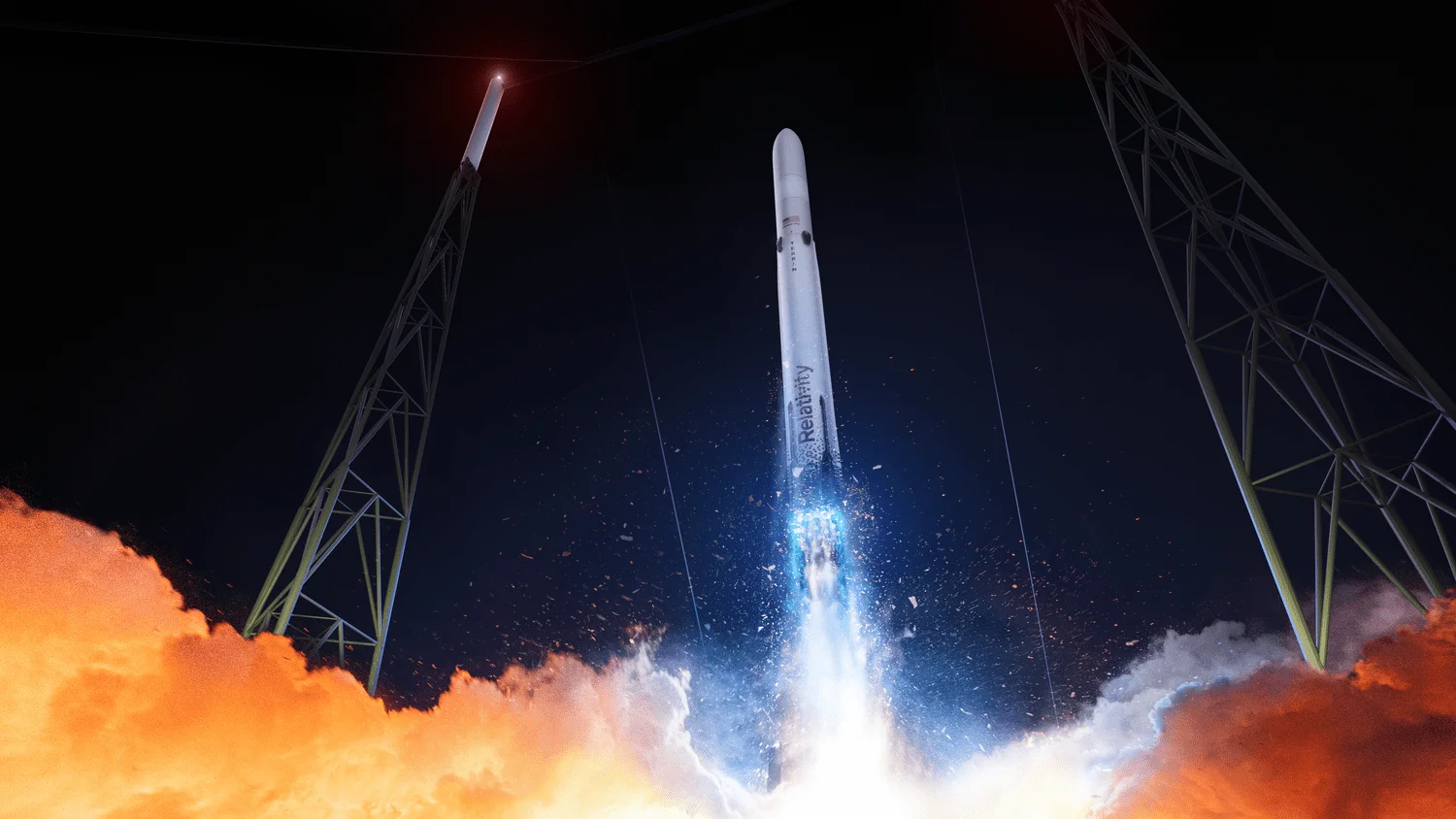
Relativity Space is a next-generation launch provider on a mission to make access to space more reliable, routine, and affordable. Its flagship rocket, Terran R, is a fully reusable, two-stage launch vehicle engineered for high-frequency flights, offering 23,500 kg to LEO with downrange landing and up to 33,500 kg in expendable configuration. Terran R also targets Geosynchronous Transfer Orbit at 5,500 kg, broadening the range of missions it can serve. At the heart of Relativity's competitive edge is a breakthrough approach to large-scale additive manufacturing (3D printing), which streamlines production, reduces part count, cuts costs, and enables rapid iteration from prototype to flight hardware. This manufacturing philosophy underpins everything from propulsion systems to structural components. Beyond rockets, Relativity operates two innovation platforms: Horizon, a division dedicated to advancing additive manufacturing technology for aerospace and defense applications; and Dark Matter Lab, a high-autonomy R&D incubator focused on deep-tech moonshots that could reshape the future of space exploration and beyond. With a team of world-class engineers, technologists, and operators, Relativity is positioned to serve commercial satellite operators, government agencies, and scientific missions. The company is energized by bold new leadership and is scaling its launch cadence to meet growing global demand for orbital access. Relativity Space is headquartered in the United States with launch and production facilities supporting its ambitious roadmap.
Key Features
- Terran R Reusable Launch Vehicle: A two-stage fully reusable rocket capable of delivering up to 33,500 kg to LEO in expendable mode and 23,500 kg with downrange booster recovery.
- Large-Scale Additive Manufacturing: Proprietary 3D printing technology for rocket components that reduces production time, lowers costs, and enables rapid design iteration from prototype to flight.
- Dark Matter Lab – Deep-Tech Incubator: A high-autonomy innovation lab that rapidly prototypes transformative technologies aimed at reshaping the future of space exploration and advanced engineering.
- Horizon – Advanced Manufacturing Division: A dedicated business unit commercializing Relativity's additive manufacturing breakthroughs for aerospace, defense, and industrial applications beyond launch vehicles.
- Multi-Orbit Mission Capability: Terran R supports missions to LEO, GTO, and custom orbits, with both reusable and expendable configurations to accommodate diverse payload requirements.
Use Cases
- Commercial satellite constellation deployment to Low Earth Orbit for communications, Earth observation, or IoT applications.
- Government and defense payload launches requiring reliable, flexible medium-to-heavy lift capacity.
- Scientific and research mission deployment to LEO or GTO, enabling new orbital experiments and space observatories.
- Supply chain and logistics missions for space stations or future lunar economy infrastructure.
- Advanced manufacturing R&D partnerships via the Horizon division for aerospace and defense industries seeking additive manufacturing at scale.
Pros
- Innovative Manufacturing Approach: Large-scale 3D printing dramatically reduces part count and production complexity, enabling faster build cycles and lower launch costs compared to traditional manufacturing.
- High Payload Capacity: Terran R's 23,500–33,500 kg LEO capability places it among the most capable medium-to-heavy lift vehicles on the market, opening a wide range of commercial and government missions.
- Vertically Integrated Innovation Ecosystem: With Horizon and Dark Matter Lab alongside its core launch business, Relativity is building a portfolio of deep-tech platforms that compound long-term value.
Cons
- Still Pre-Revenue on Terran R: Terran R has not yet completed its first orbital launch, so customers face typical early-stage launch provider risks around schedule and demonstrated reliability.
- High Capital Requirements: Developing and scaling reusable launch vehicles demands significant ongoing investment, which can affect pricing flexibility compared to more mature competitors.
- Limited Launch History: As a relatively young launch company, Relativity has a shorter track record of successful missions than established providers, which may give risk-averse customers pause.
Frequently Asked Questions
What is Terran R and what can it carry?
Terran R is Relativity Space's flagship fully reusable two-stage rocket. It can deliver 23,500 kg to LEO with downrange booster landing, 5,500 kg to GTO with downrange landing, or 33,500 kg to LEO in an expendable configuration.
How does Relativity Space use additive manufacturing?
Relativity pioneered large-scale 3D printing for rocket components, drastically reducing the number of parts needed and enabling faster production cycles. This technology is also being commercialized through its Horizon division for aerospace and defense customers.
What is the Dark Matter Lab?
Dark Matter Lab is Relativity's high-autonomy internal R&D incubator focused on rapid prototyping and deep-tech moonshot projects that could transform the future of space exploration and advanced manufacturing.
What types of missions can Relativity Space support?
Relativity can support missions to Low Earth Orbit, Geosynchronous Transfer Orbit, and other custom orbits, serving commercial satellite operators, government agencies, and scientific research payloads.
How does Relativity Space compare to other launch providers?
Relativity differentiates itself through its additive manufacturing heritage, which enables lower production costs and faster iteration. Terran R's reusability and high payload capacity position it to compete with medium-to-heavy lift vehicles from established providers like SpaceX and ULA.