

About
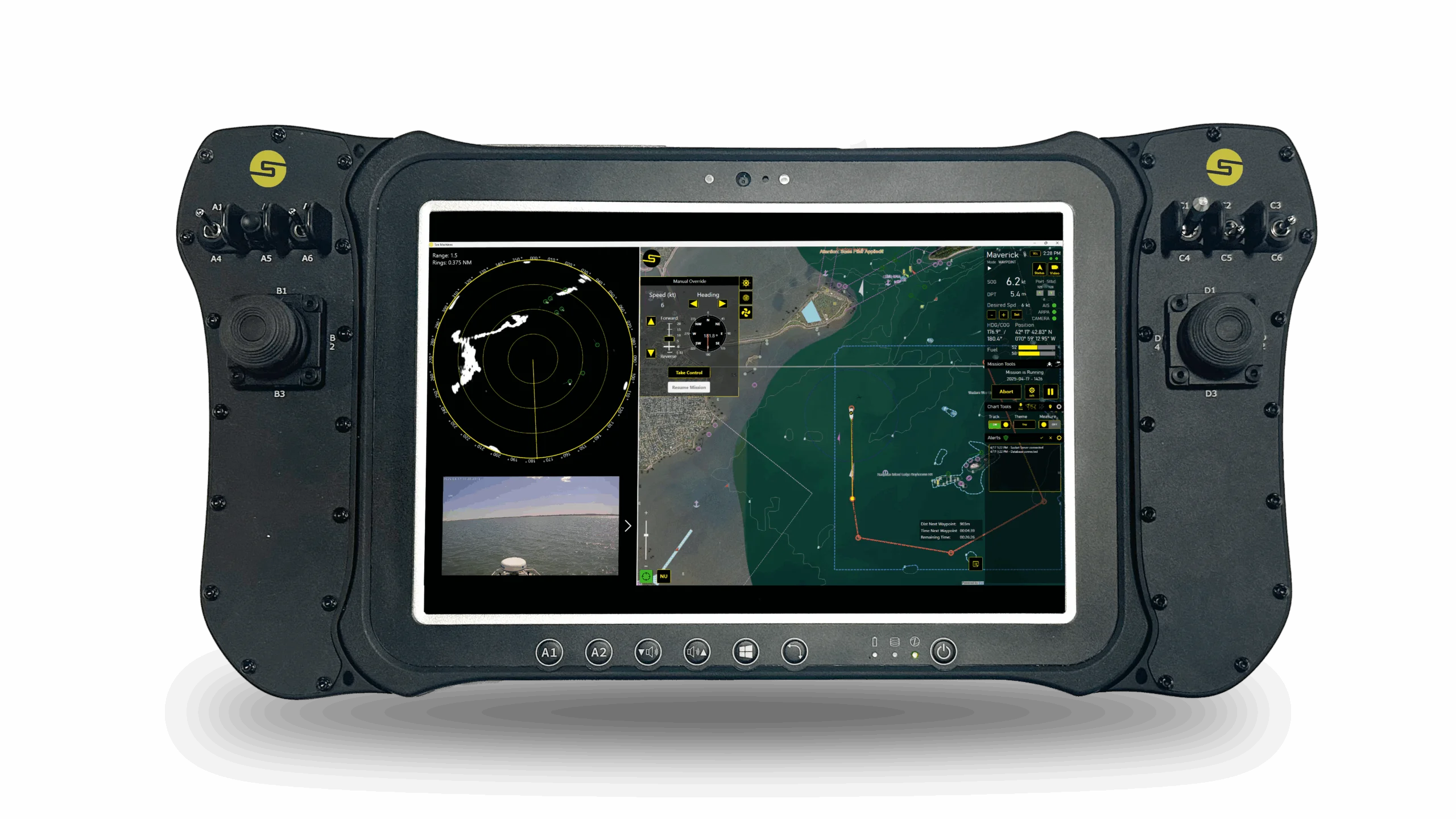
Sea Machines Robotics develops advanced autonomy, connectivity, and computer vision systems for marine vessels across commercial and defense sectors. Their flagship SM300 autonomy system series supports vessels from 10 to 300 feet and is engineered for rapid deployment, GPS-denied environments, and contested operational theatres. The platform is retrofittable on existing vessels and ready for new builds, making it flexible across fleet types and propulsion technologies including diesel, electric, jet, and hybrid. The product stack includes the SM300-SP (compact, attritable) and SM300-NG (class-approved and robust) autonomy systems, SELKIE and STORMRUNNER unmanned surface vehicles (USVs), and software tools like SMLINK Streaming API, SMLINK Control API, and Fleetviewer for fleet management. Their AI-Ris computer vision system provides 4K real-time vessel awareness and obstacle detection. Sea Machines serves industries including commercial workboats, government and defense, shipping, and passenger transport. The company is dual-use by design, export-ready, and manufactures in both the U.S. and Europe. With headquarters in Boston and offices in Germany, Denmark, and Poland, Sea Machines is globally deployed and operationally trusted. It is ideal for maritime operators, naval defense programs, and commercial shipping companies seeking to introduce autonomy at scale.
Key Features
- SM300 Autonomy System Series: One-box autonomy solution for vessels 10–300 ft, deployable in GPS-denied and communications-denied environments, available in compact (SP) and class-approved (NG) variants.
- Unmanned Surface Vehicles (USVs): SELKIE offers a modular, versatile USV platform while STORMRUNNER is purpose-built for contested maritime environments and defense applications.
- AI-Ris Computer Vision System: 4K AI-powered marine computer vision system for real-time obstacle detection, collision avoidance, and situational awareness at sea.
- SMLINK APIs & Fleetviewer: Streaming and control APIs for third-party command-and-control integration, plus a fleet management dashboard for multi-vessel monitoring and coordination.
- Dual-Use, Export-Ready Design: Trusted by both commercial and defense operators, with U.S. and European manufacturing and proven deployments across workboats, naval programs, and shipping fleets.
Use Cases
- Deploying autonomous navigation on commercial workboats to reduce crew requirements and operational costs on repetitive transit routes.
- Equipping naval and defense vessels with GPS-denied autonomy for operations in contested maritime environments.
- Integrating unmanned surface vehicles (USVs) like STORMRUNNER into maritime counter-UAS and defense patrol missions.
- Enabling remote command and control of vessels from shore-based operations centers using SMLINK APIs.
- Fleet operators monitoring and managing multiple autonomous vessels simultaneously through the Fleetviewer software platform.
Pros
- Proven at Scale: Over 200 deliveries worldwide across commercial and defense sectors demonstrate real-world reliability rather than prototype-stage technology.
- Universal Vessel Compatibility: Integrates with vessels from 10 to 300 feet and supports all major propulsion types, making it highly flexible for diverse fleet operators.
- Open API Ecosystem: SMLINK Streaming and Control APIs allow third-party C2 systems to integrate Sea Machines autonomy, enabling extensibility for custom defense and commercial workflows.
- GPS & Comms-Denied Resilience: Designed to operate in contested environments where GPS and communications may be unavailable, critical for defense and offshore applications.
Cons
- Enterprise Pricing: As a defense-grade and commercial maritime solution, costs are likely significant and not publicly disclosed, placing it out of reach for smaller operators.
- Niche Market Focus: Highly specialized for marine and maritime industries, limiting applicability outside of naval, workboat, and commercial shipping contexts.
- Complex Integration Requirements: Retrofitting and systems integration, while supported, may require significant technical expertise and coordination with Sea Machines' engineering teams.
Frequently Asked Questions
What types of vessels can Sea Machines systems be installed on?
Sea Machines systems are compatible with vessels ranging from 10 ft RHIBs to 300 ft workboats and ships, supporting diesel, electric, jet, and hybrid propulsion types.
Can Sea Machines technology be retrofitted onto existing vessels?
Yes, the SM300 autonomy system is designed to be seamlessly retrofitted onto existing vessels as well as integrated into new builds.
Does Sea Machines serve both commercial and defense customers?
Yes, Sea Machines is dual-use by design and serves commercial industries (workboats, shipping, passenger) as well as government and defense programs globally.
What is AI-Ris?
AI-Ris is Sea Machines' 4K computer vision system that provides AI-powered situational awareness, obstacle detection, and collision avoidance for marine vessels.
Does Sea Machines offer APIs for third-party integration?
Yes, SMLINK Streaming API and SMLINK Control API allow third-party command-and-control systems to integrate Sea Machines autonomy capabilities into their own platforms.