
About
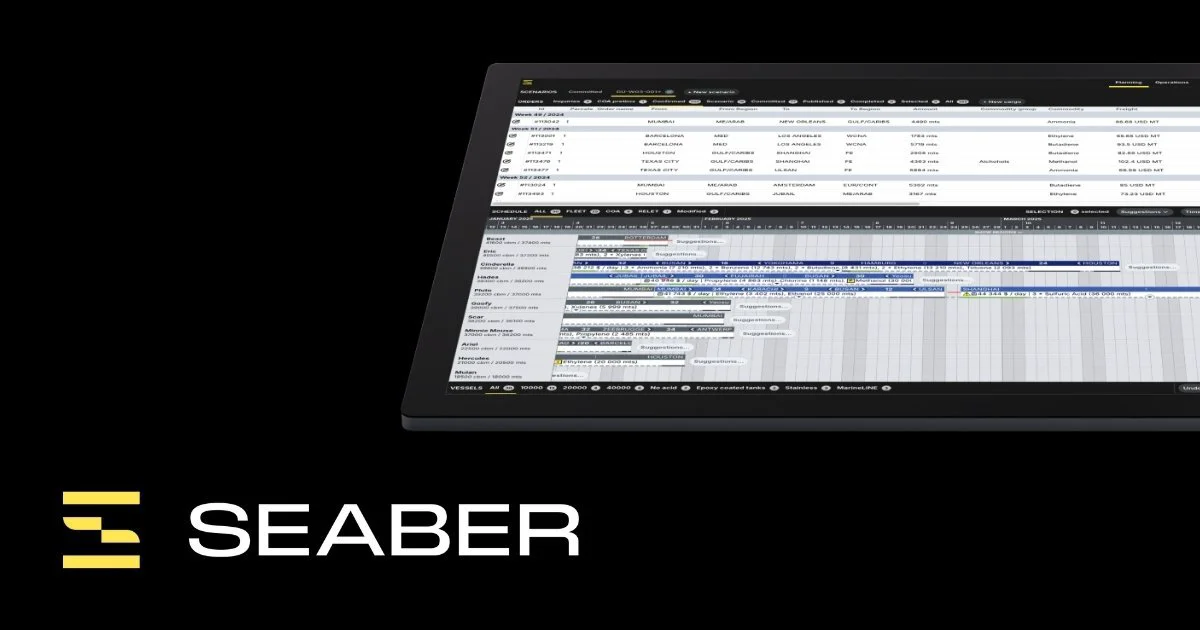
Seaber is an independent Finnish maritime software-as-a-service platform that supercharges freight operations through intelligent AI-powered scheduling and chartering optimization. Built for commercial shipowners, industrial charterers, and commodity traders managing bulker, tanker, breakbulk, and heavy lift fleets, Seaber delivers measurable results: 3–8% cost savings, 49 vessel days recovered in 3 months, and 18 hours of work time saved per week. The platform provides real-time scheduling with always-up-to-date fleet plans, predictive AI insights for market cargo identification, and smart scenario planning that lets users compare multiple scheduling options across fleet TCE, ballast percentage, and cost per ton mile. Data automation handles market cargoes, vessel positions, port distances, bunker consumption, ETA/ETB/ETD updates, and more. Seaber integrates seamlessly with existing voyage management systems (VMS) and ERPs, including a partnership with Sedna VMS for live fixture data flow. It supports complex multi-parcel and multi-port voyages where scheduling optimization is most challenging. Beyond financial gains, Seaber helps operators reduce environmental impact by improving vessel utilization and minimizing port wait times to lower fuel consumption. The platform is quickly deployed with dedicated onboarding support, making it accessible for chartering and scheduling teams of any size.
Key Features
- Real-Time Fleet Scheduling: Always-up-to-date fleet schedule plans powered by predictive AI, integrated with operations department updates for faster and smarter chartering decisions.
- Smart Scenario Planning: Create and compare multiple schedule scenarios in minutes, analyzing fleet TCE, ballast percentage, and cost per ton mile across different planning options.
- Market Cargo Intelligence: Identify the best market cargoes for maximum fleet Time Charter Equivalent (TCE) using data-driven market knowledge and AI optimization algorithms.
- Data Automation & Visualization: Automated retrieval and actionable visualization of vessel positions, port distances, bunker consumption, ETA/ETB/ETD updates, port costs, and cargo requirements.
- VMS & ERP Integration: Seamless integration with existing voyage management systems and ERPs, including a live data partnership with Sedna VMS for connected chartering and scheduling workflows.
Use Cases
- A bulk shipowner compares multiple fleet schedule scenarios to identify the most profitable cargo combinations and maximize fleet TCE across their vessel pool.
- An industrial charterer uses Seaber's market intelligence to find optimal spot cargoes and balance TC vessel utilization against existing COA commitments.
- A commodity trader reacts proactively to port delays using real-time scheduling insights, rerouting vessels to minimize TCE losses and laycan violations.
- A shipping operations team automates data collection for vessel positions, bunker consumption, and port ETAs, saving over 18 hours of manual work per week.
- A fleet manager reduces environmental footprint by using Seaber's efficiency analytics to minimize port wait times and improve overall voyage fuel consumption.
Pros
- Proven Cost Savings: Documented 3–8% cost reductions and recovery of 49 vessel days in 3 months, with 18 hours of weekly manual work eliminated per user.
- Seamless System Integration: Quickly deployed alongside existing VMS and ERP systems, reducing onboarding friction and enabling immediate productivity gains for operations teams.
- Environmental Impact Reduction: Improves vessel utilization and minimizes port wait times to directly lower fuel consumption and shipping emissions footprint.
- Multi-Voyage Complexity Support: Handles complex multi-parcel and multi-port voyages in addition to single-cargo routes, covering the most demanding scheduling scenarios.
Cons
- Enterprise-Only Access: No self-serve free tier available; access requires booking a demo and engaging the sales team, which may slow evaluation for smaller operators.
- Maritime-Specific Use Case: Purpose-built for maritime freight (bulk, tanker, breakbulk), making it inapplicable outside the shipping and chartering industry.
- Integration Dependency: Full value realization depends on connecting with existing VMS and ERP systems, which may require technical setup and IT involvement during onboarding.
Frequently Asked Questions
Who is Seaber designed for?
Seaber is built for commercial shipowners (dry/wet bulk, breakbulk, heavy lift), industrial charterers managing TC vessels, COA, or spot contracts, and commodity traders who need data-driven scheduling and chartering optimization.
What cost savings can I expect from using Seaber?
Seaber customers typically achieve 3–8% cost savings through optimized scheduling, with documented results including 49 vessel days recovered in 3 months and 18 hours of manual work saved per week.
Does Seaber integrate with existing voyage management systems?
Yes. Seaber integrates with voyage management systems (VMS) and ERPs. It has a formal partnership with Sedna VMS for live fixture data flow directly into Seaber's optimization engine.
Does Seaber support multi-port and multi-parcel voyages?
Yes, Seaber fully supports single-cargo, multi-parcel, and multi-port voyages, making it especially valuable for the most complex scheduling and chartering scenarios.
How long does it take to deploy Seaber?
Seaber is designed for quick deployment with dedicated onboarding support from their team, minimizing disruption to existing operations and accelerating time-to-value.