

About
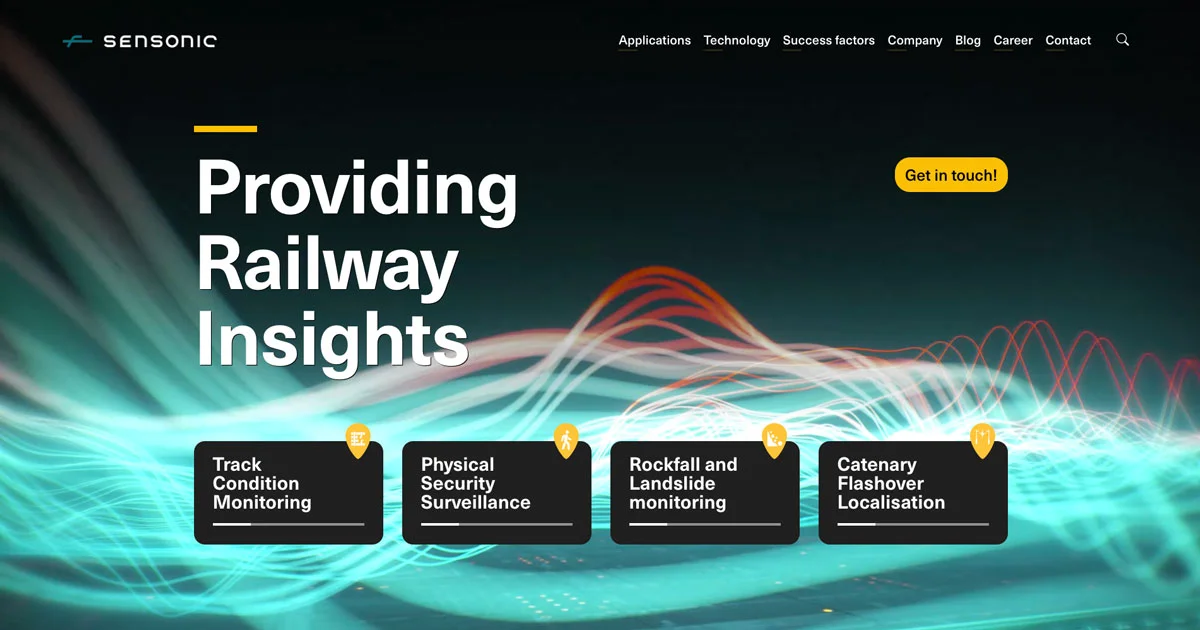
Sensonic is an enterprise-grade railway intelligence platform that leverages fiber optic vibration sensing, Distributed Acoustic Sensing (DAS), and artificial intelligence to provide comprehensive, continuous monitoring of rail infrastructure. By converting the vibrations already present along fiber optic cables into structured data, Sensonic delivers a 24/7 view of network activity without requiring additional trackside hardware beyond power and internet connectivity. The platform's core offering is the SonicTwin®—a real-time digital twin of entire rail routes—which aggregates live and historical sensor data to generate predictive forecasts and early-warning alerts. Key application areas include track condition monitoring (detecting degradation before it causes failures), physical security surveillance (identifying trespass and copper cable theft), natural hazard monitoring (landslide and rockfall detection), and catenary flashover localisation. Sensonic's AI-driven approach means every passing train effectively becomes a mobile inspection vehicle, continuously generating data without operational disruption. This makes it ideal for large national rail operators, infrastructure managers, and maintenance teams seeking scalable, cost-effective route intelligence. The platform is particularly valuable for safety-critical decisions, enabling operators to shift from reactive maintenance to proactive, predictive management of their entire network.
Key Features
- SonicTwin® Digital Twin: Creates a real-time digital twin of entire rail routes by combining live and historical DAS data to enable predictive forecasting and smarter operational decisions.
- Track Condition Monitoring: Detects track degradation and anomalies continuously, with every passing train acting as a mobile inspection unit generating actionable maintenance data.
- Physical Security Surveillance: Identifies trespass events and copper cable theft attempts in real time along the full route length, transforming the railway from passive victim to active crime fighter.
- Natural Hazard Detection: Provides early warning alerts for landslides, rockfalls, and other geophysical events that threaten rail safety, enabling rapid operational response.
- Catenary Flashover Localisation: Pinpoints the precise location of catenary flashover events along overhead line equipment to accelerate fault response and minimise service disruption.
Use Cases
- National rail infrastructure managers deploying route-wide track condition monitoring to predict and prevent rail failures before they cause service disruptions.
- Railway security teams using fiber optic sensing to detect and locate trespass events or copper cable theft in real time along unmanned track sections.
- Operations centres receiving automated landslide and rockfall alerts to halt trains and protect passengers on routes running through geologically unstable terrain.
- Maintenance departments using SonicTwin® predictive analytics to schedule targeted interventions based on actual track degradation data rather than fixed timetables.
- Rail electrification teams leveraging catenary flashover localisation to rapidly identify and repair faults in overhead line equipment, minimising service downtime.
Pros
- No Additional Trackside Sensors Required: Sensonic uses existing fiber optic cable infrastructure, requiring only power and internet connectivity, making deployment fast and cost-effective at scale.
- Continuous 24/7 Network Coverage: Every train passage generates data, providing uninterrupted insight across entire route networks without manual inspection cycles.
- Multi-Discipline Insights from a Single Platform: Track condition, security, natural hazard monitoring, and flashover localisation are all delivered through one integrated platform, reducing vendor complexity.
- Predictive Rather Than Reactive: AI-driven forecasting enables maintenance teams to address issues before they become failures, improving safety and reducing costly emergency interventions.
Cons
- Requires Existing Fiber Optic Infrastructure: The platform depends on fiber optic cable being present along the route; rail operators without existing fiber must factor in infrastructure investment.
- Enterprise Pricing with No Public Plans: Sensonic is an enterprise solution with no publicly listed pricing tiers, making it inaccessible for smaller operators or those needing quick cost assessments.
- Railway-Specific Use Case: The platform is purpose-built for rail infrastructure and is not adaptable to other industries or general-purpose IoT monitoring use cases.
Frequently Asked Questions
How does Sensonic's Distributed Acoustic Sensing (DAS) technology work?
Sensonic uses fiber optic cables already installed along railway routes as long-range microphones. Laser pulses sent through the fiber detect minute vibrations caused by trains, people, machinery, or geological events. These vibration signatures are then processed by AI and machine learning models to classify and interpret what is happening along the track in real time.
Does Sensonic require new sensors or hardware to be installed along the track?
No. Sensonic's system only requires power and an internet connection at the interrogator unit. It uses existing fiber optic cable—whether telecommunications or dedicated—as its sensing medium, making rollout simple and minimally disruptive to operations.
What is the SonicTwin® and how does it help railway operators?
The SonicTwin® is Sensonic's proprietary digital twin of an entire rail route. It combines live DAS sensor data with historical records to generate forecasts, trend analyses, and early-warning alerts. This enables operators and maintenance teams to move from reactive to proactive decision-making across their entire network.
Which types of natural hazards can Sensonic detect?
Sensonic can detect landslides and rockfalls by identifying the distinctive acoustic signatures these events produce in the fiber optic cable. Alerts are generated in real time, giving operators time to halt trains and prevent accidents before they occur.
Is Sensonic suitable for large national rail networks or only smaller routes?
Sensonic is designed to scale to entire national rail networks. Because it leverages existing fiber optic infrastructure and each train contributes monitoring data, the platform becomes more valuable as route length increases, making it particularly well suited to large-scale rail operators and infrastructure managers.