

About
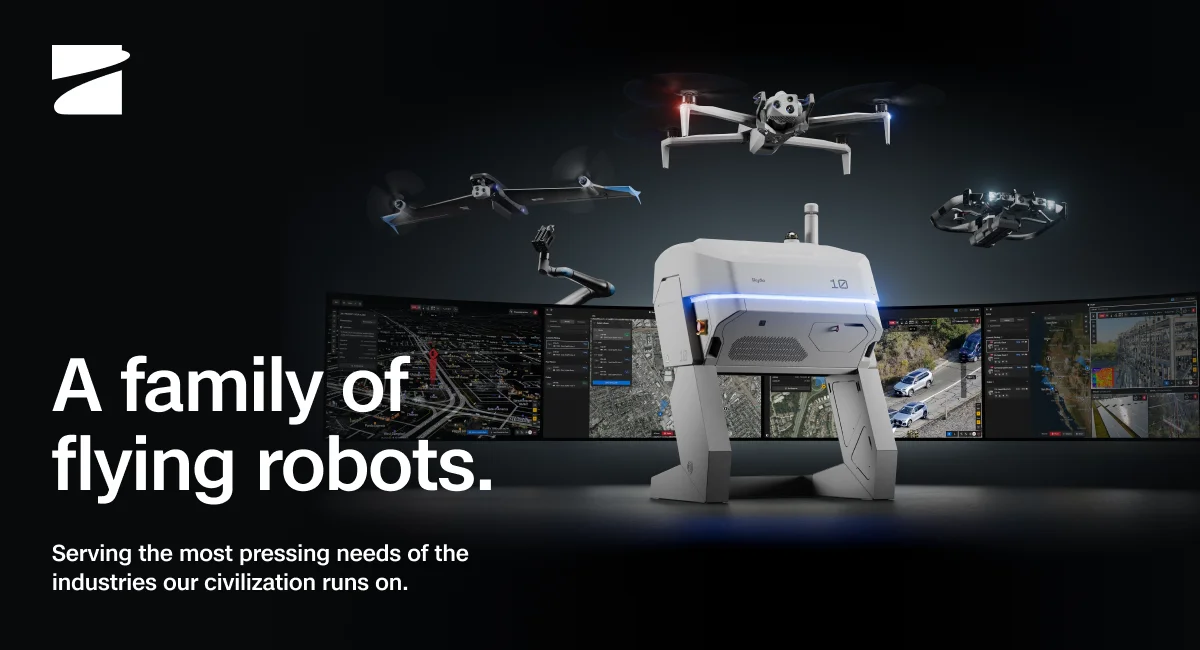
Skydio 3D Scan is a specialized software solution within the Skydio autonomous drone platform, designed to automate the capture of high-fidelity 3D maps and photogrammetric models for surveying and mapping workflows. Leveraging Skydio's industry-leading AI autonomy engine, the software guides drones through complex environments—without requiring a skilled pilot—to produce consistent, repeatable, survey-grade outputs mission after mission. Key use cases include construction site progress monitoring, crash and crime scene reconstruction for law enforcement, infrastructure asset documentation, and general geospatial data collection. The platform supports integration with Skydio's Dock for X10, enabling fully remote and even automated launch-and-return operations from fixed docking stations deployed in the field. Skydio 3D Scan is built for enterprise and government users who need reliable spatial intelligence at scale. It connects to the broader Skydio software ecosystem—including DFR Command and Remote Ops—and supports third-party integrations through Skydio Extend and its developer tools catalog. The result is a complete, end-to-end autonomous data collection workflow that reduces reliance on manual labor, minimizes human exposure to hazardous environments, and accelerates the delivery of actionable geospatial insights to decision-makers.
Key Features
- Fully Autonomous Flight Capture: AI-guided drones execute scanning missions without manual piloting, ensuring consistent coverage and repeatable results across every flight.
- Survey-Grade 3D Maps & Models: Produces high-accuracy photogrammetric outputs suitable for professional surveying, engineering review, and legal documentation.
- Remote & Docked Operations: Integrates with the Skydio Dock for X10 to enable fully remote launches from fixed field stations, supporting lights-out autonomous data collection.
- Cross-Platform Software Ecosystem: Connects seamlessly with Skydio's DFR Command, Remote Ops, and third-party tools via Skydio Extend APIs and the integrations catalog.
- Multi-Industry Applicability: Supports construction site progress tracking, crash and crime scene reconstruction, infrastructure inspection, and general geospatial mapping workflows.
Use Cases
- Construction companies use Skydio 3D Scan to autonomously monitor site progress over time, generating accurate 3D models that track changes between visits without deploying additional survey crews.
- Law enforcement and accident investigation teams deploy 3D Scan to rapidly document crash and crime scenes with survey-grade precision, preserving spatial evidence and accelerating case processing.
- Utility and energy infrastructure operators use the software to create detailed 3D models of substations, towers, and pipelines, enabling proactive maintenance planning and post-incident analysis.
- Government and military agencies leverage 3D Scan for base mapping, border terrain documentation, and asset inventory—gathering actionable geospatial intelligence with minimal personnel exposure.
- Engineering and transportation departments use 3D Scan to produce as-built documentation for bridges, roads, and structures, integrating drone-captured models into BIM and GIS workflows.
Pros
- No Expert Pilot Required: Skydio's AI autonomy handles complex flight paths and obstacle avoidance, making high-quality 3D capture accessible to non-pilot operators.
- Repeatable, Consistent Data Quality: Automated flight planning ensures identical coverage parameters on every mission, enabling accurate change detection and progress monitoring over time.
- End-to-End Platform Integration: Works natively within the full Skydio ecosystem—hardware, docking, software, and developer APIs—reducing integration friction for enterprise deployments.
Cons
- Hardware Dependency: Skydio 3D Scan is tightly coupled with Skydio drone hardware (e.g., X10), limiting use for organizations with existing non-Skydio drone fleets.
- Enterprise Pricing: As a premium enterprise solution, total cost of ownership—including hardware, docking infrastructure, and software licensing—can be significant.
- Limited Consumer Accessibility: The platform is designed for large-scale professional and government deployments, making it less suitable for small teams or individual users.
Frequently Asked Questions
What is Skydio 3D Scan used for?
Skydio 3D Scan is used to autonomously capture survey-grade 3D maps and models for applications like construction site monitoring, crime and crash scene reconstruction, infrastructure inspection, and general geospatial mapping.
Does Skydio 3D Scan require a trained drone pilot?
No. Skydio's AI autonomy engine handles flight path planning, obstacle avoidance, and data capture automatically, allowing non-pilot operators to conduct professional-grade scanning missions.
Which Skydio drones are compatible with 3D Scan?
Skydio 3D Scan is optimized for the Skydio X10 and works in conjunction with the Skydio Dock for X10 to support fully remote and automated deployments.
Can Skydio 3D Scan integrate with third-party software?
Yes. Through Skydio Extend, developers and enterprise customers can connect 3D Scan data and workflows to third-party platforms using available APIs and the Skydio integrations catalog.
What industries use Skydio 3D Scan?
Primary industries include construction and engineering, public safety and law enforcement, utilities and energy infrastructure, transportation, and national security and defense.