

About
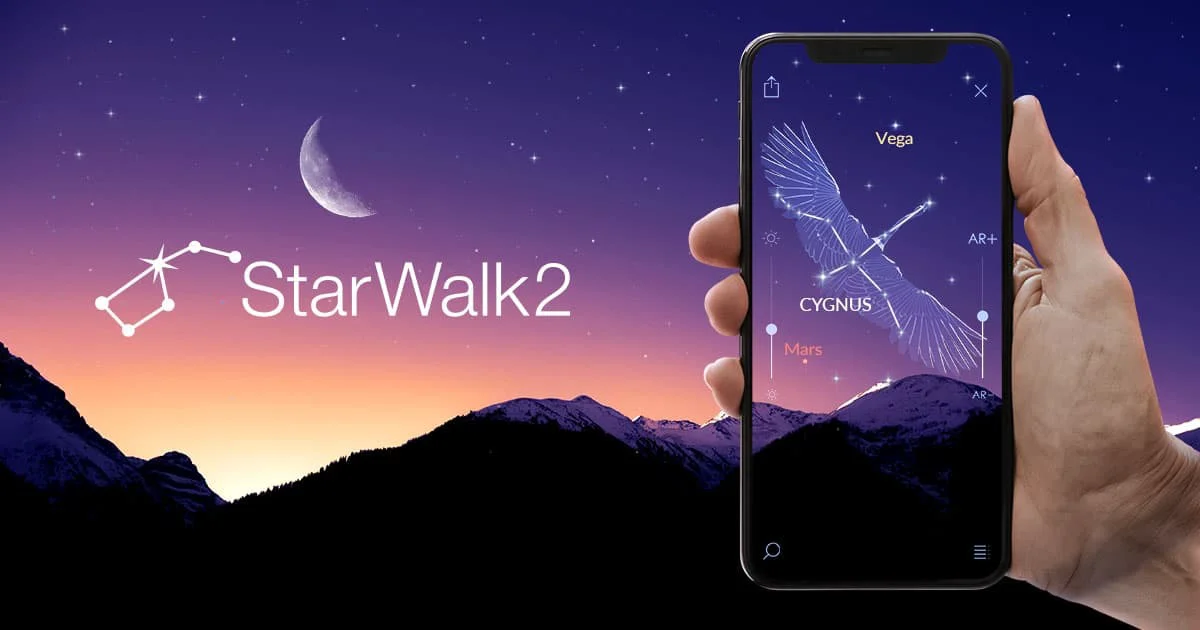
Star Walk 2 is a feature-rich astronomy and stargazing application developed by Vito Technology, Inc. It transforms any smartphone into a powerful celestial guide by overlaying a real-time, interactive sky map onto your device's camera feed using augmented reality. Users can instantly identify stars, planets, constellations, nebulae, star clusters, galaxies, asteroids, comets, meteors, and even man-made satellites such as the ISS and Starlink satellites simply by pointing their phone at the sky. The app's 'What's Up in the Sky?' feature shows which objects are currently visible from your specific location and calculates the best observation times. The built-in Encyclopedia of the Sky provides extended information, photos, and elaborate 3D models for thousands of celestial objects. A unique Time Travel feature lets users visualize the sky map at any past or future date and location on Earth — ideal for planning stargazing or astrophotography sessions. Star Walk 2 also delivers up-to-date astronomical news and push notifications for upcoming sky events such as meteor showers, eclipses, and planetary conjunctions. Optional extensions expand coverage to satellites, deep-sky objects, and more. Educators at institutions like the American College of Education recommend it as a supplemental teaching tool for astronomy courses. With an intuitive interface, visual effects, and immersive music, Star Walk 2 is equally approachable for curious beginners and dedicated amateur astronomers.
Key Features
- Real-Time AR Sky Map: Point your device at the sky to instantly overlay an interactive, augmented reality map identifying stars, planets, constellations, and satellites in real time.
- Encyclopedia of the Sky: Access detailed information, high-resolution photos, and elaborate 3D models for thousands of celestial objects including nebulae, galaxies, asteroids, and comets.
- Time Travel Visualization: Simulate the sky at any date and time — past or future — for any location on Earth, making it easy to plan observation sessions or explore historical astronomical events.
- What's Up Tonight: Get a location-aware list of sky objects currently visible from your position, complete with rise and set times to optimize your viewing window.
- Astronomical News & Event Alerts: Stay informed about upcoming astronomical events like meteor showers, eclipses, and planetary conjunctions with timely push notifications and curated news articles.
Use Cases
- Amateur astronomers identifying stars, planets, and constellations during evening stargazing sessions using their smartphone.
- Teachers and educators using the app as a supplemental classroom tool when teaching astronomy units in schools and colleges.
- Astrophotographers planning shoots by checking object visibility windows, rise/set times, and sky positions at specific future dates.
- Space enthusiasts tracking live positions of the ISS, Starlink satellite trains, and newly discovered comets from their backyard.
- Curious travelers and hikers using the app to navigate by the stars or learn the night sky while away from city lights.
Pros
- Beginner-Friendly: Simple setup, intuitive navigation, and clear AR overlays make it accessible to anyone new to astronomy, earning praise from educators and reviewers alike.
- Rich Educational Content: The built-in sky encyclopedia with 3D models and detailed object data turns casual stargazing into a genuine learning experience, recommended for classroom use.
- Affordable Feature Set: Offers a wide range of powerful astronomy tools at a relatively low price point compared to dedicated telescope software or desktop planetarium applications.
- Satellite & Comet Tracking: Tracks live positions of the ISS, Starlink satellites, and comets, providing rise/set times and visibility windows that other basic stargazing apps often omit.
Cons
- Key Features Locked Behind Extensions: Advanced content such as deep-sky object catalogs and expanded satellite tracking require purchasing optional in-app extensions, increasing the total cost.
- Primarily a Mobile Experience: The app is designed for iOS and Android; the web presence is informational rather than a full-featured alternative, limiting use on desktops or laptops.
- Light Pollution Not Accounted For: The sky map shows theoretical object positions but does not factor in local light pollution levels, which can affect real-world visibility expectations for users in urban areas.
Frequently Asked Questions
What is Star Walk 2?
Star Walk 2 is a mobile astronomy app that uses augmented reality to display a real-time sky map on your device, helping you identify stars, planets, constellations, satellites, comets, and other celestial objects by pointing your phone at the sky.
Is Star Walk 2 suitable for beginners?
Yes. Reviewers from Space.com and educators from the American College of Education specifically highlight Star Walk 2's easy setup and intuitive navigation as ideal for beginners with little to no prior astronomy knowledge.
Can I track satellites like the ISS or Starlink with Star Walk 2?
Yes. Star Walk 2 provides real-time tracking for the ISS (NORAD ID 25544), Starlink satellites, and other man-made objects in orbit, including predicted rise and set times for your location.
Does the Time Travel feature work for any date?
Yes. The Time Travel feature lets you visualize what the sky looks like at any date and time — past or future — and for any location on Earth, which is useful for planning stargazing sessions or exploring historical celestial events.
Is Star Walk 2 free to use?
Star Walk 2 operates on a freemium model. A base version is available at a low cost, and optional paid extensions unlock additional content such as expanded satellite catalogs, deep-sky objects, and other specialized databases.