

About
StoryFile enables museums, cultural institutions, and individuals to preserve firsthand history and personal memories through immersive, conversational AI. The platform works in three stages: a cinematic, professionally filmed interview session captures hundreds of thoughtful responses; StoryFile's AI then intelligently indexes each answer to natural conversational pathways; and finally, visitors or family members can ask questions in real time and receive instant, authentic video replies drawn from the original interview. Unlike generative avatar tools that can fabricate responses, StoryFile is grounded in real recordings—preserving the authentic voice, emotion, and words of the subject. This makes it uniquely suited for memorial applications, historical preservation, and educational installations. Institutions like the National WWII Museum, the Japanese American National Museum, and the Holocaust Museum for Hope & Humanity have deployed StoryFile experiences to connect visitors with living history. The platform also supports personal use, allowing families to create StoryFiles of loved ones so future generations can ask questions and hear answers directly. For in-person installations, StoryFile pairs with HOLOGLASS, a premium 3D holographic display that renders the digital human at life-size scale with cinematic fidelity. The platform is designed for enterprise and institutional clients, accessed via a demo request model.
Key Features
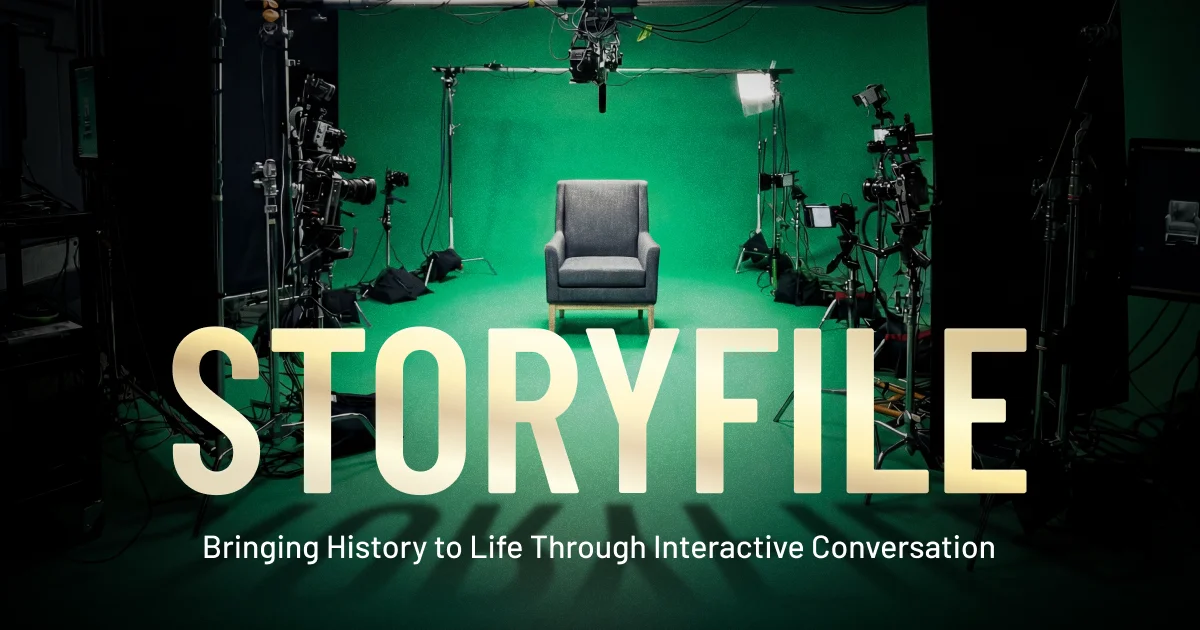
- Cinematic Interview Recording: Professionally filmed sessions capture hundreds of thoughtful, authentic responses from the subject for use in the interactive experience.
- AI-Powered Response Indexing: StoryFile's AI intelligently links each recorded answer to natural conversational pathways, enabling fluid, context-aware interactions.
- Real-Time Video Interaction: Visitors or users ask questions and instantly receive authentic video responses drawn directly from the original interview recordings.
- HOLOGLASS Hardware Integration: A premium 3D holographic display brings digital humans to life at life-size scale with cinematic fidelity for in-person museum and institutional installations.
- Personal Memory Preservation: Families can create StoryFiles of loved ones, allowing future generations to ask questions and hear authentic answers for years to come.
Use Cases
- Museums and cultural institutions preserving firsthand accounts from veterans, survivors, or historical figures for interactive visitor experiences
- Educational institutions creating engaging digital exhibits where students can 'interview' notable scientists, astronauts, or public figures
- Families creating lasting digital memories of loved ones so future generations can ask questions and hear authentic answers
- Holocaust, war, and civil rights museums capturing survivor testimonies in an interactive format before those voices are lost
- Corporate and organizational legacy projects preserving the knowledge and stories of founders, leaders, or long-tenured employees
Pros
- Authentic, Non-Fabricated Responses: Unlike generative AI avatars, StoryFile only delivers real recorded answers, ensuring emotional integrity and factual accuracy.
- Proven Institutional Adoption: Deployed at respected institutions including the National WWII Museum and the Holocaust Museum for Hope & Humanity, validating its reliability for sensitive historical content.
- Immersive Visitor Experience: The combination of real video, AI-driven conversation, and optional holographic hardware creates a deeply engaging and memorable experience for museum visitors.
Cons
- Enterprise Pricing with No Self-Serve Option: StoryFile requires booking a demo and is clearly aimed at institutional clients, making it inaccessible for individuals or small organizations with limited budgets.
- Limited to Pre-Recorded Content: Because responses are drawn only from filmed interviews, the conversational scope is constrained by the questions asked during the original recording session.
- Hardware Dependency for Best Experience: The most immersive installations rely on the proprietary HOLOGLASS display, adding significant cost and logistical complexity for physical deployments.
Frequently Asked Questions
What makes StoryFile different from AI chatbots or avatar generators?
StoryFile only delivers authentic video responses from real filmed interviews—it does not generate or fabricate responses. This preserves the genuine voice, emotion, and words of the subject, which is critical for historical preservation and memorial applications.
Who is StoryFile designed for?
StoryFile is primarily designed for museums, cultural institutions, and historical organizations. It is also available for personal use, allowing families to preserve the voices and memories of loved ones for future generations.
How does the interview process work?
A professional filming session captures the subject answering hundreds of carefully structured questions. StoryFile's AI then indexes these responses so that future visitors can ask natural questions and receive the most relevant video answer in real time.
What is HOLOGLASS?
HOLOGLASS is StoryFile's premium 3D holographic display hardware that renders digital human figures at life-size scale with cinematic fidelity, designed for physical museum and institutional installations.
How do I get started with StoryFile?
StoryFile is available through a demo booking process. Organizations interested in deploying it for a museum, institution, or personal project can contact StoryFile directly via their website to discuss requirements and pricing.