

About
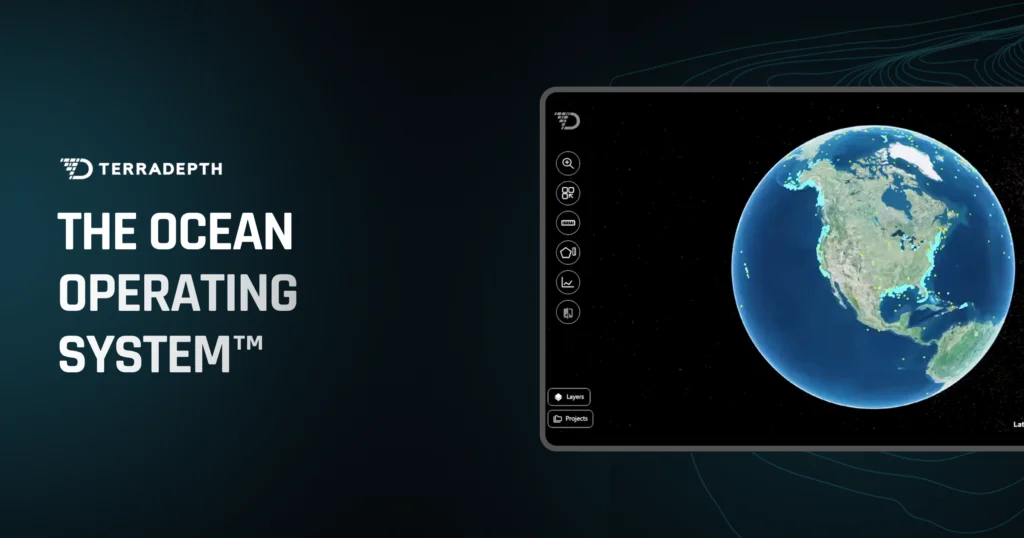
Terradepth is an enterprise ocean intelligence company offering The Ocean Operating System™ — an end-to-end platform for acquiring, managing, and acting on high-consequence ocean data. At its core is Absolute Ocean, a cloud-native, API-first, data-agnostic platform that unifies bathymetric surveys, AUV/ASV sensor feeds, satellite data, and open-source datasets (NOAA, EMODnet) into a single collaborative environment. The platform is built on a federated architecture enabling interoperability across autonomous systems while preserving local control, making it suitable for both commercial and defense applications. Key capabilities include operational command-and-control interfaces for mission planning, real-time asset and infrastructure monitoring, multi-stakeholder secure collaboration, high-fidelity seabed resource mapping, and acoustic signature classification for threat detection. Terradepth also operates a proprietary fleet of self-recharging autonomous submarines providing continuous subsea intelligence, delivering claimed CAPEX reductions of 20x compared to traditional survey methods. The platform supports 3D seafloor visualization, terrain profile analysis, and geospatial data ingestion from third-party hardware. Primary users include defense and national security agencies, offshore energy operators, maritime insurers, government regulators, subsea telecommunications providers, and oceanographic research institutions. Terradepth is headquartered in Cedar Park, Texas, and offers platform access via demo request.
Key Features
- Absolute Ocean Platform: Cloud-native, API-first platform that aggregates and visualizes ocean data from autonomous vehicles, third-party sensors, satellites, and open-source datasets in one unified environment.
- Autonomous Submarine Fleet: Proprietary self-recharging underwater drones provide continuous, comprehensive subsea intelligence at up to 20x lower cost than traditional survey methods.
- Interactive 3D Seafloor Visualization: Explore high-resolution bathymetric models in an intuitive 3D interface with built-in measurement, terrain profiling, and mission planning tools.
- Dual-Use Threat Detection & Mission Control: Supports acoustic signature classification, anomaly detection, and operational command-and-decision interfaces for both commercial and defense applications.
- Multi-Source Data Ingestion: Seamlessly ingest data from AUVs, ASVs, partner hardware, NOAA, EMODnet, and satellite sources into a federated, secure collaboration environment.
Use Cases
- Defense agencies using autonomous underwater surveillance for real-time acoustic anomaly detection and threat classification in contested maritime zones.
- Offshore energy operators conducting pipeline inspection, infrastructure monitoring, and site surveys for oil, gas, and offshore wind installations.
- Maritime insurers performing underwater asset verification and risk assessment for salvage operations and hull inspections.
- Government agencies managing coastal mapping, environmental compliance monitoring, and marine resource management with aggregated multi-source data.
- Oceanographic research institutions collecting high-resolution bathymetric and environmental data for scientific study of seafloor ecosystems.
Pros
- Significant Cost Reduction: Self-recharging autonomous submarines deliver up to 20x reduction in survey costs with two orders of magnitude in CAPEX savings on energy payloads.
- Unified Data Ecosystem: Federates data from proprietary robots, third-party hardware, and public datasets into one platform, eliminating silos across missions and organizations.
- Dual-Use Flexibility: The architecture supports both commercial use cases (energy, insurance, telecom) and sensitive defense/national security applications with local control preserved.
- API-First, Open Architecture: Cloud-native and API-first design allows organizations to build tailored applications and integrate Terradepth data into existing workflows.
Cons
- Enterprise-Only Access: Platform access requires a demo request with no self-serve or public pricing, creating a high barrier to entry for smaller organizations or researchers.
- Highly Specialized Domain: The platform is purpose-built for maritime and subsea use cases, offering limited utility outside ocean-related industries.
- Hardware Dependency: Full value of the platform is realized when paired with Terradepth's proprietary autonomous submarine fleet, which may involve significant procurement commitments.
Frequently Asked Questions
What is the Absolute Ocean platform?
Absolute Ocean is Terradepth's cloud-native, data-agnostic platform that unifies ocean data collection, storage, visualization, analysis, and collaboration. It supports data from Terradepth's own autonomous submarines, third-party AUVs/ASVs, and public datasets like NOAA and EMODnet.
Who is Terradepth designed for?
Terradepth serves a range of sectors including defense and national security, offshore energy, maritime insurance, government and regulatory agencies, scientific research institutions, and subsea telecommunications infrastructure providers.
How does Terradepth reduce ocean survey costs?
Terradepth uses self-recharging autonomous submarines that can operate continuously without expensive crewed vessel support, delivering claimed cost reductions of up to 20x compared to traditional survey methods.
Can Terradepth integrate with existing hardware and data sources?
Yes. The platform is designed to ingest data from third-party AUVs, ASVs, sensors, and partner hardware, as well as public datasets, making it compatible with existing maritime technology stacks.
Is Terradepth suitable for defense applications?
Yes. The dual-use architecture supports defense and national security use cases including acoustic signature classification, anomaly detection, and mission control, while maintaining local data control through its federated design.