
About
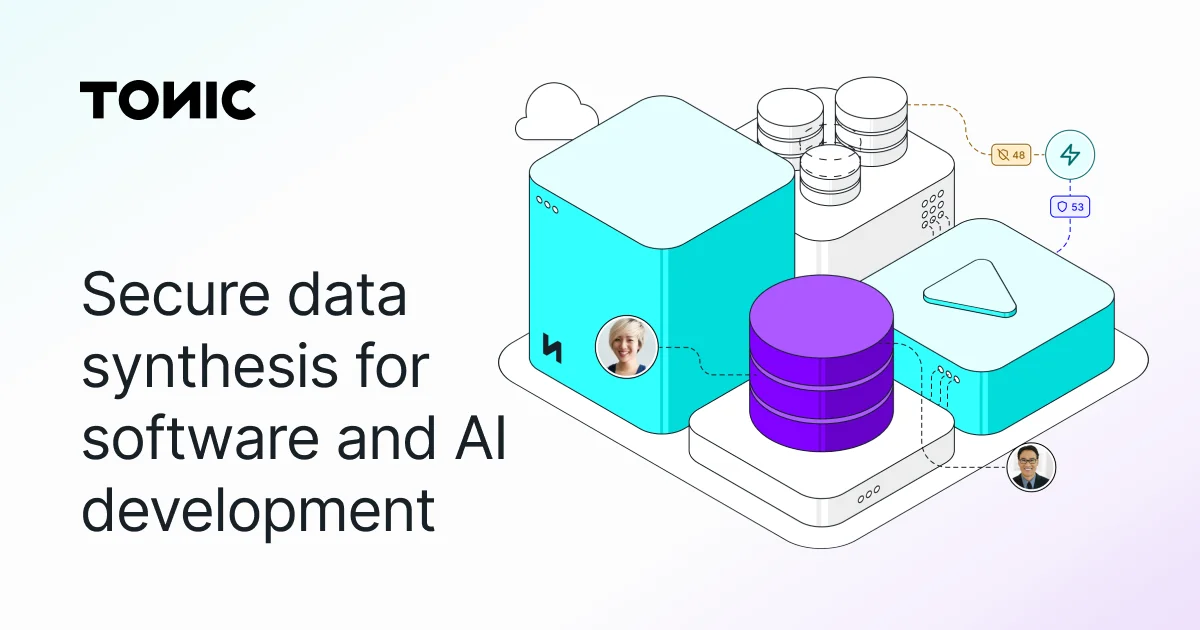
Tonic AI is a comprehensive synthetic data platform purpose-built for software engineers, QA teams, and AI developers who need realistic, privacy-safe data without the risk of exposing sensitive information. The platform comprises three products: Tonic Fabricate, which generates relational data, free-text, and mock APIs entirely from scratch; Tonic Structural, which de-identifies, subsets, and synthesizes structured and semi-structured production databases while preserving referential integrity; and Tonic Textual, which detects, redacts, and synthesizes sensitive information in unstructured documents, free-text, and files using Named Entity Recognition. Tonic AI integrates with a broad ecosystem of data sources including relational databases, data lakes, NoSQL databases, flat files, and SaaS applications. Its capabilities span data discovery and classification, database subsetting, guided redaction for government and enterprise, expert determination, and LLM privacy proxying—making it suitable for teams handling regulated data at scale. Key use cases include accelerating app development by eliminating data dependencies, enabling faster and safer QA cycles with production-like test databases, preparing compliant training datasets for LLM fine-tuning and RAG systems, and implementing data governance pipelines for HIPAA, GDPR, and financial compliance requirements. Tonic AI serves industries with strict compliance needs—particularly healthcare and financial services—and is trusted by software development, data engineering, and AI teams that need to move fast without compromising data privacy.
Key Features
- Tonic Fabricate – Synthesize from Scratch: Generate realistic relational data, free-text, and mock APIs from scratch without needing any existing production data source.
- Tonic Structural – Structured Data De-identification: De-identify, subset, and synthesize structured and semi-structured databases while preserving referential integrity for safe testing environments.
- Tonic Textual – Unstructured Data Redaction: Detect and redact sensitive PII and other entities in unstructured documents, free-text, and files using Named Entity Recognition.
- LLM Privacy Proxy & AI Training Support: Redact sensitive data before it reaches AI models and prepare privacy-compliant datasets for LLM fine-tuning and RAG system development.
- Broad Integration Support: Connects with relational databases, data lakes, NoSQL databases, flat files, and SaaS applications for seamless data pipeline integration.
Use Cases
- Generating realistic synthetic test databases from production data to unblock QA teams and accelerate release cycles
- De-identifying sensitive customer or patient data to create safe development and staging environments
- Preparing privacy-compliant unstructured datasets for LLM fine-tuning and RAG system development
- Building mock APIs and synthesized relational data from scratch for rapid prototyping without production data access
- Implementing an LLM privacy proxy to prevent sensitive information from being sent to external AI services
Pros
- Three Specialized Products for Full Coverage: Fabricate, Structural, and Textual together cover every data scenario—from scratch generation to structured database de-identification to unstructured document redaction.
- Built for Compliance-Sensitive Industries: Designed with healthcare and financial services requirements in mind, offering guided redaction, expert determination, and data governance features out of the box.
- Enables Safe AI Model Training: Teams can safely use sensitive datasets for LLM fine-tuning and RAG pipelines by detecting and redacting PII and confidential information before training.
- Free Tier to Get Started: A free plan lowers the barrier to entry, allowing teams to evaluate synthetic data capabilities before committing to a paid plan.
Cons
- Three Separate Products Add Management Overhead: Users needing capabilities across Fabricate, Structural, and Textual must navigate and manage multiple distinct products, which can add operational complexity.
- Configuration Effort for Complex Environments: Setting up de-identification and subsetting pipelines across large, multi-system production environments may require significant initial configuration time.
- Advanced Compliance Features Require Enterprise Tier: Guided redaction for government, expert determination, and enterprise-grade compliance workflows likely require upgrading beyond the free or standard plans.
Frequently Asked Questions
What is the difference between Tonic Fabricate, Structural, and Textual?
Fabricate creates synthetic data entirely from scratch, Structural de-identifies and synthesizes structured databases from existing production sources, and Textual handles unstructured documents and free-text for redaction and synthesis.
Can Tonic AI help with LLM and AI model training?
Yes. Tonic AI detects and redacts sensitive information in training datasets, enabling teams to safely fine-tune LLMs and build RAG systems without risking privacy violations.
Does Tonic AI preserve referential integrity in synthesized data?
Yes. Tonic Structural preserves referential integrity when transforming production databases into test datasets, ensuring relationships between tables remain valid and consistent.
Which industries does Tonic AI primarily serve?
Tonic AI is particularly focused on regulated industries including financial services and healthcare, where strict data privacy, compliance, and governance requirements apply.
Is there a free version of Tonic AI?
Yes. Tonic AI offers a free tier to get started with synthetic data generation. Advanced features and higher usage volumes are available through paid plans.