

About
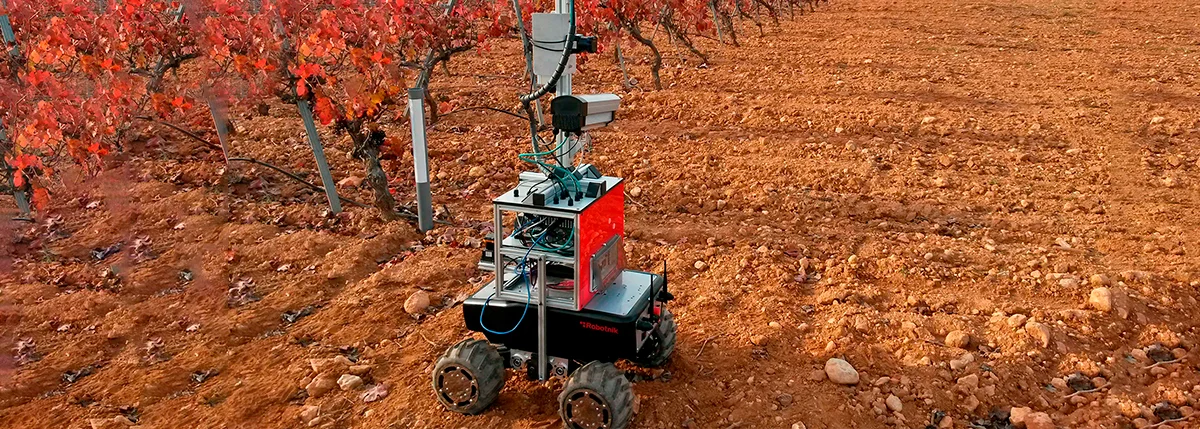
VinBot is an autonomous off-road mobile robot developed by Robotnik as part of a European research initiative aimed at boosting wine quality through data-driven vineyard management. Built on the Summit XL all-terrain robot platform, VinBot is equipped with a suite of sensors capable of capturing high-resolution vineyard images and detailed 3D point cloud data as it navigates autonomously through vine rows. The captured data is transmitted to cloud computing applications where it is processed and analyzed to estimate vineyard yield — measured in kilograms per square meter of vine area (kg/m²). This yield estimation capability is central to precision viticulture (PV), enabling winegrowers to make more accurate, timely decisions about canopy management techniques applied throughout the growing season. By knowing yield forecasts for different vineyard areas, growers can also plan sequential harvesting — picking sections of the vineyard at the precise moment each area reaches optimal grape ripeness — directly contributing to improved wine quality and reduced waste. Insights and reports are shared with winegrowers through the connected cloud platform, making complex sensor data accessible and actionable. VinBot is ideally suited for European wine producers, agricultural research institutions, and precision agriculture technology integrators looking to modernize vineyard operations. The project is part of a broader EU-funded R&D initiative, reflecting collaborative efforts across the wine and robotics industries to advance sustainable, data-informed viticulture.
Key Features
- Autonomous All-Terrain Navigation: Built on the Summit XL platform, VinBot navigates vineyard rows autonomously without human intervention, even across rough, uneven off-road terrain.
- Multi-Sensor Image & 3D Data Capture: Equipped with cameras and depth sensors to capture high-resolution vineyard images and detailed 3D point cloud data of the vine canopy and fruit.
- Cloud-Based Yield Estimation: Captured data is processed via cloud computing applications to calculate grape yield per square meter (kg/m²), enabling accurate harvest forecasting.
- Precision Viticulture Analytics: Provides winegrowers with data-driven insights to optimize canopy management techniques and plan sequential harvesting by ripeness zone.
- Winegrower Information Sharing: Analytical results and vineyard intelligence are shared directly with winegrowers through connected cloud applications for decision support.
Use Cases
- Automated yield estimation across large vineyard estates to plan purchasing, logistics, and harvest crew scheduling.
- Zone-specific sequential harvesting planning by identifying which vineyard sections have reached optimal grape ripeness.
- Data-driven annual canopy management, using 3D vine structure data to guide pruning and canopy maintenance decisions.
- Precision viticulture research by agricultural universities and institutions studying sustainable wine production techniques.
- Wine quality improvement programs where producers leverage sensor analytics to minimize inconsistency across harvests.
Pros
- Enables Large-Scale Precision Viticulture: Automates data collection across entire vineyards, making precision agriculture practical and scalable for wine producers of various sizes.
- Reduces Manual Monitoring Labor: Replaces or augments time-intensive manual vineyard scouting, freeing up winegrowers to focus on quality-impacting decisions.
- Directly Improves Wine Quality: By enabling optimal, zone-specific harvest timing based on real data, VinBot contributes to measurably better grape ripeness and wine quality.
- Robust Off-Road Performance: The Summit XL base is purpose-built for rough terrain, ensuring reliable operation across the varied ground conditions found in real vineyards.
Cons
- High Acquisition & Deployment Cost: As a specialized autonomous robotics platform, VinBot involves significant capital investment, making it less accessible for small or budget-constrained vineyards.
- Narrow Agricultural Focus: VinBot is purpose-built for viticulture and is not adaptable for other agricultural or industrial use cases without significant modification.
- Technical Integration Requirements: Deploying VinBot effectively requires technical expertise for setup, sensor calibration, and integration with cloud computing infrastructure.
Frequently Asked Questions
What is VinBot and who developed it?
VinBot is an autonomous all-terrain mobile robot developed by Robotnik as part of an EU-funded research project. It is designed to help winegrowers optimize vineyard performance through precision viticulture using robotics and cloud computing.
How does VinBot estimate grape yield?
VinBot navigates vineyard rows autonomously, capturing images and 3D data with its onboard sensors. This data is uploaded to cloud computing applications that analyze vine canopy and fruit density to calculate estimated yield in kilograms per square meter (kg/m²).
What robot platform is VinBot built on?
VinBot is based on the Robotnik Summit XL, an all-terrain autonomous mobile robot platform designed for outdoor and off-road environments, which makes it well suited to navigating uneven vineyard terrain.
How does VinBot help improve wine quality?
By providing accurate yield estimates and canopy data, VinBot enables winegrowers to perform better canopy management and plan sequential harvesting — picking each vineyard zone when grapes reach their optimal ripeness, which directly improves wine quality.
Is VinBot a commercial product or a research project?
VinBot originated as a European R&D research project and is part of Robotnik's portfolio of specialized autonomous robots. Deployment is handled through Robotnik's commercial channels and is typically suited for enterprise-level wine producers and agri-tech research organizations.