

About
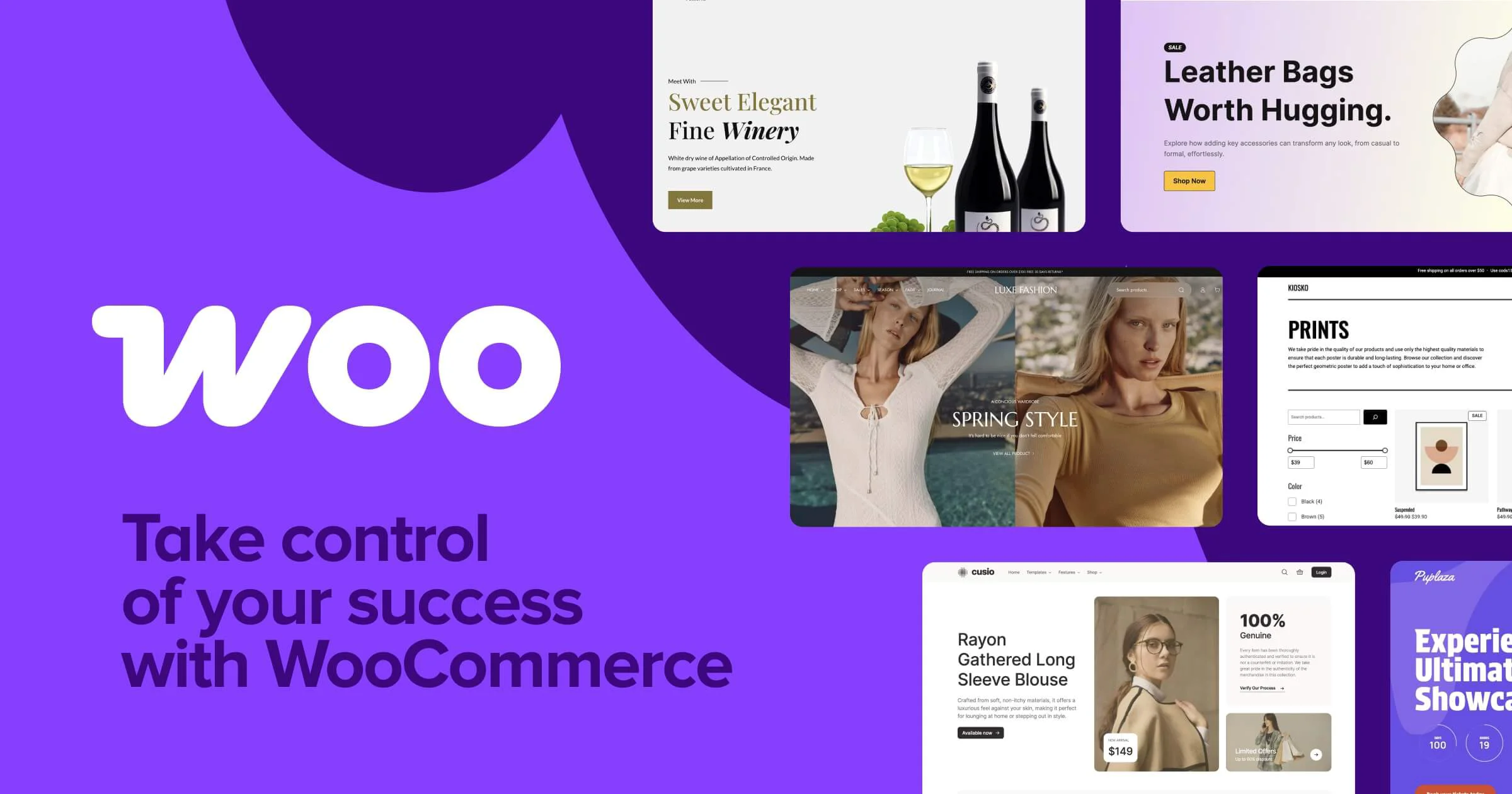
WooCommerce is a free, open-source ecommerce plugin for WordPress that transforms any WordPress site into a fully functional online store. Unlike hosted SaaS platforms, WooCommerce puts merchants in complete control — of their payments provider, hosting environment, store design, customer data, and feature set. With over 4 million active stores and powering nearly a third of the top 1 million ecommerce sites globally, it is the most trusted ecommerce solution on the web. Merchants can sell physical products, digital downloads, subscriptions, memberships, and more. WooCommerce supports multichannel selling — syncing inventory and orders across a store's own site, TikTok, Amazon, and third-party retailers — all from one dashboard. The built-in WooPayments solution enables fast, friction-free checkout with support for Apple Pay and other modern payment methods, reducing time-to-deposit and improving conversion rates. A vast marketplace of hundreds of extensions and themes allows store owners to add virtually any feature — from advanced shipping rules and loyalty programs to email marketing and CRM integrations. Developers benefit from WooCommerce's open-source architecture and global community to build bespoke solutions for clients. Enterprise businesses get dedicated Customer Success Managers, proven scalability, and the flexibility to support complex, high-volume operations. Whether you're launching a first store or scaling a household brand, WooCommerce adapts to your needs.
Key Features
- Open-Source & Fully Customizable: As a 100% open-source platform, WooCommerce imposes no limits on customization — merchants can modify every aspect of their store's code, design, and functionality.
- WooPayments Built-In: Native payment processing with WooPayments supports Apple Pay, card payments, and more, improving checkout conversion and cutting time-to-deposit to as little as one day.
- Multichannel Selling: Automatically sync products, inventory, and orders across your WooCommerce store, TikTok Shop, Amazon, and other marketplaces from a single dashboard.
- Extensive Extensions & Themes Marketplace: Hundreds of trusted extensions and themes let you add subscriptions, advanced shipping, marketing tools, CRM integrations, and more without writing code.
- Enterprise-Grade Scalability: Dedicated Customer Success Managers, flexible hosting, and an open architecture support businesses from a single-product store to high-volume global operations.
Use Cases
- Building a fully customized branded online store with unique checkout flows and design, without the constraints of a closed SaaS platform.
- Scaling a small direct-to-consumer brand into a multichannel operation by syncing sales across a website, TikTok, Amazon, and retail locations.
- Developers and agencies building bespoke ecommerce solutions for clients using the open-source WooCommerce framework and its extension ecosystem.
- Running subscription or membership-based ecommerce businesses with recurring billing and gated content, using WooCommerce's extension marketplace.
- Enterprise retailers replacing legacy ecommerce systems with a flexible, cost-controlled platform that gives full ownership of customer data and checkout experience.
Pros
- Complete Data & Platform Ownership: Unlike hosted SaaS platforms, WooCommerce gives merchants full ownership of their customer data, store code, and hosting environment with no vendor lock-in.
- Massive Ecosystem: A global developer community and hundreds of extensions mean virtually any ecommerce feature or integration can be added to a WooCommerce store.
- Free Core Platform: The core WooCommerce plugin is completely free, making it accessible to businesses of all sizes — from solo entrepreneurs to enterprise brands.
- Proven at Scale: Powers 4M+ stores and 31% of the top 1 million ecommerce sites, with case studies showing 22–35% conversion rate improvements for brands like Nutribullet and House of Malt.
Cons
- Requires WordPress Hosting Knowledge: Unlike all-in-one hosted platforms, WooCommerce requires merchants to manage their own WordPress hosting, updates, backups, and security, which can be complex for non-technical users.
- Costs Can Escalate with Extensions: While the core plugin is free, advanced features often require paid extensions and premium themes, which can make total cost of ownership higher than expected.
- Performance Depends on Hosting: Store speed and uptime are directly tied to the quality of the hosting provider chosen, requiring additional investment or expertise to optimize at scale.
Frequently Asked Questions
Is WooCommerce free to use?
Yes, the core WooCommerce plugin is 100% free and open-source. However, you will need to pay for WordPress hosting, a domain name, and potentially premium extensions or themes to unlock advanced functionality.
Do I need WordPress to use WooCommerce?
Yes, WooCommerce is a WordPress plugin and requires a WordPress installation to run. WordPress itself is also free and open-source, and most web hosts offer one-click WordPress installations.
Can WooCommerce handle large, high-traffic stores?
Absolutely. WooCommerce powers enterprise brands with millions of orders. Performance scales with your hosting infrastructure, and dedicated enterprise support with Customer Success Managers is available for high-volume businesses.
What payment methods does WooCommerce support?
WooCommerce supports a wide range of payment gateways including WooPayments (its native solution), PayPal, Stripe, Apple Pay, and hundreds more through extensions, giving merchants full flexibility in how they accept payments.
Can I sell on multiple channels with WooCommerce?
Yes. WooCommerce supports multichannel selling, allowing you to sync your products, inventory, and orders across your website, TikTok Shop, Amazon, and other marketplaces automatically from one central dashboard.