

About
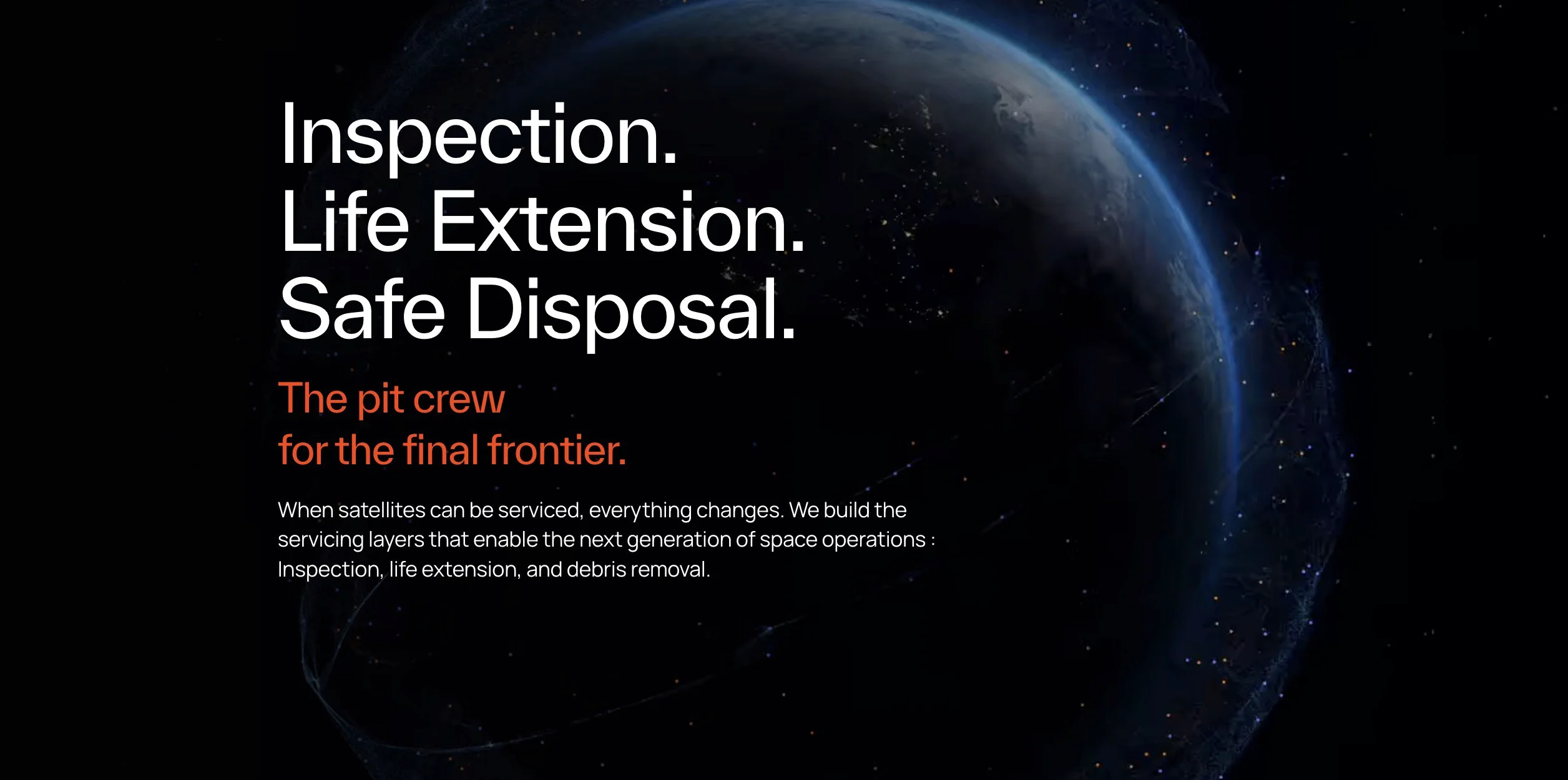
ClearSpace builds the servicing layers that define the next generation of space operations. Facing an era of rapidly growing satellite constellations and accumulating orbital debris, ClearSpace offers three core service pillars: Inspection, Life Extension, and Safe Disposal. Their maneuverable inspection spacecraft can approach assets at close range, delivering high-fidelity optical imaging, real-time telemetry, anomaly detection, and ownership attribution. This actionable intelligence reduces mission risk, accelerates anomaly resolution, and lowers unplanned operational costs. For life extension, ClearSpace provides precision in-orbit servicing that preserves satellite performance and unlocks additional years of operational value — going beyond standard GEO compatibility to handle both cooperative and non-cooperative missions. Satellite missions can be extended without the capital cost of a replacement vehicle. For safe disposal, ClearSpace offers controlled re-entry and targeted debris removal, achieving up to 75% propellant savings through optimized capture sequences. Their approach ensures compliance with Clean Space policies while protecting orbital slots and long-term mission objectives. What distinguishes ClearSpace is its speed-to-capability: delivering in three years what competitors require a decade to mature, with proven readiness through ESA missions. ClearSpace is purpose-built for satellite operators, government agencies, and commercial space enterprises that need dependable, last-minute operational solutions to protect their assets and preserve orbital access.
Key Features
- High-Fidelity In-Orbit Inspection: Maneuverable spacecraft delivers skin-close optical imaging, real-time telemetry, and anomaly detection to provide actionable intelligence for satellite operators.
- Satellite Life Extension: Precision in-orbit servicing preserves satellite performance and extends operational lifetimes by up to 7+ years without requiring costly vehicle replacement.
- Safe Debris Disposal: Controlled re-entry and targeted orbital debris removal with up to 75% propellant savings, ensuring compliance with Clean Space policies.
- Non-Cooperative Mission Capability: Beyond standard GEO compatibility, ClearSpace is engineered to handle exceptions where cooperative missions become non-cooperative mid-operation.
- ESA-Proven Technical Readiness: Technology matured through ESA mission programs, delivering in three years what competitors take a decade to develop — built for critical, last-minute operations.
Use Cases
- Satellite operators extending the operational life of aging GEO satellites to maximize return on investment without launching a replacement vehicle.
- Space agencies and commercial operators conducting close-proximity inspection of satellites to diagnose anomalies, attribute ownership, and assess damage.
- End-of-life satellite disposal to comply with international Clean Space regulations and national licensing requirements.
- Orbital debris removal campaigns to reduce collision risk for active satellite constellations and protect high-value orbital slots.
- Mission assurance for critical government and commercial satellites requiring rapid characterization and operational status verification.
Pros
- Proven Through ESA Partnerships: High technical readiness validated through European Space Agency missions provides operators with confidence in mission-critical deployments.
- Rapid Capability Delivery: ClearSpace delivers mature, operational servicing capabilities in roughly three years — significantly faster than industry competitors.
- Significant Propellant Savings: Optimized capture and removal sequences achieve up to 75% propellant savings compared to conventional debris mitigation approaches.
- End-to-End Service Coverage: A single provider covers the full satellite lifecycle — from in-orbit inspection through life extension to controlled end-of-life disposal.
Cons
- Highly Specialized Market: Services are exclusively relevant to satellite operators, government space agencies, and commercial space enterprises — not applicable to general technology users.
- Enterprise Pricing: In-orbit servicing missions involve significant cost and complex contracting, making ClearSpace inaccessible to smaller or early-stage space ventures.
- Limited Self-Service Information: Detailed technical specifications, pricing, and mission timelines are not publicly disclosed and require direct engagement with the ClearSpace team.
Frequently Asked Questions
What core services does ClearSpace provide?
ClearSpace offers three core in-orbit services: Inspection (close-proximity satellite imaging and anomaly detection), Life Extension (in-orbit servicing to extend satellite operational lifetime), and Safe Disposal (controlled re-entry and targeted debris removal to ensure orbital compliance).
Which orbital regimes does ClearSpace support?
ClearSpace is designed primarily around GEO (Geostationary Orbit) compatibility but goes beyond standard constraints to handle missions in other orbital regimes and exceptions where standard cooperative mission profiles are not feasible.
How does ClearSpace handle non-cooperative satellites?
ClearSpace's servicing platform is engineered to adapt when cooperative missions become non-cooperative, leveraging its maneuverable spacecraft and precision guidance systems to maintain mission success under challenging conditions.
How quickly can ClearSpace deliver a servicing mission?
ClearSpace is built for speed-to-capability, delivering mature operational servicing in approximately three years — roughly three times faster than industry competitors — and is designed for dependable, last-minute operational deployments.
How does ClearSpace contribute to space sustainability?
By providing targeted debris removal, controlled re-entry, and life extension services, ClearSpace directly reduces collision threats, protects orbital slots, and enables compliance with Clean Space policies — preserving long-term access to valuable orbital environments.