
About
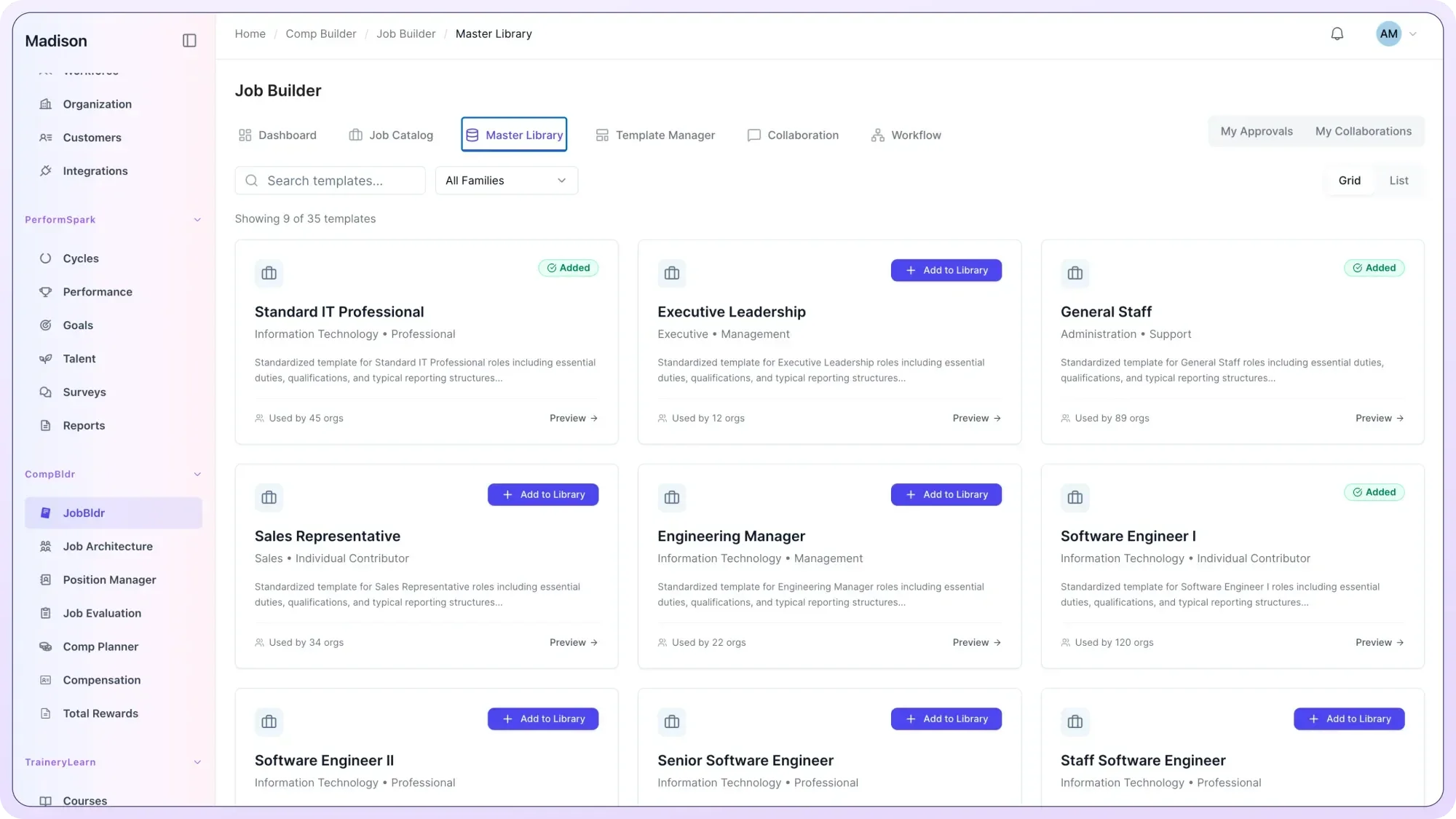
CompBldr centralizes compensation management for HR and Finance teams, replacing fragmented spreadsheets and disconnected point solutions with a unified governance platform. It covers the full compensation lifecycle — from job architecture and job evaluation to market benchmarking and salary range setting — giving teams a structured, data-driven foundation for compensation decisions. The platform includes dedicated pay equity analysis tools that surface compensation disparities across demographic groups and support remediation planning. Compensation planning workflows streamline annual review cycles and off-cycle adjustments, while total rewards management capabilities allow organizations to track and communicate the full value of employee compensation beyond base pay. CompBldr is designed for organizations that need to bring consistency, auditability, and compliance discipline to their compensation programs — whether they are building job architecture from scratch, running a pay equity audit, or modernizing a manual planning process.
Key Features
- Compensation Planning: Structured workflows for annual and off-cycle compensation review cycles with budget governance, approval routing, and audit trails.
- Job Architecture & Evaluation: Tools to design and maintain leveling frameworks and evaluate roles consistently against an internal job evaluation methodology.
- Market Benchmarking: Compare internal pay positions against external market data to set competitive salary ranges and identify flight risk or overpay scenarios.
- Pay Equity Analysis: Identify, measure, and remediate compensation disparities across gender, race, and other demographic dimensions with built-in analytical reporting.
- Total Rewards Management: Holistically manage all components of employee compensation — base, bonus, equity, and benefits — and communicate total rewards value to employees.
Use Cases
- Annual compensation planning and merit cycle management
- Job architecture and leveling framework design
- Pay equity audits and demographic gap remediation
- Market benchmarking and competitive salary range setting
- Total rewards program tracking and employee communication
Pros
- All-in-one compensation system: Consolidates job architecture, market benchmarking, pay equity, and total rewards in a single platform, reducing reliance on fragmented spreadsheets and disconnected tools.
- Governance and compliance focus: Built with audit trails, structured approval workflows, and pay equity reporting to support compliance-minded HR and Finance teams.
- Connected data model: Job architecture, market data, and planning workflows share a unified data layer, ensuring consistency across compensation decisions.
Cons
- Narrow functional scope: Purpose-built for compensation management only — it does not cover adjacent HR functions like payroll processing, performance management, or recruiting.
- Enterprise-oriented complexity: The breadth of features (job evaluation, pay equity, total rewards) may be more than small businesses with simple compensation needs require.
Frequently Asked Questions
What types of teams is CompBldr designed for?
CompBldr is built for HR and Finance teams responsible for compensation strategy, job architecture, and total rewards governance. It is suited for mid-market and enterprise organizations managing structured compensation programs.
Does CompBldr support pay equity analysis?
Yes. CompBldr includes dedicated pay equity analysis tools that help teams identify compensation disparities across demographic groups and model remediation scenarios to close gaps.
Can CompBldr replace spreadsheet-based compensation planning?
CompBldr is designed to replace manual, spreadsheet-driven compensation workflows with governed, auditable processes — including merit cycle planning, off-cycle adjustments, and budget tracking.
Does CompBldr include market salary data?
CompBldr supports market benchmarking as part of its platform, allowing teams to compare internal pay levels against external market data to set and validate salary ranges.
Is CompBldr suitable for companies building compensation infrastructure from scratch?
Yes. CompBldr covers job architecture and job evaluation alongside planning and benchmarking, making it useful for organizations establishing their compensation framework for the first time as well as those modernizing existing programs.