

About
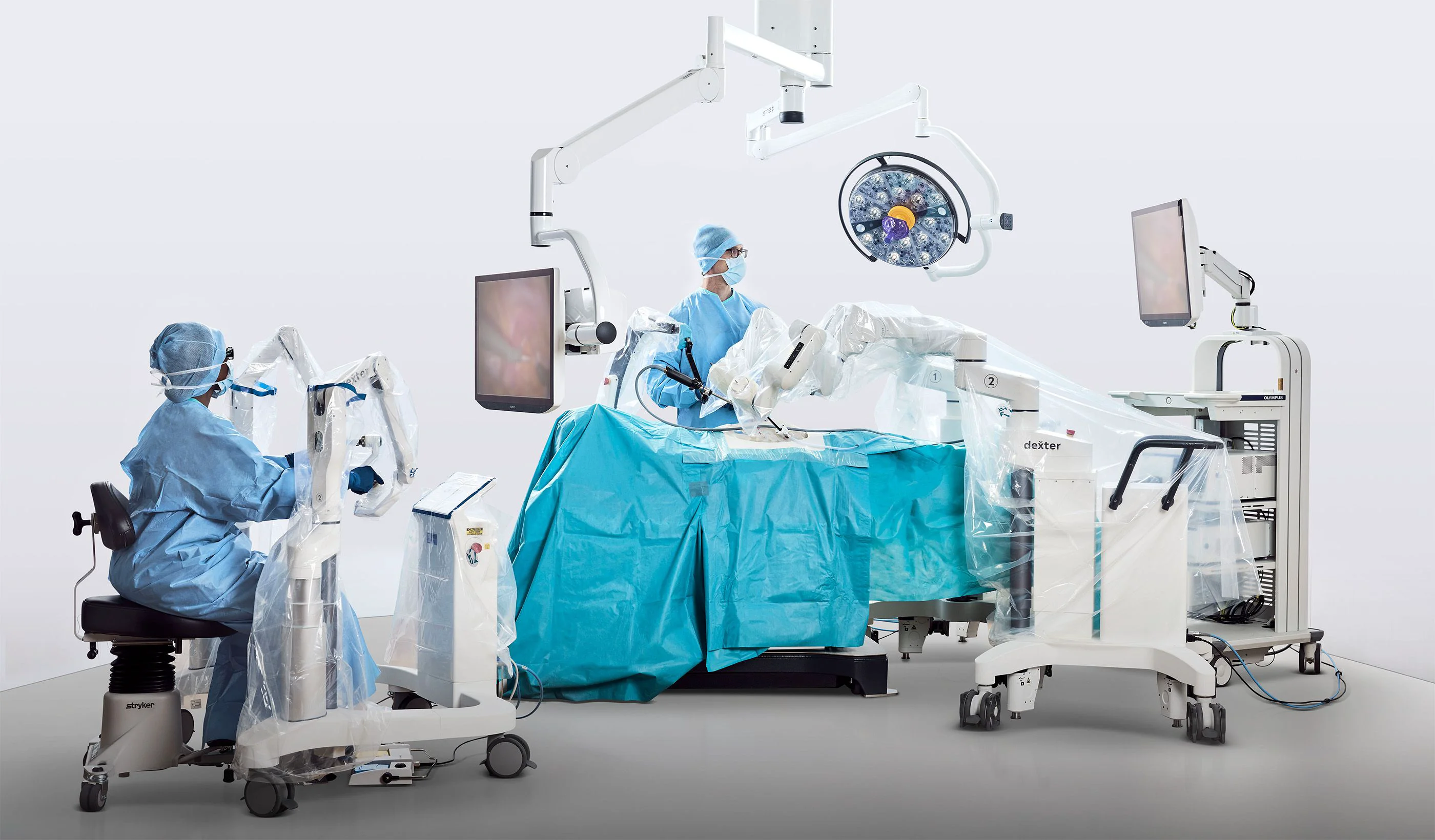
DEXTER is Distalmotion's flagship robotic surgery system built to broaden access to minimally invasive care. Unlike traditional robotic platforms that demand significant workflow disruption and dedicated operating room infrastructure, DEXTER is engineered for flexibility—enabling hospitals, outpatient facilities, and surgical centers of all sizes to integrate robotics without overhauling existing processes. Surgeons benefit from DEXTER's ergonomic design, which keeps them connected to the patient while offering compatibility with preferred surgical instruments and technology ecosystems. The system is well-suited for general surgery, gynecology, urology, and other minimally invasive specialties. For hospital administrators and OR managers, DEXTER simplifies logistics: faster setup, reduced footprint, and multi-site scalability mean that robotics programs can be launched in outpatient and ambulatory settings previously considered impractical. This addresses a key gap in robotic surgery adoption—cost and complexity barriers that have historically limited robotics to large academic medical centers. Distalmotion's global team of over 25 nationalities reflects its commitment to making world-class surgical robotics accessible across healthcare systems worldwide. DEXTER has earned endorsements from leading surgeons and surgical societies for its practical, workflow-forward approach to robotic-assisted procedures.
Key Features
- Seamless Workflow Integration: DEXTER is designed to slot into existing OR workflows without requiring new infrastructure or disrupting established surgical practices.
- Minimally Invasive Surgery Support: Enables surgeons to perform complex minimally invasive procedures with robotic precision, improving patient outcomes and recovery times.
- Multi-Site Scalability: Suitable for deployment across hospitals, outpatient centers, and ambulatory surgical facilities, expanding robotic surgery access beyond large academic centers.
- Technology Compatibility: Compatible with surgeons' preferred instruments and existing OR technology, reducing the learning curve and total cost of adoption.
- Patient-Centric Design: Keeps the surgeon connected to the patient throughout the procedure while providing the precision and stability of robotic assistance.
Use Cases
- Hospitals launching new robotic surgery programs in outpatient or ambulatory surgical centers without major infrastructure investment.
- Surgeons seeking to expand their minimally invasive capabilities with robotic assistance while maintaining familiar OR workflows.
- Healthcare networks looking to scale robotic surgery access across multiple sites of care.
- Academic medical centers training the next generation of robotic surgeons using an accessible, workflow-compatible platform.
- Surgical departments aiming to improve patient outcomes through precision robotic-assisted minimally invasive procedures.
Pros
- Accessible for Diverse Settings: Works in outpatient and ambulatory facilities, not just large hospital ORs, dramatically broadening who can offer robotic surgery.
- Minimal Workflow Disruption: Integrates into existing surgical routines, reducing adoption barriers for surgeons and hospital administrators alike.
- Global Expert Backing: Endorsed by leading surgeons and surgical societies, reflecting clinical confidence in the system's performance and design.
Cons
- Enterprise Pricing: As a capital medical device, DEXTER requires significant institutional investment, limiting accessibility for smaller or resource-constrained facilities.
- Requires Surgical Training: Despite its workflow-friendly design, surgeons still require dedicated training and credentialing to operate the robotic system safely.
Frequently Asked Questions
What types of surgeries can DEXTER be used for?
DEXTER is designed for minimally invasive surgical procedures across specialties such as general surgery, gynecology, and urology. Its flexible design supports a range of laparoscopic robotic applications.
How does DEXTER differ from other robotic surgery systems?
DEXTER is specifically engineered to integrate into existing OR workflows with minimal disruption, making it suitable for outpatient and ambulatory settings—not just large hospital ORs. This sets it apart from legacy systems that require dedicated infrastructure.
Who manufactures DEXTER?
DEXTER is developed and manufactured by Distalmotion SA, a medtech company founded in 2012 and headquartered in Epalinges (Lausanne), Switzerland.
Is DEXTER suitable for hospitals without existing robotic programs?
Yes. DEXTER is specifically designed to enable hospitals and surgical centers to launch robotic programs without overhauling workflows or investing in large dedicated robotic infrastructure.
How do surgeons get trained on DEXTER?
Distalmotion provides training and support resources for surgeons adopting DEXTER. The system's design is intended to minimize the learning curve through compatibility with familiar instruments and intuitive controls.