

About
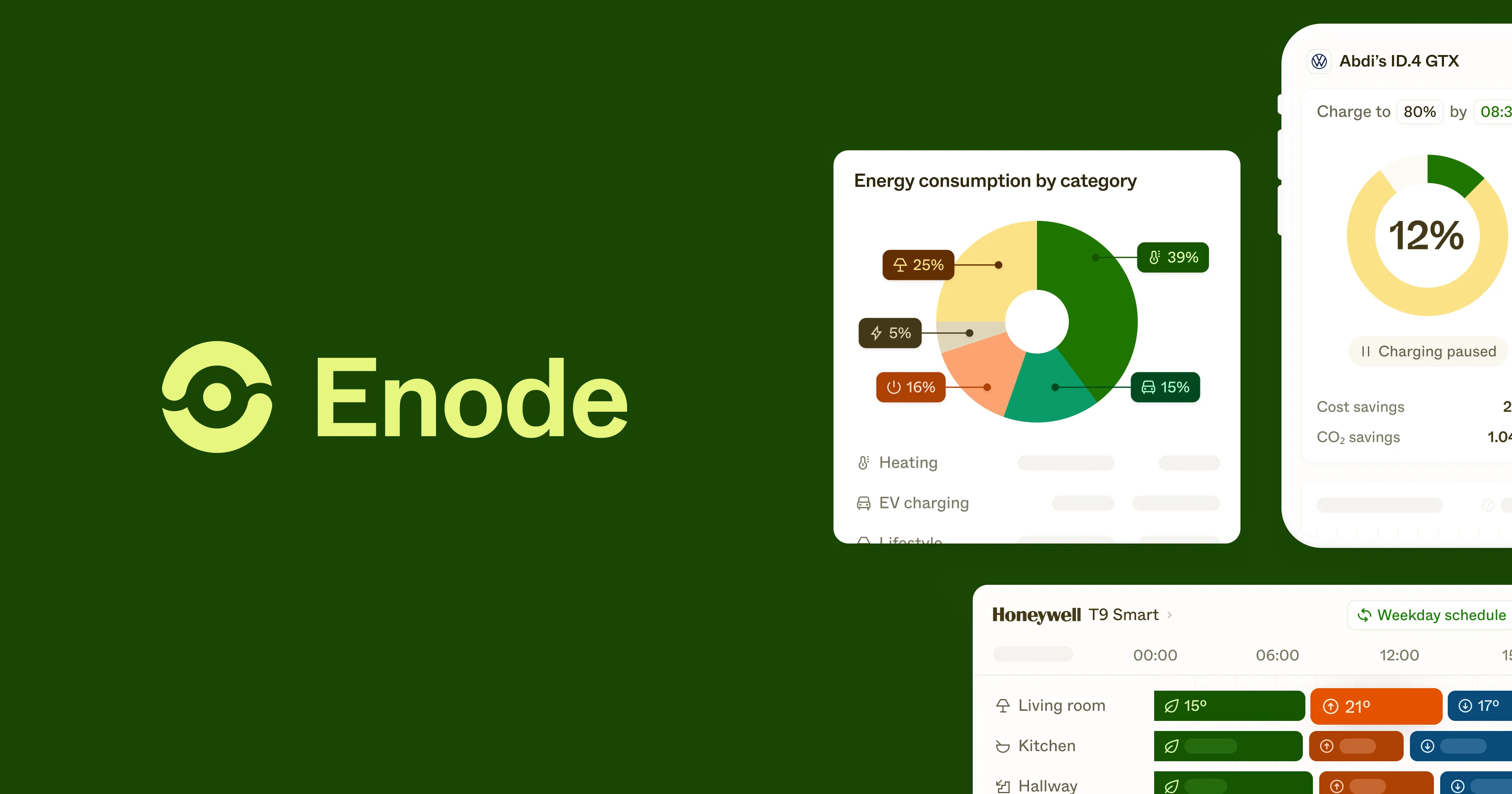
Enode is a developer-first API platform built for energy companies, utilities, EV charging networks, and climate tech startups that want to connect and control distributed energy resources without maintaining dozens of individual OEM integrations. A single Enode integration unlocks access to 1,000+ energy devices across 80+ brands, including electric vehicles, home chargers, solar inverters, home batteries, and HVAC systems. The platform is structured around three core pillars. Connect provides the device connectivity layer—SDKs, ready-built authentication flows, and unified APIs to read and control device data across all supported brands. Optimize delivers out-of-the-box smart charging algorithms, energy insight APIs, and statistics endpoints so developers can offer automated, cost-saving experiences without building complex energy logic from scratch. Flex aggregates residential energy devices into shapeable virtual power plants (VPPs) with real-time control, 36-hour forward visibility, and dashboard interfaces for energy management system integration. Key use cases include smart EV charging that automatically schedules charging during low-cost or low-carbon periods, home energy management dashboards showing solar production and battery status, demand response programs that remotely control devices during grid events, vehicle-to-grid (V2G) services, and smart public charging route planning. Enode dramatically reduces integration complexity, allowing product teams to focus on user experience and business differentiation rather than device-level API maintenance.
Key Features
- Unified Energy Device API: Connect to 1,000+ energy devices across 80+ OEM brands—EVs, solar inverters, home batteries, chargers, and HVACs—with a single API integration instead of managing dozens of separate connections.
- Smart Charging Optimization: Out-of-the-box algorithms automatically schedule and optimize EV charging based on electricity prices, grid demand, and user preferences, without requiring custom energy logic.
- Virtual Power Plant (VPP) Aggregation: The Flex product aggregates distributed residential devices into controllable, flexible load with real-time dispatch control and 36-hour forward visibility for energy market participation.
- Energy Insights & Statistics APIs: Surface real-time and historical data on energy consumption, solar production, battery state, and export to end users through intuitive API endpoints.
- Demand Response & Grid Services: Enable automated demand response programs that remotely control connected energy assets during peak grid events to generate flexibility revenue.
Use Cases
- Building smart EV charging apps that automatically schedule charging during low-cost or low-carbon electricity periods
- Creating home energy management dashboards that display real-time solar production, battery state of charge, and household consumption
- Running demand response programs that remotely curtail or shift residential energy loads during peak grid stress events
- Aggregating distributed home batteries and EV chargers into virtual power plants for flexibility market participation and grid services revenue
- Powering smart public EV charging route planning apps with real-time charger availability and vehicle range data
Pros
- Massive Device Coverage: One integration replaces 80+ individual OEM integrations, dramatically reducing development time and ongoing maintenance overhead.
- Out-of-the-Box Algorithms: Pre-built smart charging and energy optimization logic means teams can launch sophisticated energy features without deep domain expertise.
- Developer-Friendly Tooling: Comprehensive API reference, SDKs, and ready-built connection UI flows let engineering teams get up and running quickly and reliably.
Cons
- Enterprise-Focused Pricing: The 'Contact sales' model and lack of public pricing makes it difficult for early-stage startups or individual developers to evaluate cost upfront.
- Energy Sector Only: Enode's platform is purpose-built for the energy and EV ecosystem, offering no value to teams outside of this specific vertical.
- OEM Coverage Gaps: While 1,000+ devices are supported, niche or regional OEM brands may not yet be available, requiring validation before committing to the platform.
Frequently Asked Questions
What types of energy devices does Enode support?
Enode supports electric vehicles, home EV chargers, solar inverters, home battery systems, and HVAC/thermostat devices from 80+ OEM brands, covering 1,000+ individual device models.
How does Enode's smart charging work?
Enode's Optimize APIs use out-of-the-box algorithms to automatically schedule EV charging during off-peak or low-cost electricity periods, reducing energy costs for consumers while balancing grid load.
What is a Virtual Power Plant (VPP) and how does Enode enable it?
A VPP aggregates distributed residential energy assets—like home batteries and EV chargers—into a single, controllable flexible load. Enode's Flex product provides real-time dispatch control, 36-hour forward visibility, and APIs for energy management system integration to enable VPP operations.
How long does it take to integrate Enode?
Enode is designed so that a few lines of code replace what would otherwise be months of individual OEM integration and maintenance work. The platform offers SDKs and pre-built connection flows to accelerate onboarding further.
Who is Enode built for?
Enode is built for energy retailers, EV charging network operators, utilities, climate tech startups, and any developer or company looking to build green energy apps that connect to and control residential energy devices.