

About
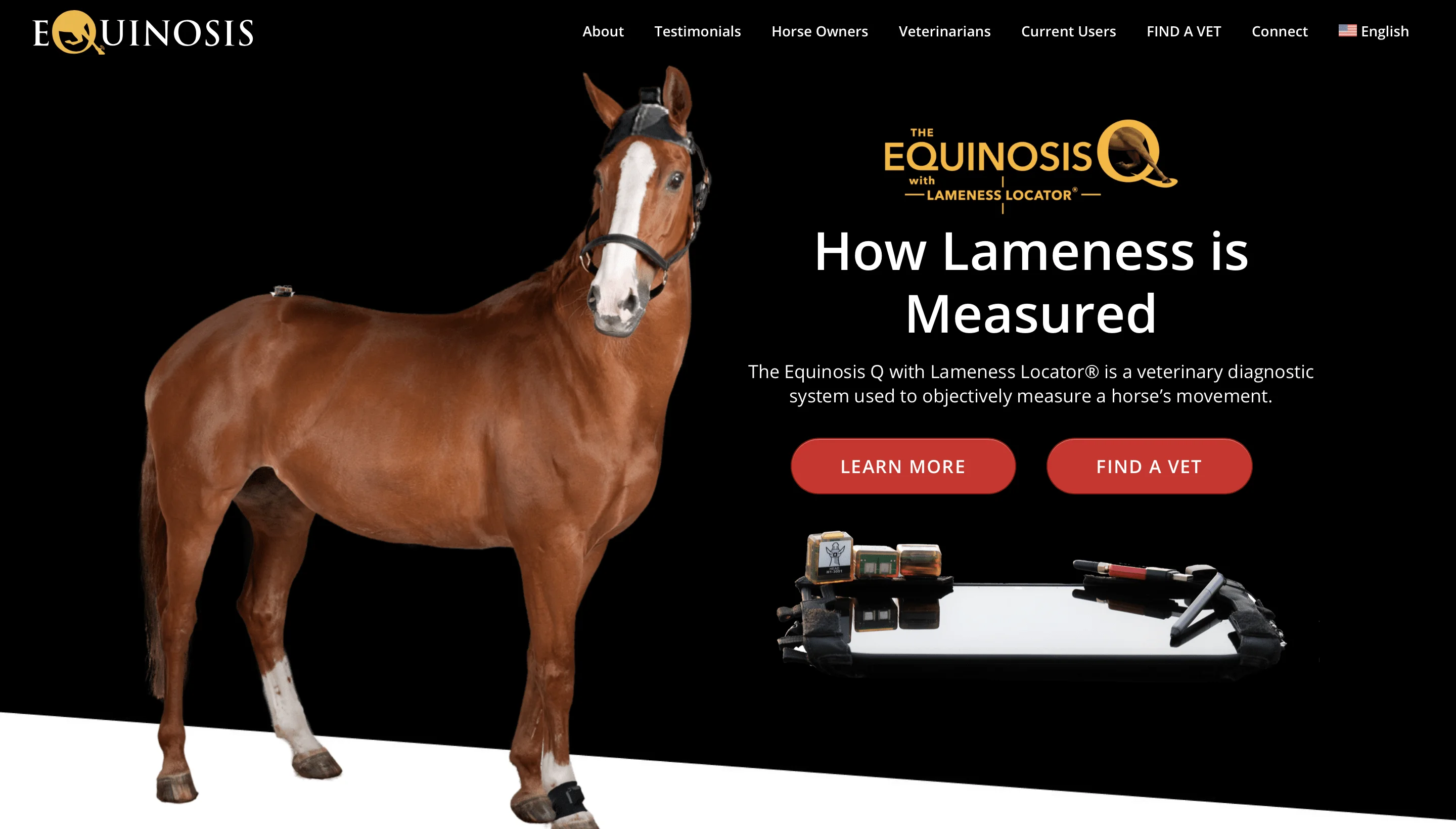
Equinosis Q with Lameness Locator® is a cutting-edge equine biomechanical diagnostic system designed exclusively for licensed equine veterinarians. Using lightweight, wireless inertial sensors placed on the horse, the platform captures real-time movement data with accuracy to less than 1 millimeter — roughly 10 times more sensitive than the human eye. Proprietary algorithms, developed over two decades of gait analysis research led by University of Missouri equine surgery expert Dr. Kevin Keegan, translate raw sensor data into precise lameness metrics including symmetry asymmetries and weight-bearing patterns. The handheld, field-deployable system requires no specialized lab setup and can be used in clinics or during farm visits. Data is collected wirelessly and processed in real time, providing veterinarians with objective, evidence-based insights to support clinical decision-making. Equinosis Q is trusted by hundreds of private equine practices in over 35 countries, as well as 80 universities globally — including 90% of all AAVMC-accredited veterinary schools in North America. The system is sold exclusively to licensed registered veterinarians, and outputs must be interpreted alongside a complete veterinary examination. Ideal for equine veterinary practices, university research programs, and equine sports medicine professionals seeking to elevate lameness care quality and consistency.
Key Features
- Sub-Millimeter Motion Accuracy: Wireless inertial sensors track horse movement to less than 1mm precision, capturing asymmetries invisible to the human eye.
- Real-Time Data Collection: Microelectronic sensors stream biomechanical data wirelessly and in real time, enabling instant lameness assessment in clinic or field settings.
- Evidence-Based Proprietary Algorithms: Lameness metrics are computed using algorithms built on 20+ years of equine gait research from the University of Missouri.
- Non-Invasive, Field-Ready Design: The handheld system is quick to instrument, completely non-invasive, and deployable in any environment — clinic or pasture.
- Objective Symmetry Measurement: Quantifies biomechanical load shifts and movement asymmetries directly correlated with decreased weight-bearing in lame limbs.
Use Cases
- Equine veterinarians performing objective lameness evaluations during farm or clinic visits using wireless sensors for real-time gait analysis.
- Veterinary schools and research universities using the system for evidence-based equine biomechanics research and student training.
- Sports medicine vets monitoring performance horses for subtle lameness patterns before and after competition or treatment.
- Private equine practices standardizing lameness examination protocols to improve diagnostic consistency across multiple practitioners.
- Veterinary specialists tracking lameness progression or treatment response over time with repeatable, quantified movement metrics.
Pros
- Clinically Validated & Research-Backed: Developed over 20 years by equine veterinary researchers and adopted by 90% of AAVMC-accredited vet schools in North America.
- Objective, Quantifiable Diagnostics: Removes subjective guesswork from lameness evaluations by providing precise, repeatable numerical metrics.
- Broad Global Adoption: Used by hundreds of practices and 80 universities in over 35 countries, demonstrating widespread professional trust.
- Field & Clinic Versatility: Portable and wireless design allows use in any setting, from hospital stalls to open paddocks.
Cons
- Restricted to Licensed Veterinarians: The system is sold exclusively to licensed registered veterinarians, limiting direct access for horse owners or trainers.
- Requires Trained Interpretation: Analytical output must be interpreted by a vet skilled in equine lameness evaluations; it cannot be used as a standalone diagnostic without a full clinical exam.
- Hardware Investment Required: As a specialized medical device, the upfront cost and equipment commitment may be significant for smaller practices.
Frequently Asked Questions
What is the Equinosis Q with Lameness Locator®?
It is a real-time, handheld veterinary diagnostic system that uses wireless inertial sensors and proprietary AI-driven algorithms to objectively measure lameness in horses by quantifying movement asymmetries.
Who can purchase and use the Equinosis Q?
The Equinosis Q is sold exclusively to licensed, registered veterinarians. Its outputs must be interpreted by a vet trained in equine lameness evaluations and in use of the equipment.
How accurate is the system?
The wireless sensors track horse movement with accuracy to less than 1 millimeter, providing approximately 10 times more sensitivity than the unaided human eye.
Can the system be used outside of a clinic?
Yes. The Equinosis Q is a field-based, handheld system designed to function in any environment, including barns, paddocks, and arenas, with wireless real-time data collection.
How widely is the Equinosis Q used?
It is trusted by hundreds of private equine practices in over 35 countries and 80 universities worldwide, including 90% of all AAVMC-accredited veterinary schools in North America.