

About
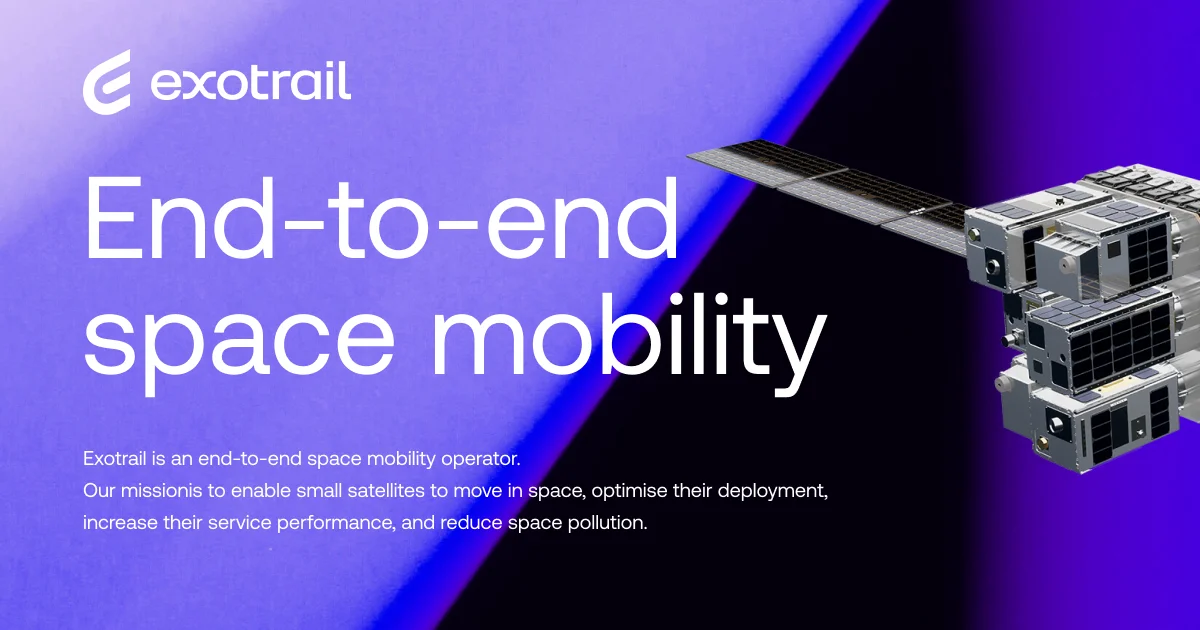
Exotrail is a pioneering space mobility company delivering comprehensive solutions that enable small satellites to maneuver efficiently and sustainably in orbit. Their portfolio encompasses two core pillars: advanced electric propulsion hardware and end-to-end in-orbit services. On the propulsion side, Exotrail engineers compact, high-performance electric thrusters tailored for small satellites (smallsats and nanosats), enabling precise orbital insertion, station-keeping, collision avoidance, and controlled deorbiting at end-of-life. Their in-orbit services extend beyond hardware to include mission planning, trajectory optimization, and operational support, helping satellite operators maximize service performance throughout a mission lifecycle. Exotrail addresses a critical challenge: as the number of satellites in low-Earth orbit grows exponentially, managing traffic, preventing collisions, and maintaining a sustainable space environment has become essential. The company's technology facilitates efficient use of limited orbital slots, reduces long-term space debris, and lays the groundwork for emerging services such as satellite refueling, in-orbit inspection, and debris removal. Exotrail's solutions target commercial satellite operators, government agencies, and new space startups seeking to deploy agile, long-lived satellite constellations. With signed contracts across global clients including XDLINX Space Labs, Pixxel, and Dhruva Space, Exotrail is actively shaping the future of sustainable space logistics.
Key Features
- Electric Propulsion Systems: State-of-the-art electric thrusters designed for small satellites, enabling precise orbital maneuvers, station-keeping, and controlled deorbiting.
- In-Orbit Services: End-to-end mission support including trajectory optimization, orbital transfer planning, and collision avoidance throughout the satellite lifecycle.
- Mission Lifecycle Optimization: Tools and services to maximize satellite service performance from deployment through decommissioning, extending operational lifespan.
- Sustainable Deorbiting: Controlled end-of-life deorbiting capabilities that reduce space debris and support responsible use of orbital resources.
- Future In-Orbit Infrastructure: Roadmap toward satellite refueling, in-orbit inspection, and debris removal services to support long-term space sustainability.
Use Cases
- Small satellite operators deploying constellations who need precise orbital insertion and station-keeping propulsion.
- Earth observation and telecommunications satellite missions requiring in-orbit repositioning to optimize coverage.
- Satellite operators seeking compliant, controlled end-of-life deorbiting to meet space debris mitigation regulations.
- New space startups building agile smallsat platforms that need integrated mobility solutions from a single provider.
- Government and defense agencies requiring reliable, high-performance propulsion for small tactical or scientific satellites.
Pros
- End-to-End Solution: Combines propulsion hardware with in-orbit operational services, reducing the need for satellite operators to work with multiple vendors.
- Sustainability Focus: Purpose-built to address space debris and orbital congestion, aligning with growing regulatory and industry demands for responsible space operations.
- Proven Commercial Traction: Active contracts with multiple global clients (Pixxel, Dhruva Space, XDLINX) demonstrate real-world validation and reliability.
Cons
- Niche Market: Solutions are specialized for the satellite and space industry, limiting relevance to a narrow segment of potential customers.
- Enterprise-Only Pricing: No self-service or entry-level pricing; access requires direct contract engagement, making it inaccessible for smaller or early-stage ventures.
- Limited Public Technical Documentation: Detailed performance specifications and integration documentation are not publicly available, requiring direct engagement for evaluation.
Frequently Asked Questions
What types of satellites does Exotrail serve?
Exotrail focuses primarily on small satellites (smallsats and nanosats), providing compact electric propulsion systems tailored to their size, mass, and power constraints.
What is electric propulsion and why does it matter for small satellites?
Electric propulsion uses electrical energy to accelerate propellant, offering higher efficiency (specific impulse) than chemical thrusters. For small satellites, this translates to longer mission life, more precise maneuvering, and reduced propellant mass.
What in-orbit services does Exotrail provide?
Exotrail's in-orbit services include mission planning, orbital trajectory optimization, deployment support, collision avoidance maneuvers, and end-of-life deorbiting management.
How does Exotrail contribute to space sustainability?
By enabling controlled deorbiting, precise orbital management, and laying groundwork for future debris removal and satellite refueling services, Exotrail helps reduce long-term space debris and orbital congestion.
How can I purchase Exotrail's products or services?
Exotrail offers a shop on their website and accepts direct inquiries via their contact form. Commercial contracts are typically negotiated directly with their sales team.