
R
About
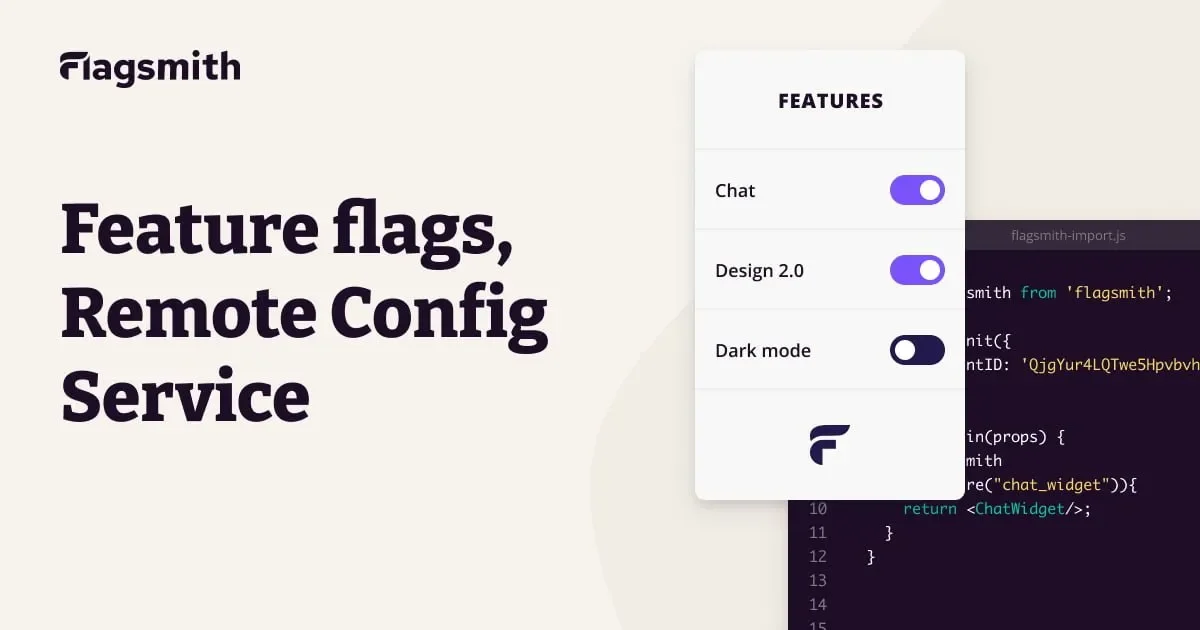
Flagsmith is a powerful, open source feature flag and remote configuration service designed to help development teams ship faster while maintaining granular control over releases. Whether you're migrating from an in-house solution or adopting feature toggles for the first time, Flagsmith provides a unified platform to create, manage, and analyze feature flags across all your environments and platforms. With Flagsmith, teams can target features to individual users, user segments, or percentage-based rollouts—enabling safe canary deployments and gradual rollouts. The built-in A/B and multivariate testing capabilities allow teams to experiment with confidence by splitting traffic across multiple variations and integrating results with existing analytics tools. Remote config support lets you customize feature values without redeploying, enabling real-time changes to both functionality and visual elements. Flagsmith also includes role-based access control, change control workflows, and advanced governance features for enterprise teams operating in regulated industries like banking and insurance. The platform offers flexible deployment options including cloud-hosted, self-hosted, and private cloud configurations. An Edge API ensures low-latency flag evaluations at scale, while real-time flags keep clients updated instantly. Native SDKs cover all major platforms, and integrations with tools like an MCP Server make it well-suited for AI-powered workflows. Flagsmith is trusted by engineering teams at organizations of all sizes looking to reduce release risk and improve developer experience.
Key Features
- Feature Flags & Remote Config: Create and manage feature toggles across all environments and platforms. Combine with remote config to customize feature values without redeploying.
- Powerful Segmentation: Target feature flags to individual users, defined segments, or percentage-based rollouts, enabling canary deployments and progressive delivery.
- A/B & Multivariate Testing: Run controlled experiments by splitting traffic across multiple variations. Integrate flag data with your analytics platform for data-driven decisions.
- Role-Based Access & Governance: Enterprise-grade role-based access control, change control workflows, and advanced governance features suited for regulated industries.
- Flexible Deployment & Edge API: Deploy on cloud, self-hosted, or private cloud infrastructure. The Edge API delivers real-time, low-latency flag evaluations at scale.
Use Cases
- Gradually rolling out new features to a percentage of users to reduce release risk and catch issues early before full deployment.
- Running A/B and multivariate experiments to test UI changes, pricing variants, or new functionality across user segments.
- Implementing canary deployments by targeting new code paths to internal users or a specific user segment before wider rollout.
- Managing environment-specific configurations (development, staging, production) without changing code or redeploying applications.
- Enabling AI feature flag management for teams building LLM-powered applications that need dynamic control over model parameters or prompt strategies.
Pros
- Truly Open Source: Fully open source codebase with self-hosting options gives teams full control over their data and infrastructure without vendor lock-in.
- Multi-Platform SDK Support: Native SDKs for web, mobile, and server-side platforms make it straightforward to integrate feature flags across any tech stack.
- Flexible Deployment Options: Supports cloud, self-hosted, and private cloud deployments, making it suitable for teams with strict compliance or data residency requirements.
- AI & MCP Integration: Built-in support for AI workflows and an MCP Server makes Flagsmith forward-compatible with modern AI-driven development pipelines.
Cons
- Self-Hosting Complexity: Setting up and maintaining a self-hosted instance requires DevOps expertise, which may be a barrier for smaller teams.
- Advanced Features Behind Paid Plans: Some enterprise governance, advanced security, and private cloud features may require a paid subscription beyond the free/open source tier.
- Learning Curve for New Adopters: Teams new to feature flag management may need time to understand concepts like segmentation rules, multivariate flags, and remote config best practices.
Frequently Asked Questions
Is Flagsmith really open source?
Yes, Flagsmith is fully open source. You can self-host the entire platform using the publicly available codebase, or use the managed cloud offering for convenience.
What deployment options does Flagsmith support?
Flagsmith supports three deployment models: a managed cloud service, self-hosted (on your own infrastructure), and private cloud hosting for organizations with strict data residency or compliance requirements.
How does Flagsmith handle A/B testing?
Flagsmith supports multivariate feature flags that split traffic across two or more variations by percentage. You can integrate flag evaluation data with your analytics platform to measure experiment results.
Can I use Flagsmith for remote configuration?
Yes. Every feature flag in Flagsmith supports remote config, meaning you can attach custom values to flags and change them in real time without redeploying your application.
What platforms and languages does Flagsmith support?
Flagsmith provides native SDKs for JavaScript, Python, Java, .NET, Ruby, Go, PHP, Rust, and more, covering web, mobile (iOS, Android), and server-side use cases.