

About
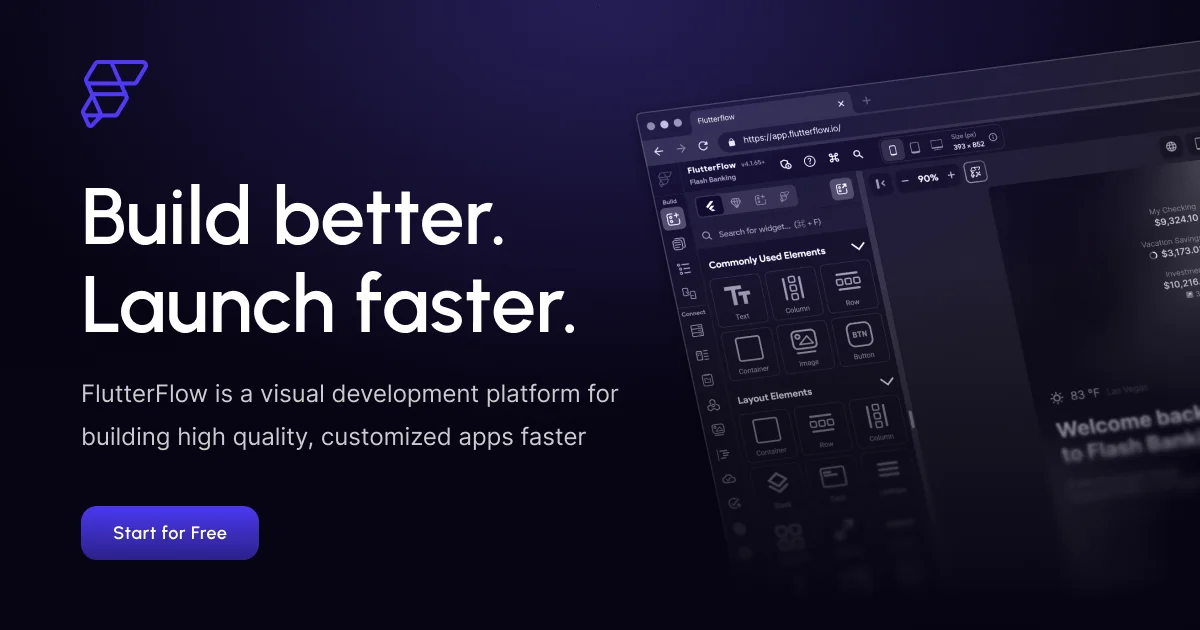
FlutterFlow is a powerful low-code/no-code platform built on top of Flutter, enabling developers, product managers, and entrepreneurs to create high-quality, fully functional cross-platform applications without writing code from scratch. The platform provides over 200 pre-designed UI elements, a visual Action Flow Editor for business logic, and granular widget property controls to give users both speed and deep customization. FlutterFlow supports native integrations with Firebase and Supabase for backend/database setup, as well as REST API connections and built-in support for payments, maps, and more. Designers can import themes from Figma or build their own design system directly inside the tool, ensuring brand consistency across every screen. Teams can collaborate seamlessly with branching, in-app comments, and task assignment — no external setup required. When ready, apps can be deployed to the App Store, Google Play Store, or the web with just a few clicks. Crucially, FlutterFlow offers full code export, eliminating vendor lock-in and allowing teams to continue development in standard Flutter/Dart environments. FlutterFlow is trusted by companies like Wendy's, Atlassian, Google, and numerous startups for rapidly prototyping MVPs and shipping production-ready apps. It's ideal for developers seeking speed, non-technical founders building products, and enterprise teams looking to accelerate delivery cycles.
Key Features
- Visual UI Builder: Design app screens using 200+ pre-built UI elements with a drag-and-drop editor, enabling rapid prototyping and pixel-perfect customization.
- Action Flow Editor: Add business logic and interactivity visually without writing code, using an intuitive flow-based editor for user actions and app behavior.
- Backend & API Integrations: Connect to Firebase, Supabase, REST APIs, payments, and maps in just a few clicks — no backend configuration headaches.
- Full Code Export: Export your entire Flutter/Dart codebase at any time with no vendor lock-in, enabling seamless handoff to engineering teams.
- One-Click Deployment: Deploy finished apps directly to the Apple App Store, Google Play Store, and the web from within the FlutterFlow platform.
Use Cases
- Startup founders building and launching a mobile app MVP quickly to validate an idea and attract early funding.
- Product managers and designers prototyping functional app demos for stakeholder presentations without engineering resources.
- Development teams accelerating delivery of client apps by visually assembling UI and logic, then exporting clean Flutter code.
- Enterprises rapidly building internal tools or customer-facing apps that need Firebase or Supabase-powered backends.
- Educators and students learning mobile app development through a visual, hands-on environment backed by real Flutter code.
Pros
- Rapid Development: Build and launch functional app MVPs in hours rather than weeks, dramatically accelerating product development cycles.
- No Vendor Lock-In: Full Flutter code export means you're never trapped — teams can take the codebase and continue development independently at any time.
- Cross-Platform by Default: Build once and deploy to iOS, Android, and web simultaneously, saving significant time and resources.
- Team Collaboration Built-In: Native branching, commenting, and task assignment features allow development teams to work together without extra tooling.
Cons
- Complex Logic Has Limits: Highly complex or custom app logic may still require writing custom Flutter/Dart code or workarounds within the platform.
- Pricing Can Escalate: Advanced features, team collaboration, and higher usage tiers are locked behind paid plans that can become costly for larger teams.
- Flutter Ecosystem Dependency: The platform is tightly coupled to Flutter, so teams not already invested in the Flutter ecosystem may face a learning curve.
Frequently Asked Questions
Do I need to know how to code to use FlutterFlow?
No. FlutterFlow is designed for both developers and non-technical users. While coding knowledge can help with advanced customization, most app-building tasks can be completed entirely through the visual editor.
Can I export the code from FlutterFlow?
Yes. FlutterFlow allows you to export your full Flutter/Dart source code at any time with no vendor lock-in. This means you can hand the codebase off to developers or continue building in a standard Flutter environment.
What platforms can I deploy to with FlutterFlow?
You can deploy apps built in FlutterFlow to iOS (App Store), Android (Google Play Store), and the web — all from within the platform with just a few clicks.
Does FlutterFlow support backend and database integration?
Yes. FlutterFlow has built-in integrations with Firebase and Supabase, and also supports custom REST APIs, payments, maps, and other third-party services.
Is FlutterFlow free to use?
FlutterFlow offers a free tier to get started. Paid plans unlock additional features such as code export, advanced integrations, team collaboration, and higher usage limits.