

About
GoodShip is a comprehensive freight orchestration and procurement platform designed for shippers, brokers, and carriers looking to modernize their transportation networks. At its core is Laney, an AI transportation analyst that answers real-time questions about your freight operations using data pulled from your TMS, ERP, budget systems, and third-party market sources like DAT, TruckStop, and FreightWaves SONAR. The platform's Transportation Procurement module automates bid analysis and awarding, surfaces lanes that are over-market or underperforming, and provides carriers with lane-level insights including seasonality and lead time data. Shippers benefit from historical carrier performance data and market rate benchmarking embedded directly into the procurement workflow. GoodShip's Analytics and Recommendations engine delivers a unified dashboard with actionable insights to reduce spend and improve service levels, while the Carrier Management portal empowers carriers with self-service scorecards, late-load dispute resolution, and automated RFP notifications. A built-in Collaboration module replaces tribal knowledge with in-app messaging, tagging, and searchable chat archives to drive cross-functional accountability. Typical results include a 20% decrease in late loads, 3–5% reduced spend versus market, and a four-week implementation timeline with access to savings recommendations in as little as two weeks. GoodShip is best suited for enterprise logistics and supply chain teams managing complex carrier networks.
Key Features
- Laney AI Transportation Analyst: An AI analyst that answers real-time, data-driven questions about your transportation network, pulling from TMS, ERP, and market data sources.
- AI-Powered Bid Optimizer: Automates freight bid analysis and carrier awarding, with recommendations for lanes that are over-market, underperforming, or trending toward spot.
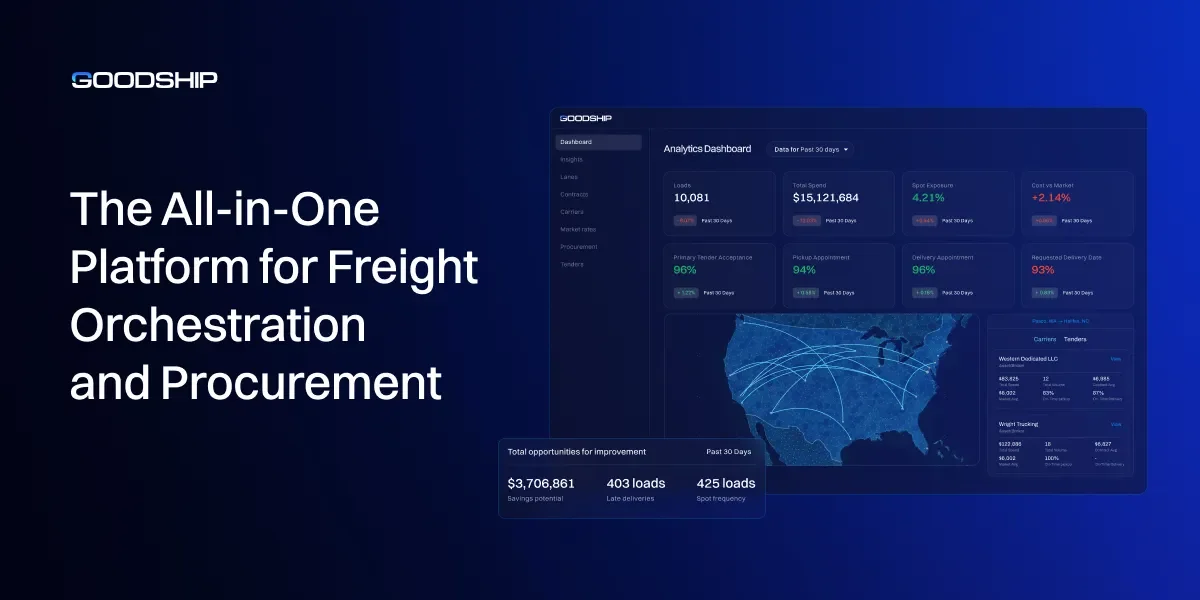
- Unified Analytics Dashboard: Consolidates data from your TMS, ERP, and budget alongside embedded market rates from DAT, TruckStop, and FreightWaves SONAR for actionable spend and service insights.
- Carrier Management Portal: Gives carriers a self-service hub with tender-level scorecards, late-load dispute resolution, automated RFP invitations, and performance alerts.
- In-App Collaboration: Centralized messaging with tagging, filterable chat archives, and cross-functional corrective action planning to eliminate reliance on tribal knowledge.
Use Cases
- Enterprise shippers conducting truckload RFPs who want to automate bid analysis and optimize carrier awards using AI-powered recommendations.
- Logistics and supply chain teams seeking a unified dashboard that consolidates TMS, ERP, and market rate data to identify over-market or underperforming freight lanes.
- Transportation managers looking to improve routing guide durability and reduce reliance on spot market freight by building stronger carrier relationships.
- Carrier relations teams that need scorecards, performance alerts, and dispute resolution tools to proactively manage service quality.
- Cross-functional freight operations teams that need a shared, data-grounded communication layer to replace email threads and tribal knowledge.
Pros
- Fast Time-to-Value: Four-week implementation with access to cost savings and service recommendations in as little as two weeks.
- Embedded Market Benchmarking: Real-time rate data from DAT, TruckStop, and FreightWaves SONAR is built directly into the platform, eliminating the need for separate market intelligence tools.
- End-to-End Freight Workflow: Covers procurement, analytics, carrier management, and collaboration in one platform, reducing tool sprawl for logistics teams.
Cons
- Enterprise-Focused Pricing: Designed for enterprise shippers — smaller companies or SMBs may find the platform and pricing out of scope for their needs.
- Requires Demo to Access: There is no self-serve trial; prospective customers must request a demo, adding friction to the evaluation process.
- Freight-Specific Use Case: The platform is purpose-built for truckload freight procurement and carrier management, limiting applicability outside of the transportation and logistics industry.
Frequently Asked Questions
What is Laney and how does it work?
Laney is GoodShip's AI transportation analyst. It uses data from your connected TMS, ERP, and third-party market sources to answer natural-language questions about your freight network in real time.
How long does it take to implement GoodShip?
GoodShip typically implements in four weeks, with access to cost savings and service recommendations available within the first two weeks.
What market rate data sources does GoodShip integrate with?
GoodShip embeds market rate data from DAT, TruckStop, and FreightWaves SONAR directly into its analytics and procurement workflows.
Can carriers access GoodShip directly?
Yes. GoodShip includes a dedicated carrier portal where carriers can view lane-level scorecards, submit bids, dispute late loads, and receive automated RFP notifications.
What results can shippers expect from using GoodShip?
GoodShip customers typically see a 20% decrease in late loads and a 3–5% reduction in freight spend relative to market rates.