
About
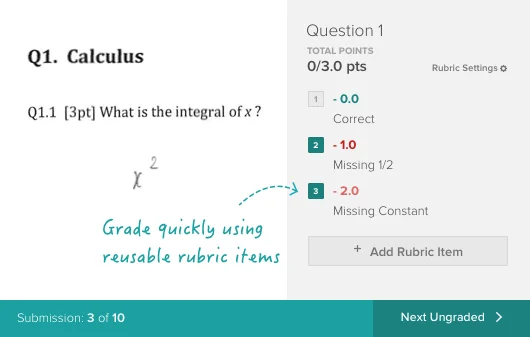
Gradescope is a comprehensive AI-assisted grading platform used by over 140,000 instructors across 2,600+ universities to grade more than 700 million questions. Designed for educators in every discipline—from Computer Science and Math to Economics and Biology—Gradescope supports variable-length assignments like problem sets and projects as well as fixed-template assessments like worksheets, quizzes, bubble sheets, and exams. Instructors can scan paper-based student work, upload digital PDFs, or collect code submissions directly from GitHub and Bitbucket. From there, a flexible rubric system allows graders to apply detailed feedback with a single click and make retroactive changes that automatically propagate to all previously graded work—ensuring fairness and consistency at scale. Code assignments benefit from a built-in autograder that runs test suites and returns instant feedback to students. Bubble sheet exams are automatically separated by test version during batch scanning and graded against an instructor-defined answer key. After grading, detailed per-question and per-rubric analytics help instructors quickly identify areas where students struggled, enabling data-driven instructional improvements. Grades can be sent directly to students or exported to any external gradebook. Gradescope is free to sign up and is trusted by institutions ranging from small colleges to large research universities worldwide.
Key Features
- AI-Assisted Rubric Grading: Apply detailed feedback with a single click using flexible rubrics. Changes made after grading automatically propagate to all previously graded submissions for consistent, fair scoring.
- Code Autograder: Automatically grade programming assignments by running test suites against student code. Supports GitHub and Bitbucket submissions and allows manual inline comments alongside automated results.
- Paper & Bubble Sheet Scanning: Scan and digitize paper-based exams and worksheets for online grading. Bubble sheets are automatically separated by test version and graded against an instructor-defined answer key.
- Per-Question Analytics: Access detailed statistics at the question and rubric level to understand exactly where students excelled or struggled, enabling data-driven instructional adjustments.
- Seamless Grade Export: Send grades directly to students with a single click or export them to an external gradebook or LMS, streamlining the entire assessment workflow.
Use Cases
- University instructors grading large-enrollment paper exams and quizzes consistently and efficiently at scale.
- Computer science professors setting up autograders to provide students with instant feedback on programming assignments.
- K-12 and higher education teachers digitizing handwritten homework submissions for streamlined online grading.
- Course coordinators analyzing per-question performance data to identify learning gaps and improve future instruction.
- Departments administering standardized bubble sheet assessments with automatic test-version separation and grading.
Pros
- Dramatic Time Savings: Instructors report cutting grading time from hours to minutes. Gradescope's rubric system and autograding eliminate repetitive manual work at scale.
- Works with Existing Assignments: No need to redesign assessments. Gradescope accepts paper scans, PDF uploads, and code repositories, fitting seamlessly into existing teaching workflows.
- Supports All Major Subjects and Assignment Types: From STEM problem sets and programming projects to humanities essays and bubble sheet exams, Gradescope handles diverse assessment formats across disciplines.
- Free to Get Started: Instructors can sign up and begin grading for free, with institutional plans available for larger deployments.
Cons
- Paper Assignments Require Scanning: Grading handwritten or paper-based work requires scanning student submissions first, which adds a logistical step for large classes.
- Autograder Setup Takes Technical Effort: Setting up a code autograder with custom test cases requires programming knowledge and upfront configuration time, which may be a barrier for non-technical instructors.
- Advanced Features May Require Paid Plans: While a free tier is available, larger institutions or users needing full feature access and LMS integrations may need to upgrade to a paid institutional plan.
Frequently Asked Questions
Is Gradescope free to use?
Yes, instructors can sign up and use Gradescope for free. Paid institutional plans are also available for universities that want additional features, support, and LMS integrations.
What types of assignments can be graded on Gradescope?
Gradescope supports paper-based exams, homework problem sets, digital PDF submissions, programming projects (with autograding), and bubble sheet multiple-choice tests across all academic subjects.
How does the code autograder work?
Instructors configure a Docker-based autograder with custom test cases. When students submit code, the autograder runs the tests automatically and returns scores and feedback. Students can also submit from GitHub or Bitbucket.
Can rubric changes be applied retroactively?
Yes. If you update a rubric item after grading has begun—changing point values or descriptions—Gradescope automatically recalculates and updates scores for all previously graded submissions.
How do I get grades into my LMS or gradebook?
After grading is complete, you can send grades directly to students with one click or export them as a CSV or in a format compatible with popular LMS platforms like Canvas, Blackboard, and Coursera.