

About
Instrumental is an engineering control platform designed for complex electronics manufacturing. It aggregates siloed manufacturing data across the entire product lifecycle into a traceable digital thread connected by serial numbers, giving engineering teams unprecedented visibility into their production lines. Using anomaly-detecting AI, Instrumental can discover novel defects in real time with as few as five units—no pre-labeled datasets required. For known defect types, it augments operator judgment by running hundreds of automated visual inspections simultaneously, even in high-mix production scenarios. When failures do occur, its failure analysis capabilities eliminate potential root causes in minutes rather than days, saving teams up to 90% of the time typically spent on each investigation. Instrumental serves teams across New Product Introduction (NPI) and mass production, helping organizations meet NPI deadlines, ramp faster, reduce field failures, and improve first pass yield. It is used by leading companies in AI compute infrastructure, consumer electronics, enterprise electronics, aerospace and defense electronics, and more. Proven results include saving Meta 900+ engineering weeks, delivering a one-month breakeven for a telecommunications brand, and saving Owlet $935K in replacement costs. Instrumental is purpose-built for engineering and operations teams seeking to drive digital transformation and set global quality standards across factories and sites.
Key Features
- Anomaly-Detecting AI for Novel Defects: Discovers unknown failure modes in real time using as few as 5 units—no labeled training data required.
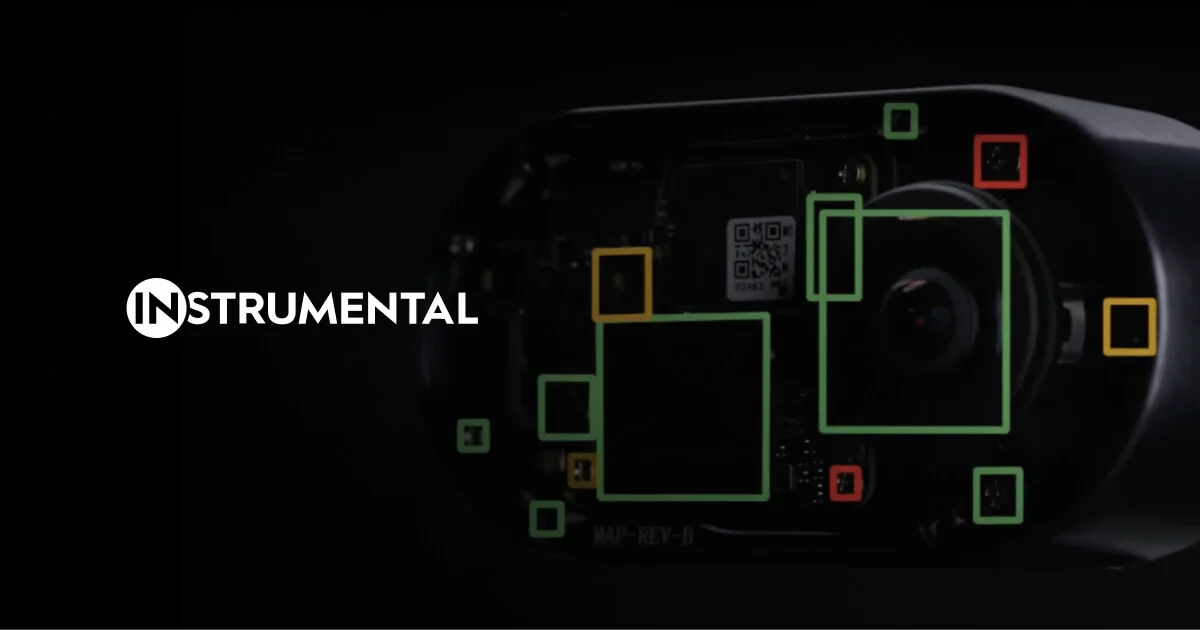
- Automated Visual Inspection: Runs hundreds of simultaneous visual inspections to intercept known defects and augment operator judgment, even in high-mix production scenarios.
- Accelerated Failure Analysis: Reduces the time spent on each failure analysis by up to 90% by automatically identifying and eliminating potential root causes in minutes.
- Digital Thread Data Aggregation: Aggregates siloed manufacturing data across the product lifecycle into a traceable record connected by serial numbers for full production visibility.
- Cross-Site Benchmarking and Best Practice Transfer: Enables teams to compare quality metrics and transfer production best practices across multiple factories and geographies.
Use Cases
- Electronics manufacturers using AI-powered visual inspection to catch assembly defects before products ship to customers.
- Hardware engineering teams accelerating New Product Introduction (NPI) by proactively surfacing novel design failures with minimal sample units.
- Operations teams reducing first pass yield failures and field returns during mass production ramp.
- Engineering leaders aggregating disparate factory data sources into a unified digital thread for traceability and root cause analysis.
- Global manufacturers benchmarking quality across multiple sites and transferring production best practices to drive consistency.
Pros
- Proven ROI at Scale: Documented results include saving Meta 900+ engineering weeks, achieving one-month payback for telecom brands, and preventing hundreds of thousands in replacement costs.
- Works with Minimal Data: Novel defect detection requires only 5 units, making it valuable from the very start of a new product introduction cycle.
- End-to-End Manufacturing Coverage: Supports the full product lifecycle from NPI through mass production, unifying data and AI across all stages.
Cons
- Enterprise-Only Pricing: Instrumental is targeted at large-scale electronics manufacturers; no self-serve or SMB pricing tiers are publicly available.
- Industry-Specific Focus: Designed exclusively for electronics manufacturing, limiting its applicability to other industries or general-purpose data analytics needs.
Frequently Asked Questions
What types of manufacturers is Instrumental designed for?
Instrumental is purpose-built for complex electronics manufacturers across segments including AI compute infrastructure, consumer electronics, enterprise electronics, and aerospace and defense electronics.
How quickly can Instrumental detect novel defects?
Instrumental's anomaly-detecting AI can surface novel defects in real time using as few as 5 units, with no need for pre-labeled training data.
How does Instrumental help with failure analysis?
By connecting visual inspection, test, and process signals, Instrumental automatically identifies and eliminates potential root causes in minutes, saving up to 90% of the time typically spent on failure analysis.
Can Instrumental be used during New Product Introduction (NPI)?
Yes. Instrumental is specifically designed to support NPI programs by aggregating data into a digital thread, proactively surfacing novel defects, and accelerating failure analysis to help teams meet deadlines and avoid unnecessary builds.
Does Instrumental support multiple factory locations?
Yes. Instrumental enables organizations to set global quality standards, compare production metrics, and transfer best practices across multiple manufacturing sites and lines.