

About
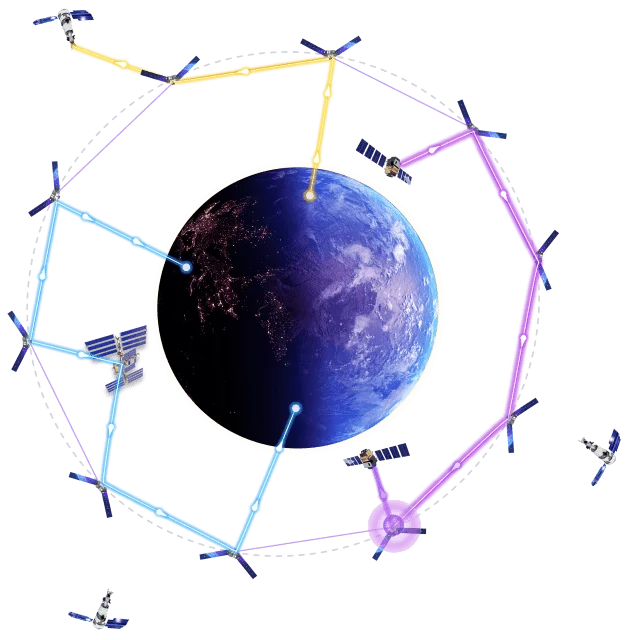
Kepler Communications is a pioneer in space-based cloud infrastructure, operating the Kepler Network as an orbital cloud environment that extends terrestrial cloud concepts beyond Earth. The network provides three core pillars of service: real-time connectivity linking spacecraft and ground systems on demand; on-orbit compute that brings NVIDIA-powered edge processing closer to the data source for faster decisions and more autonomous systems; and hosted payload services that accelerate access to orbit by reducing the cost, schedule risk, and technical complexity traditionally associated with space missions. Selected by the European Space Agency as prime contractor for the HydRON Element 3 program, Kepler has also successfully launched its first tranche of optical relay satellites and established partnerships with NanoAvionics for optically-connected missions. The network supports Earth observation operators such as OroraTech, demonstrating real-world utility for commercial and scientific use cases alike. Kepler's platform is purpose-built for satellite operators, space startups, government agencies, and commercial payload developers who need reliable, scalable orbital infrastructure without the overhead of owning and operating full satellite buses. By treating space as an extension of cloud computing, Kepler enables mission teams to focus on their payloads rather than connectivity logistics.
Key Features
- Real-Time Orbital Connectivity: On-demand, real-time data connectivity between spacecraft and ground systems via an expanding network of optical relay satellites.
- On-Orbit Edge Compute: NVIDIA-powered processing deployed directly in orbit, enabling faster autonomous decisions and reducing latency by processing data at the source.
- Hosted Payload Services: Accelerated path to orbit allowing payload developers to fly experiments and instruments on Kepler satellites without owning a full spacecraft.
- Optical Relay Satellite Network: A growing constellation of optically-connected satellites providing scalable, high-bandwidth data relay across orbital planes.
- Cloud-Native Space Architecture: Extends familiar cloud computing paradigms — elasticity, on-demand access, and scalable infrastructure — to the orbital environment.
Use Cases
- Earth observation operators streaming sensor data in real time from orbit to ground analytics platforms
- Space startups flying hosted payloads on Kepler satellites to validate technology without building a full spacecraft
- Government and commercial missions requiring on-orbit AI inference powered by edge GPU compute
- Satellite constellations offloading inter-satellite data relay to the Kepler optical network
- Research institutions accessing affordable, rapid access to orbit through hosted payload programs
Pros
- Reduces Mission Cost & Complexity: Hosted payload and connectivity services let teams reach orbit faster with less capital expenditure and lower technical risk.
- Real-Time Data Access: On-demand connectivity eliminates the traditional store-and-forward delays that limit responsiveness in space operations.
- ESA-Endorsed Infrastructure: Selection as prime contractor for ESA's HydRON Element 3 validates the network's capabilities for demanding institutional missions.
- Edge AI Enablement: NVIDIA-powered on-orbit compute opens the door to AI-driven autonomous operations directly on satellites, reducing ground intervention.
Cons
- Highly Specialized Market: Services are exclusively relevant to space mission operators, satellite developers, and related industries — not applicable to general software use cases.
- Enterprise-Level Pricing: Space infrastructure services are priced for institutional and commercial space customers, making it inaccessible to early-stage or non-space startups.
- Constellation Still Scaling: As the satellite network continues its deployment, coverage and capacity may be constrained for certain orbital regimes or mission profiles.
Frequently Asked Questions
What is the Kepler Network?
The Kepler Network is a cloud environment operating in orbit that provides real-time connectivity, on-orbit compute, and hosted payload services to satellite operators and space mission developers.
What is on-orbit compute and why does it matter?
On-orbit compute refers to processing data directly on satellites rather than downlinking raw data to the ground. This reduces latency, lowers bandwidth requirements, and enables faster, more autonomous decision-making — critical for time-sensitive applications like Earth observation and surveillance.
What are hosted payload services?
Hosted payload services allow organizations to fly their instruments or experiments on Kepler's existing satellites, eliminating the need to build and launch a dedicated spacecraft. This dramatically reduces cost, time to orbit, and technical risk.
Who are Kepler's primary customers?
Kepler serves commercial satellite operators, government space agencies, Earth observation companies, research institutions, and payload developers who need reliable orbital infrastructure and connectivity without operating their own satellite buses.
What makes Kepler different from traditional satellite operators?
Kepler treats space as an extension of cloud computing — offering on-demand, scalable orbital services rather than fixed satellite capacity. This cloud-native approach gives customers flexibility and faster access to space infrastructure compared to traditional models.