
About
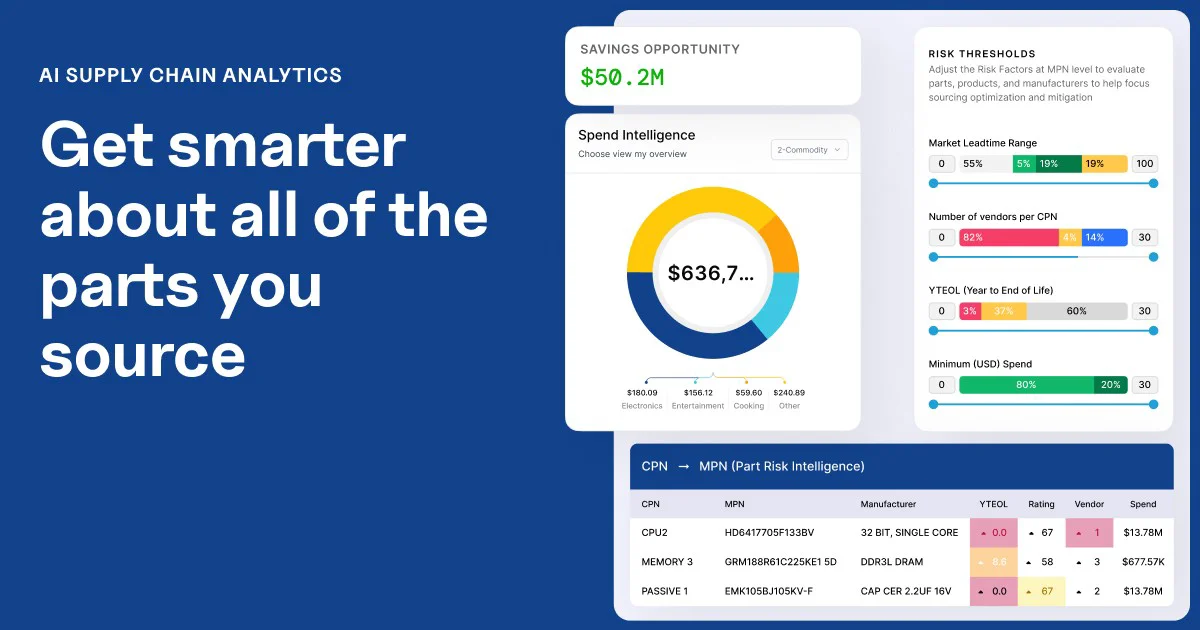
LevaData is an enterprise-grade supply chain analytics and procurement intelligence platform built to optimize the sourcing of direct materials. At its core is Part Insights — a shared intelligence layer that aggregates data from distributors, suppliers, and internal systems to give procurement and engineering teams a single, consistent source of truth. Sourcing managers can instantly benchmark part costs against market rates, identify savings opportunities, and detect supply risks before they disrupt production. Engineering teams can select the right suppliers during the design phase and enforce commodity strategy from the start. The platform also offers early warning signals for demand rebounds and supply disruptions, enabling proactive action. Key capabilities include Spend Intelligence, Savings Insights, BOM Optimization, Location Impact Analysis, Supplier Collaboration tools, Supplier Scorecards, Tariff Management, and New Product Introduction (NPI) BOM Insights. LevaData also provides Part Risk Insights, Alternate Part recommendations, and Leadtime Insights to ensure supply continuity. By removing data silos and delivering clear, actionable guidance — including price calibration benchmarks and next-step recommendations — LevaData helps procurement teams consistently achieve cost savings while maintaining supply chain resilience. The platform is purpose-built for enterprises in industries with complex direct materials supply chains, such as electronics, industrial manufacturing, and high-tech.
Key Features
- Part Insights: Aggregates data from multiple sources into a unified view for procurement, engineering, and suppliers — ensuring everyone works from the same facts.
- Cost Benchmarking: Benchmarks part prices against distributor and market data, showing exactly where costs are above or below fair market range to guide negotiation.
- BOM Optimization: Analyzes Bill of Materials to surface savings opportunities, identify alternate parts, and enforce commodity strategy during new product introduction.
- Supplier Collaboration & Scorecards: Enables structured engagement with suppliers and tracks performance metrics to inform sourcing decisions and strengthen supply relationships.
- Risk & Tariff Management: Identifies part risks, supply disruptions, tariff impacts, and lead time changes early so teams can act before production is affected.
Use Cases
- Benchmarking direct materials part costs against market and distributor rates to identify overpayment and drive negotiation savings.
- Optimizing Bills of Materials during new product introduction to select the most cost-effective and available components.
- Monitoring supplier performance and collaborating with vendors to enforce commodity strategy and reduce supply risk.
- Assessing tariff exposure and modeling the location impact of sourcing decisions to reduce geopolitical supply chain risk.
- Detecting early signals of supply disruptions or demand surges so procurement teams can secure inventory before shortages occur.
Pros
- Unified intelligence layer: Breaks down data silos between procurement, engineering, and suppliers by consolidating all relevant part and market data into one platform.
- Proactive risk detection: Provides early warnings on supply disruptions, demand rebounds, and part risks — enabling teams to act before issues impact production.
- Actionable cost guidance: Goes beyond data reporting to deliver clear next-step recommendations for price optimization and savings realization.
- End-to-end procurement coverage: Covers the full sourcing lifecycle from NPI and BOM analysis to supplier collaboration, tariff management, and spend intelligence.
Cons
- Enterprise pricing: Designed for large enterprise procurement teams, making it cost-prohibitive and potentially over-featured for smaller businesses or startups.
- Integration and onboarding complexity: Aggregating data from internal ERP, supplier, and distributor systems may require significant setup and IT involvement during deployment.
- Niche focus on direct materials: Primarily optimized for direct materials procurement, so organizations focused on indirect spend or services may find limited applicability.
Frequently Asked Questions
What is LevaData used for?
LevaData is used by procurement and engineering teams to optimize sourcing of direct materials. It provides cost benchmarking, BOM analysis, supplier collaboration, risk management, and tariff insights to drive savings and supply chain resilience.
What is Part Insights?
Part Insights is LevaData's core intelligence module that combines data from distributors, suppliers, and internal systems into a single view. It helps sourcing managers benchmark prices, spot savings, and detect supply risks in real time.
Who is LevaData designed for?
LevaData is designed for enterprise procurement leaders, sourcing managers, supply chain engineers, and commodity managers — particularly in industries with complex direct materials supply chains like electronics and high-tech manufacturing.
Does LevaData offer a free trial?
LevaData offers a free trial of Part Insights Profile as well as a free demo of the full platform. Interested users can request access directly from the website.
How does LevaData help with tariff management?
LevaData's Tariff Insights module analyzes the impact of tariffs on your direct materials spend and sourcing decisions, helping teams identify location and supplier shifts that can mitigate tariff exposure.