

About
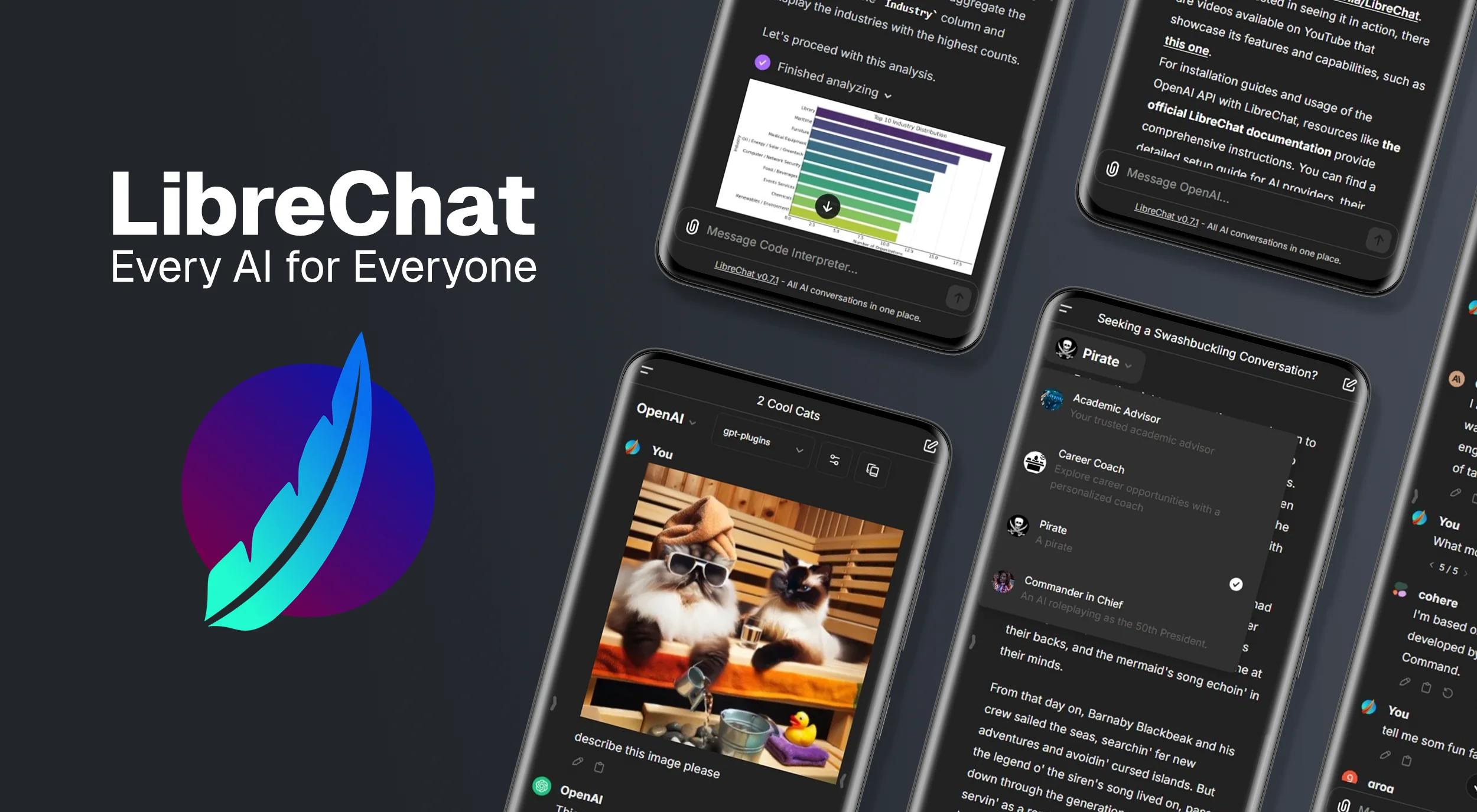
LibreChat is a powerful open-source AI platform trusted by thousands of developers and organizations worldwide. It brings together leading AI models—such as OpenAI, Anthropic Claude, Azure, and AWS Bedrock—under one unified, fully customizable interface, eliminating the need to juggle separate tools for different providers. The platform ships with a rich feature set out of the box. Advanced AI agents handle file uploads, execute code across multiple languages securely, and trigger external API actions. Artifacts support lets users generate and preview React components, HTML pages, and Mermaid diagrams directly in chat. Built-in web search grants any connected model live internet access with reranking, while persistent memory lets the AI retain context across sessions. LibreChat also embraces the Model Context Protocol (MCP), enabling seamless connections to virtually any third-party tool or service. Enterprise deployments benefit from production-ready SSO support via OAuth, SAML, and LDAP, plus two-factor authentication, making it suitable for security-conscious organizations. With 34.8k GitHub stars, 26.7 million Docker pulls, and over 321 community contributors, LibreChat has a thriving ecosystem. It can be spun up locally or deployed remotely in minutes using its quickstart guide, giving teams full data ownership and customization control. It is ideal for developers, businesses, and enterprises seeking a privacy-respecting, extensible alternative to commercial AI chat products.
Key Features
- Multi-Model Support: Connect to and switch between leading AI providers—OpenAI, Anthropic, Azure OpenAI, AWS Bedrock, and more—from a single unified interface.
- Advanced AI Agents: Build agents capable of file handling, secure code interpretation across multiple languages, and triggering external API actions with zero setup.
- Model Context Protocol (MCP): Integrate any external tool or service via MCP support, giving your AI models access to a vast ecosystem of capabilities and data sources.
- Enterprise Authentication: Production-ready SSO with OAuth, SAML, and LDAP support, plus two-factor authentication, making LibreChat suitable for security-conscious enterprise deployments.
- Persistent Memory & Web Search: Maintain context across sessions with built-in memory and give any model live internet access through integrated web search with reranking.
Use Cases
- Enterprises deploying a private, self-hosted AI chat platform with SSO and compliance controls instead of relying on third-party SaaS products.
- Developers building and testing AI agents that require code execution, file handling, and external API integrations across multiple model providers.
- Teams needing a unified interface to compare outputs from different AI models (e.g., GPT-4o vs. Claude) side by side on the same prompts.
- Organizations wanting to give employees access to AI assistants with web search and persistent memory while keeping all data on their own infrastructure.
- Open-source contributors and researchers who want a fully extensible, community-driven AI chat platform they can modify and extend to their specific needs.
Pros
- Truly Open Source: With 34.8k GitHub stars and 321+ contributors, LibreChat is actively maintained and free to self-host, giving teams full data ownership and no vendor lock-in.
- Comprehensive Feature Set: Agents, code interpreter, artifacts, MCP, web search, memory, and enterprise SSO are all included out of the box—no patchwork of separate tools needed.
- Easy Deployment: 26.7 million Docker pulls reflect how straightforward setup is; both local and remote deployments are supported with a guided quickstart.
- Provider Flexibility: Switch between multiple AI providers without changing workflows, protecting teams from price changes or deprecations by any single vendor.
Cons
- Self-Hosting Overhead: As a self-hosted solution, teams are responsible for infrastructure, maintenance, updates, and security patching, which requires technical resources.
- No Managed Cloud Tier: Unlike SaaS competitors, LibreChat does not offer a fully managed hosted version, which may be a barrier for non-technical users or small teams without DevOps support.
- API Costs Still Apply: LibreChat itself is free, but users must supply and pay for their own API keys from AI providers like OpenAI or Anthropic, so usage costs are not eliminated.
Frequently Asked Questions
Is LibreChat completely free to use?
LibreChat itself is free and open source. However, you will need to provide your own API keys for the AI model providers you want to use (e.g., OpenAI, Anthropic), and those providers charge for API usage.
Can I self-host LibreChat?
Yes. LibreChat is designed for self-hosting. It can be deployed locally or on a remote server using Docker, with a quickstart guide to get you running in minutes.
Which AI models does LibreChat support?
LibreChat supports a wide range of providers including OpenAI, Anthropic (Claude), Azure OpenAI, AWS Bedrock, and more. You can configure multiple providers and switch between them within the same interface.
Does LibreChat support enterprise authentication?
Yes. LibreChat includes enterprise-ready authentication with OAuth, SAML, LDAP, and two-factor authentication (2FA), making it suitable for organizations with strict security requirements.
What is MCP support in LibreChat?
MCP stands for Model Context Protocol, a standard for connecting AI models to external tools and services. LibreChat's MCP support lets you extend your AI agents with virtually any third-party integration.