
About
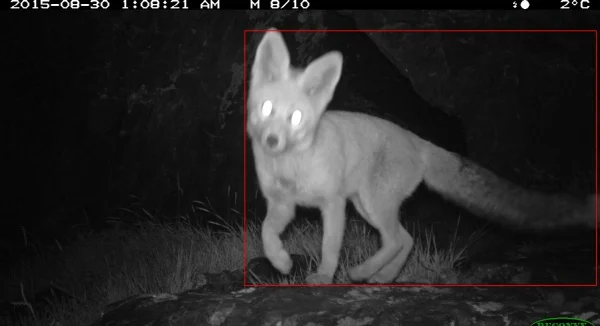
MegaDetector is an open-source deep learning model developed to solve one of the most time-consuming tasks in wildlife conservation: manually reviewing thousands of camera trap images. Camera traps are widely used by ecologists and conservation organizations to monitor wildlife, but sorting through the resulting images is labor-intensive and slow. MegaDetector automates this process by detecting the presence of animals, humans, or vehicles in each image, allowing researchers to focus only on relevant content. The model is distributed as a Python package and can be run via command line or integrated programmatically into existing conservation workflows. It supports batch processing of large image datasets, making it practical for real-world fieldwork where tens of thousands of images are common. MegaDetector outputs bounding boxes and confidence scores for detected objects, which can then feed into downstream species classification pipelines. The project is widely adopted across the wildlife research community, with support for integration with popular annotation tools such as Timelapse2 and Wildlife Insights. It is maintained actively on GitHub under an MIT license, with detailed documentation, Jupyter notebooks for getting started, and environment configuration files. MegaDetector is particularly well-suited for NGOs, academic researchers, and government agencies engaged in biodiversity monitoring and habitat assessment.
Key Features
- Animal, Person & Vehicle Detection: Detects and classifies three categories — animals, humans, and vehicles — in camera trap images using a pre-trained deep learning model.
- Batch Image Processing: Processes large volumes of images efficiently, making it practical for real field deployments where datasets often contain tens of thousands of frames.
- Bounding Box & Confidence Output: Returns bounding boxes and confidence scores for each detection, enabling downstream filtering, annotation, or species classification workflows.
- Python API & CLI: Usable as a Python package or via command-line interface, with Jupyter notebooks included for easy onboarding and experimentation.
- Integration with Conservation Tools: Compatible with widely-used annotation and review platforms like Timelapse2 and Wildlife Insights for seamless workflow integration.
Use Cases
- Filtering empty camera trap frames at scale to save researcher review time during wildlife population surveys.
- Pre-processing camera trap datasets before running species classification models in biodiversity monitoring projects.
- Automating image triage for large conservation organizations managing thousands of remote cameras across protected areas.
- Supporting academic research on animal behavior and habitat use by rapidly identifying frames containing animals.
- Enabling government wildlife agencies to process camera trap data more efficiently for regulatory reporting and habitat assessments.
Pros
- Completely Free & Open Source: Released under the MIT license, MegaDetector is freely available to any researcher or organization without licensing costs.
- Proven in the Field: Widely adopted by conservation organizations, NGOs, and academic institutions globally, with a strong community and active maintenance.
- Significant Time Savings: Automates the most tedious part of camera trap workflows, allowing researchers to focus analytical time on species-level insights rather than image triage.
Cons
- Requires Technical Setup: Installation involves Python environment configuration and command-line usage, which may be a barrier for non-technical conservation staff.
- No Built-in Species Classification: MegaDetector detects broad categories (animal/human/vehicle) but does not identify species — a separate classifier is needed for species-level analysis.
- No Graphical User Interface: There is no native GUI; users must interact via command line or Python scripts, which limits accessibility for field biologists without programming experience.
Frequently Asked Questions
What does MegaDetector detect?
MegaDetector detects three broad categories in camera trap images: animals, humans, and vehicles. It does not identify specific species — a downstream species classifier is needed for that.
Is MegaDetector free to use?
Yes. MegaDetector is fully open-source under the MIT license and free for any use, including commercial and academic applications.
What file formats and image types does it support?
MegaDetector works with standard image formats commonly produced by camera traps (JPEG, PNG). It is designed for batch processing of large folders of images.
How do I get started with MegaDetector?
The repository includes a getting-started guide, Jupyter notebooks, and environment configuration files. You install it as a Python package and can run it via CLI or integrate it into your own scripts.
Can MegaDetector integrate with other wildlife tools?
Yes. MegaDetector outputs are compatible with tools like Timelapse2 and Wildlife Insights, allowing it to fit into existing conservation data pipelines.