
About
Mineral was an Alphabet/Google X moonshot project dedicated to transforming global agriculture through artificial intelligence, machine learning, perception technology, and robotics. Incubated at X for five years, the Mineral team tackled one of humanity's most critical challenges: producing more food sustainably for a growing population in the face of climate change. The team developed a novel AI learning platform and a suite of hardware-software tools, most notably the Mineral Rover — a prototype that combined advanced sensors, computer vision, and robotics to observe and analyze individual plants at a level of granularity never before possible. By imaging plants and gathering multi-dimensional data from real-world field environments, Mineral built toward a comprehensive 'operating manual' for plants. Working with global partners such as the Alliance of Biodiversity International and CIAT, the team collaborated with soybean farmers in Argentina, kiwifruit breeders in New Zealand, and strawberry growers in California to understand real agricultural pain points. Their AI models enabled hyper-local, plant-level insights — a dramatic improvement over the industry-standard practice of uniform acre-level crop management. Mineral's research addressed the core issues of monoculture dependence, soil degradation, and overuse of fertilizers and chemicals by enabling discovery of more diverse, resilient crop varieties. In 2024, Mineral graduated from X and its technology was acquired by Driscoll's and John Deere, signaling major commercial validation of its breakthroughs.
Key Features
- AI-Powered Plant Intelligence: Novel machine learning models trained on agricultural data to identify crop traits, health indicators, and growth patterns at the individual plant level.
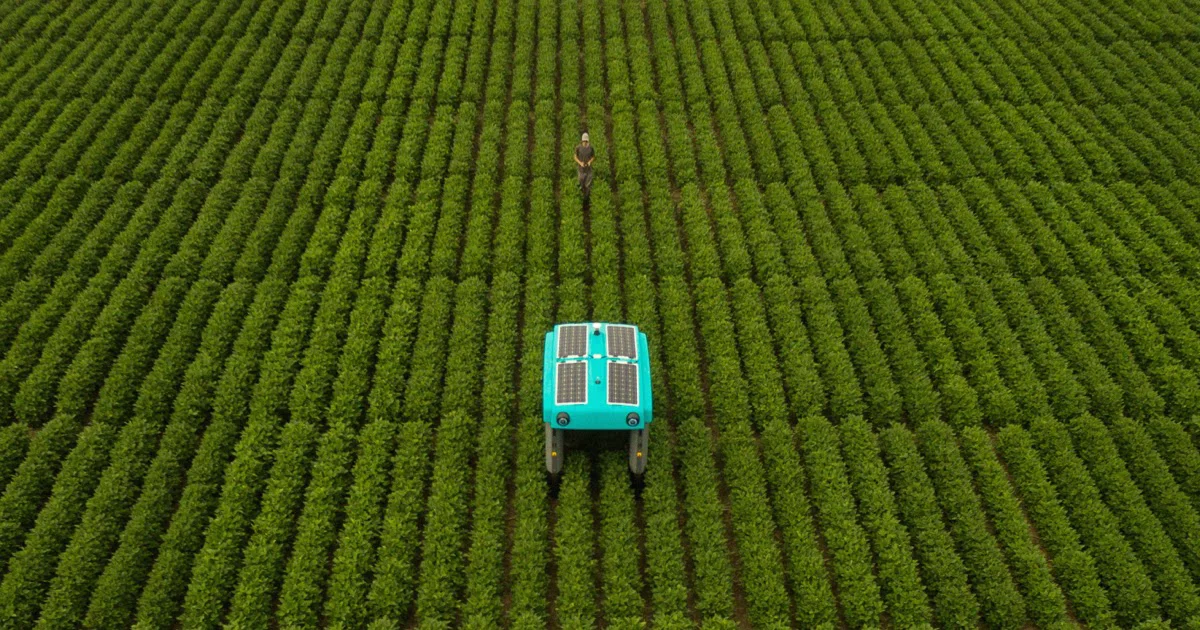
- Mineral Rover & Perception Technology: A robotics prototype equipped with advanced sensors and computer vision to capture high-fidelity data across large fields, enabling detailed plant-by-plant analysis.
- Biodiversity & Crop Resilience Discovery: Tools to help breeders evaluate thousands of crop varieties rapidly, accelerating the discovery of plants resilient to climate change and disease.
- Integrated Multi-Source Data Platform: A unified learning platform that brings together siloed data sources — sensors, GPS, imagery, spreadsheets — into actionable agricultural intelligence.
- Sustainable Agriculture Insights: AI-driven recommendations to reduce over-reliance on uniform chemical and fertilizer applications, promoting soil health and long-term farm productivity.
Use Cases
- Crop breeders using AI to rapidly screen thousands of plant varieties for resilience traits in the face of climate change.
- Growers leveraging plant-level data from robotic field scouts to make more precise and sustainable chemical and fertilizer application decisions.
- Agricultural researchers integrating multi-source farm data into a unified AI platform to uncover hidden patterns in crop health and productivity.
- Food companies and seed producers using perception technology to accelerate the development of more nutritious and climate-resistant crop varieties.
- Large-scale farming operations adopting robotics and AI insights to reduce soil degradation and improve long-term land productivity.
Pros
- Groundbreaking Research Pedigree: Backed by Google X and Alphabet with five years of R&D, producing validated breakthroughs in AI and robotics for real-world agricultural challenges.
- Plant-Level Precision: Enables crop management decisions at the individual plant level rather than per-acre averages, dramatically improving efficiency and sustainability outcomes.
- Industry Validation via Acquisition: Technology acquired by Driscoll's and John Deere in 2024 confirms commercial viability and integration into leading global agricultural operations.
Cons
- No Longer a Standalone Product: Mineral graduated from X and its technology was absorbed by private companies; it is not available as an independent platform for general use.
- Primarily a Research Initiative: Mineral was designed as a moonshot research project rather than a readily deployable commercial tool, limiting accessibility for smaller farms or agri-startups.
Frequently Asked Questions
What is Mineral AI?
Mineral was a Google X (Alphabet) moonshot project that developed artificial intelligence, machine learning, robotics, and perception technologies to help agricultural breeders and growers grow more food more sustainably.
What happened to Mineral AI?
Mineral graduated from X in 2023–2024 and its technology was acquired by Driscoll's and John Deere, where it is being integrated into their agricultural operations and product ecosystems.
What was the Mineral Rover?
The Mineral Rover was a prototype agricultural robot equipped with AI, sensors, and computer vision to monitor and analyze individual plants in the field, gathering data to improve crop management decisions.
Who did Mineral partner with during its research?
Mineral worked with global partners including the Alliance of Biodiversity International, CIAT, soybean farmers in Argentina, kiwifruit breeders in New Zealand, and strawberry growers in California.
What problem was Mineral trying to solve?
Mineral addressed the vicious cycle of modern agriculture — monoculture dependency, soil degradation, and overuse of chemicals — by building AI tools to discover diverse, resilient crop varieties and enable precise, plant-level farm management.