
About
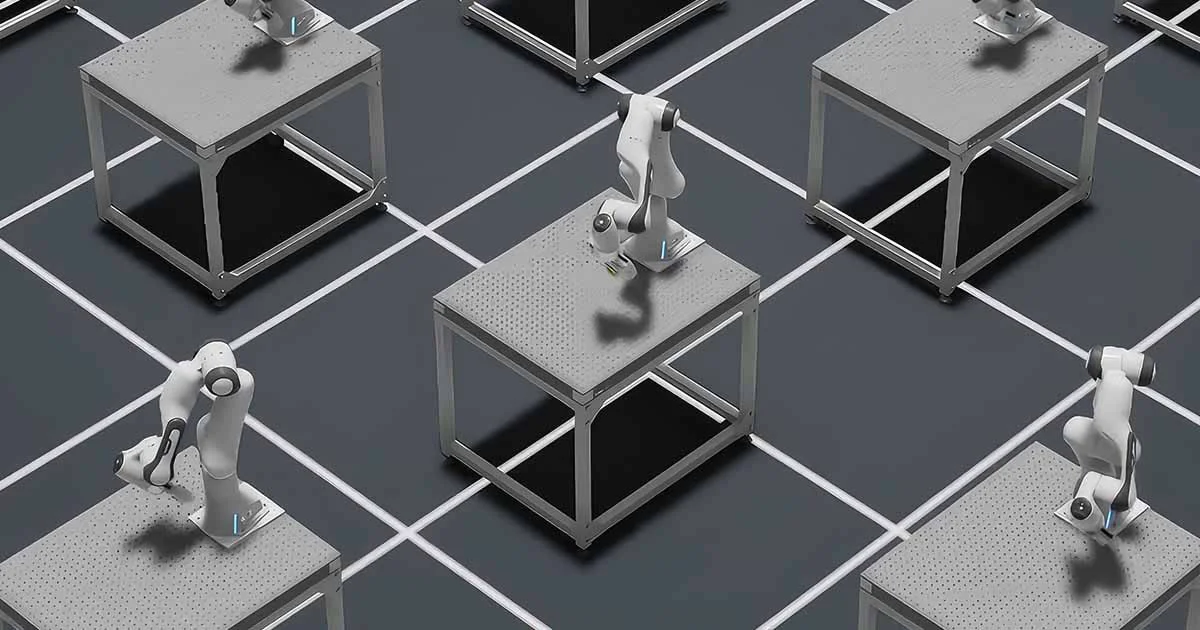
NVIDIA Omniverse is a comprehensive platform designed for building physical AI applications, industrial digital twins, and advanced robotics simulations. Powered by OpenUSD (Universal Scene Description), it provides a standards-based foundation for creating, connecting, and collaborating on complex 3D worlds. Omniverse brings together a rich set of libraries, microservices, and Physical AI Blueprints that allow developers, engineers, and enterprises to simulate real-world physics and environments with high fidelity. Key use cases include industrial facility digital twins, autonomous vehicle simulation, computational fluid dynamics (CFD), synthetic data generation for AI training, and robot learning. The platform supports the full lifecycle of simulation-based AI development — from designing virtual environments and generating synthetic training data to validating and deploying AI models in real-world settings. Omniverse integrates with industry-leading partners such as Microsoft, Siemens, Cadence, Synopsys, and WPP, making it suitable for manufacturing, automotive, semiconductor, and advertising industries. It runs on NVIDIA-certified hardware including DGX Cloud, OVX data center systems, and RTX PRO Workstations. With dedicated learning paths for robotics, OpenUSD, and digital twins, NVIDIA Omniverse is aimed at enterprise developers and researchers pushing the frontier of physical AI.
Key Features
- Industrial Digital Twins: Design and operate smart industrial facilities by building high-fidelity digital replicas of real-world environments for monitoring, optimization, and simulation.
- Robot Simulation & Learning: Train and validate robots in physically accurate simulated environments before deploying them in the real world, reducing cost and risk.
- OpenUSD Integration: Built on the open Universal Scene Description standard, enabling interoperability across 3D tools, pipelines, and platforms for seamless collaboration.
- Synthetic Data Generation: Generate large-scale, labeled synthetic datasets to accelerate AI model training without the cost or limitations of real-world data collection.
- Physical AI Blueprints: Pre-built reference workflows and blueprints for simulating, optimizing, and deploying AI in robotic and digital twin applications.
Use Cases
- Building real-time digital twins of industrial facilities to simulate operations, detect inefficiencies, and optimize production workflows.
- Training and validating autonomous robots in physically accurate virtual environments before real-world deployment.
- Simulating autonomous vehicle behavior across diverse scenarios to improve safety and accelerate development cycles.
- Generating large volumes of synthetic, labeled training data to improve AI model accuracy without relying solely on real-world datasets.
- Running computational fluid dynamics (CFD) simulations to accelerate engineering innovation in aerospace, automotive, and energy sectors.
Pros
- Industry-Grade Simulation Fidelity: Offers physically accurate, real-time simulation environments trusted by leading enterprises for autonomous vehicles, robotics, and manufacturing.
- Broad Ecosystem & Partner Integrations: Deep integrations with Microsoft, Siemens, Cadence, and others make it easy to embed Omniverse into existing enterprise workflows.
- OpenUSD Open Standard: Built on an open, interoperable format that ensures long-term portability and compatibility with a wide range of 3D tools and pipelines.
Cons
- Requires High-End NVIDIA Hardware: Optimal performance demands NVIDIA RTX or data center-grade hardware (DGX, OVX), which can be a significant investment for smaller teams.
- Steep Learning Curve: The platform's breadth — spanning OpenUSD, simulation, robotics, and AI — requires substantial technical expertise to fully utilize.
- Enterprise-Focused Scope: While powerful, the platform is primarily designed for large-scale enterprise and research use cases, which may be overkill for individual developers or small studios.
Frequently Asked Questions
What is NVIDIA Omniverse?
NVIDIA Omniverse is a platform of libraries and microservices designed for building physical AI applications, industrial digital twins, and robotics simulations. It is powered by OpenUSD and runs on NVIDIA hardware infrastructure.
What is OpenUSD and why does it matter?
OpenUSD (Universal Scene Description) is an open standard for describing, composing, and collaborating on 3D scenes. Omniverse is built on OpenUSD to ensure interoperability across different 3D tools, teams, and pipelines.
Who is NVIDIA Omniverse designed for?
Omniverse is designed for enterprise developers, simulation engineers, robotics researchers, and AI teams in industries like manufacturing, automotive, logistics, and semiconductor design.
Is NVIDIA Omniverse free to use?
NVIDIA Omniverse offers free access to many of its core libraries and tools, but enterprise-grade deployments, managed cloud services (like DGX Cloud), and certain microservices are paid offerings.
What hardware do I need to run Omniverse?
Omniverse runs best on NVIDIA RTX PRO Workstations or NVIDIA-certified data center systems (OVX, DGX). Cloud-based access is also available through NVIDIA DGX Cloud and partner platforms like Microsoft Azure.