

About
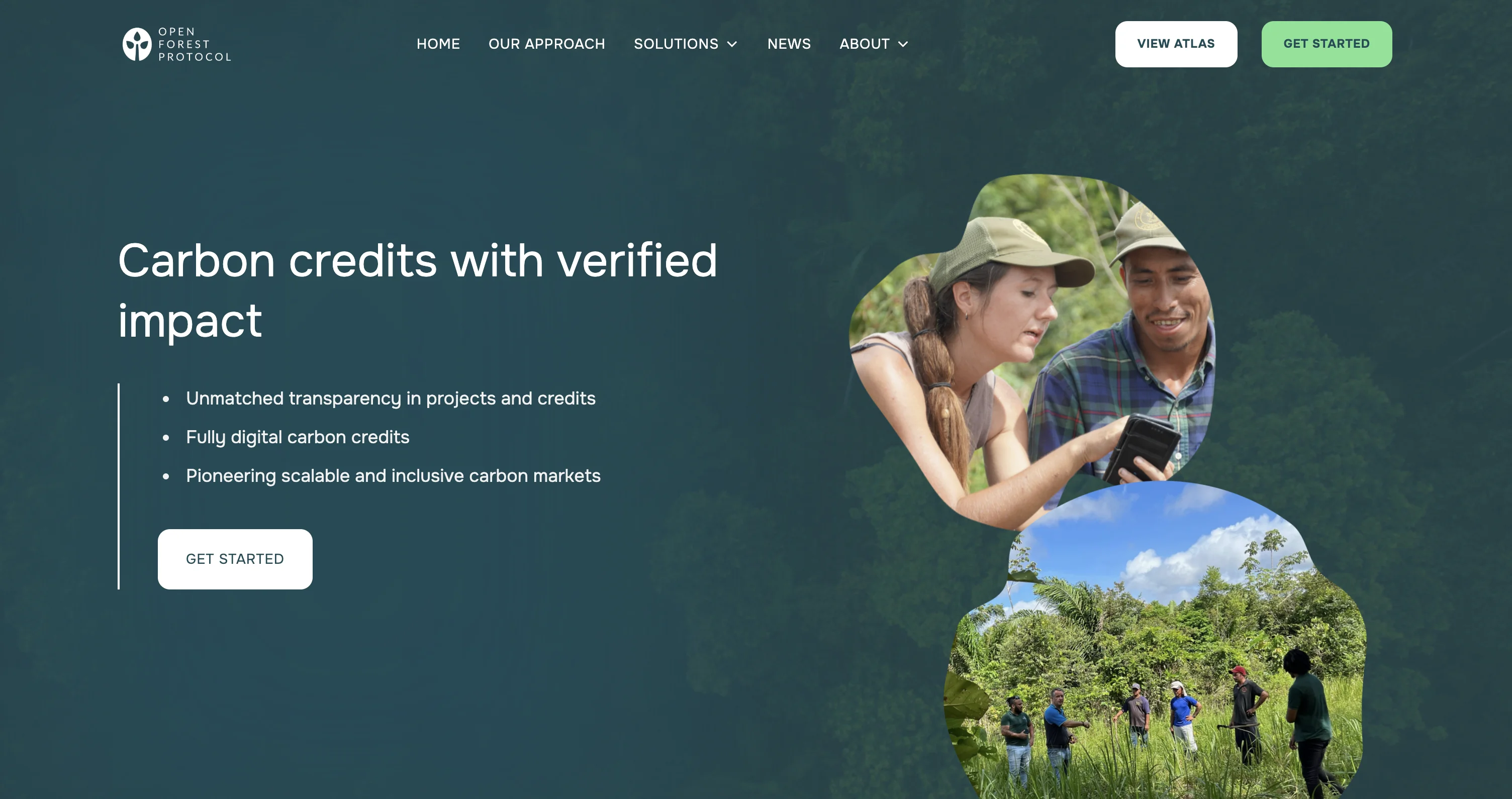
Open Forest Protocol (OFP) is a groundbreaking open infrastructure platform designed to bring integrity, scale, and inclusivity to nature-based carbon markets. It provides a fully digital environment for forest project developers, carbon credit buyers, validators, and builders to participate in the voluntary carbon market with unmatched transparency. Project developers gain access to end-to-end tools for seamless project registration, real-time monitoring, and efficient carbon credit issuance aligned with OFP's Afforestation/Reforestation methodology. Carbon credit buyers can purchase high-integrity, nature-based removal credits backed by verifiable on-chain data. Validators earn revenue by contributing their expertise to the platform's robust, decentralized data verification system. OFP's open infrastructure combines blockchain for immutable record-keeping, remote sensing technologies such as satellite imagery and LIDAR, and AI-powered analysis to ensure every credit represents genuine, measurable climate impact. The platform currently supports 191 registered projects across 20 countries, monitoring over 5,100 hectares with 76 additional projects in the pipeline. By eliminating traditional intermediaries and upfront costs, OFP democratizes access to carbon financing for smallholders, NGOs, communities, entrepreneurs, and governments alike. It is purpose-built to scale as the voluntary carbon market—projected to reach $100 billion by 2050—demands more rigorous, inclusive, and transparent mechanisms for nature-based climate solutions.
Key Features
- Digital MRV System: Fully digital Measure, Report, and Verify workflow for forest carbon projects, enabling transparent data submission from the ground up.
- Blockchain-Backed Carbon Credits: Carbon credits are issued on-chain using OFP's Afforestation/Reforestation methodology, ensuring immutable and auditable proof-of-impact records.
- Decentralized Validator Network: A growing network of independent expert organizations verifies project data using satellite imagery, AI, and LIDAR to ensure the highest credit integrity.
- Open Infrastructure for Builders: Developers and innovators can leverage OFP's open protocol to pioneer new environmental assets and custom nature-based financing mechanisms.
- Global Project Atlas: A live interactive atlas tracks registered projects, monitored hectares, and pipeline data across 20+ countries for full public transparency.
Use Cases
- Forest project developers registering, monitoring, and issuing carbon credits for afforestation and reforestation initiatives without intermediaries or upfront costs.
- Carbon credit buyers sourcing verified, high-integrity nature-based removal credits with full on-chain transparency and auditability.
- Independent organizations and experts earning revenue as validators by verifying forest project data using satellite imagery, AI, and LIDAR.
- Governments and NGOs tracking and reporting the environmental impact of national or community-level reforestation programs with immutable data.
- Developers and innovators building new environmental asset instruments and carbon financing mechanisms on top of OFP's open blockchain infrastructure.
Pros
- Unmatched Transparency: All project data, validation decisions, and carbon methodologies are publicly accessible on-chain, setting a new standard for carbon market integrity.
- No Upfront Costs or Intermediaries: OFP removes traditional barriers by eliminating intermediaries and upfront fees, making carbon financing accessible to small projects and underserved communities.
- AI & Remote Sensing Verification: Verification leverages cutting-edge technologies including satellite imagery, LIDAR, and AI, providing scientifically rigorous and scalable data validation.
- Globally Inclusive: Supports projects across 20+ countries, designed to include smallholders, NGOs, governments, and communities of all sizes.
Cons
- Narrow Asset Focus: The platform is currently limited to afforestation and reforestation forest carbon projects, excluding other nature-based solution types like blue carbon or grasslands.
- Technical Learning Curve for Builders: Leveraging the open infrastructure for custom environmental assets requires blockchain and technical development knowledge, which may be a barrier for non-technical users.
- Nascent Market Ecosystem: As an emerging protocol in a still-maturing voluntary carbon market, liquidity and buyer depth may be limited compared to established legacy carbon registries.
Frequently Asked Questions
What is Open Forest Protocol?
Open Forest Protocol (OFP) is a scalable open platform that enables forest projects worldwide to Measure, Report, and Verify (MRV) their forestation data, issuing transparent and blockchain-backed carbon credits.
Who can use Open Forest Protocol?
OFP is designed for four main audiences: project developers managing afforestation/reforestation initiatives, carbon credit buyers seeking high-integrity nature-based credits, validators who verify project data, and builders who want to create new environmental assets on top of the open infrastructure.
How are carbon credits verified on OFP?
Credits are verified by a decentralized network of independent expert validators using ground-level data submissions combined with satellite imagery, AI analysis, and LIDAR technology. All decisions are recorded transparently on-chain.
Is there a cost to register a forest project?
OFP eliminates traditional intermediaries and upfront costs, making it free for project developers to register and manage their projects on the platform.
How can I become a validator on OFP?
Organizations with expertise in forests and related technologies can apply to join the validator network. Validators earn revenue by participating in the data verification process for registered carbon projects.